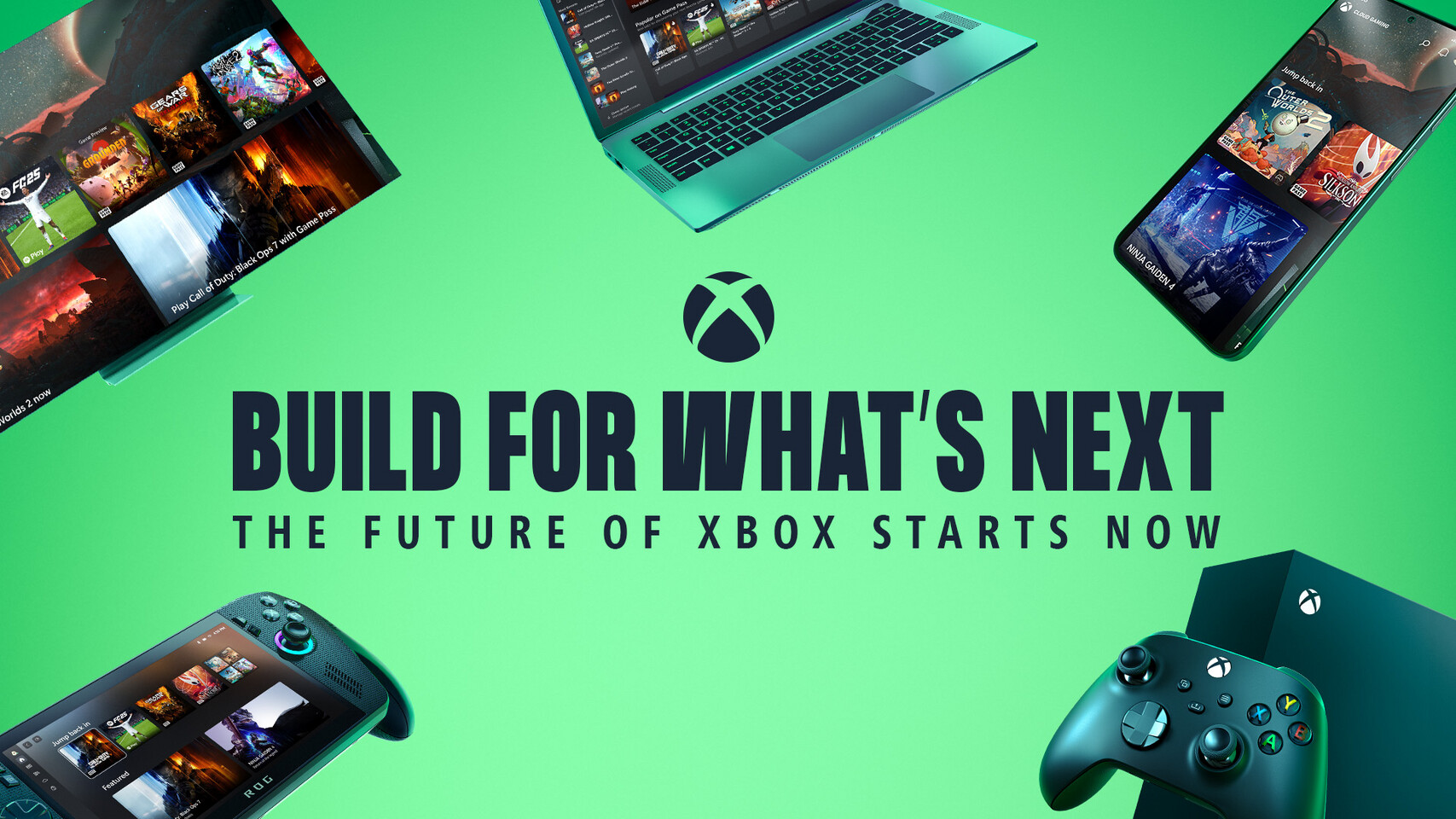
Gaming’s next frontier might cost less than a used textbook. On March 11 at the Game Developers Conference in San Francisco, Microsoft will host its first Xbox Dev Summit—a full-day event dedicated to teasing the future of its console division. And at the top of the agenda: a deep dive into the next-generation Xbox console, with rumors pointing to a starting price as low as $80—a figure that, if confirmed, would upend industry pricing norms and force competitors to reckon with a new era of affordability.
The $80 figure isn’t just a headline. It’s a statement. For decades, next-gen consoles have launched at premium prices—$500 for the PS5, $700 for the Xbox Series X. But Microsoft’s strategy has always leaned into disruption. The Xbox Series S, at $300, proved that cloud gaming and hardware efficiency could coexist. Now, with reports of a $80 console—likely a stripped-down, cloud-first device—Microsoft may be doubling down on that playbook, targeting a market segment that’s been underserved for years.
What’s Behind the $80 Price?
The console in question is expected to rely heavily on cloud streaming, with local processing limited to essential tasks. This approach would drastically reduce hardware costs while maintaining playable performance for most titles. Early leaks suggest it could pack a custom AMD SoC based on RDNA 5 architecture, though without the full GPU power of its siblings. Instead, the focus would be on low-latency streaming—a bet that Microsoft’s first-party games and Xbox Game Pass’s library will keep players engaged even if the local hardware is modest.
But the $80 console isn’t just about cost. It’s about access. Microsoft has long positioned Xbox as the gateway for indie developers and smaller studios, offering tools like DirectStorage and Velocity Architecture to reduce development barriers. A $80 console could extend that philosophy to hardware, making it easier for families, students, or casual players to enter the ecosystem without the usual financial commitment.
GDC 2026: More Than Just a Console Announcement
The Dev Summit isn’t just a hardware showcase. It’s a call to arms for developers. Microsoft will host six sponsored sessions, featuring speakers from Xbox, Windows, and major studios like Activision, Bethesda, and Blizzard. The goal? To accelerate innovation by providing tools, services, and direct feedback loops for creators. Topics will likely cover
- Optimizing games for next-gen hardware and cloud streaming
- Leveraging AI and machine learning in game development
- Expanding multiplatform opportunities across Xbox, Windows, and mobile
- Access to Microsoft’s Game Development Resource Hub and Xbox Developer Program
Jason Ronald, Microsoft’s VP of Next Gen, will kick off the event at on March 11 in West Hall Room 3001/3003 at the Moscone Convention Center. For those unable to attend in person, Microsoft will provide remote access through its GDC 2026 Hub, ensuring developers worldwide can tap into the insights.
The Bigger Picture: A Console War Redefined
If Microsoft follows through with a $80 console, the implications ripple beyond pricing. It could
- Force Sony and Nintendo to respond—either by introducing their own budget tiers or doubling down on cloud services to compete.
- Expand Xbox’s reach into emerging markets where $500 consoles are prohibitively expensive.
- Shift the balance of power in retail, as physical media sales become less dominant in favor of digital and cloud-based models.
- Accelerate the decline of mid-range hardware, as consumers opt for cloud solutions over traditional gaming PCs or consoles.
The move also aligns with Microsoft’s broader strategy of unifying gaming across devices. The company has already integrated Xbox features into Windows 11, reduced RAM usage for full-screen gaming, and pushed for 9% less resource consumption compared to standard Windows modes. A $80 console would be the next logical step—proving that gaming doesn’t need to be expensive to be immersive.
Yet, challenges remain. Will the performance hold up for AAA titles? Can Microsoft’s cloud infrastructure scale to meet demand without latency issues? And how will retailers react to a console priced closer to a Steam Deck or Nintendo Switch Lite than a traditional Xbox?
One thing is certain: March 11 at GDC 2026 won’t just be another console reveal. It could be the moment gaming’s economics—and its future—get turned on their head.