Eight years after LG unveiled the first 8K OLED TV, the industry is quietly shutting the door on a resolution that was always more marketing spectacle than practical reality. LG has halted production of 8K panels entirely, and the once-thriving 8K Association—an industry group pushing the format’s adoption—has seen its membership shrink from 33 companies in late 2022 to just 16 today. Only Samsung and Panasonic remain as active TV manufacturers in the space. The message is clear: 8K, at least for consumer displays, is effectively dead.
The decline wasn’t sudden. Since its 2012 debut (when Sharp first announced an 8K prototype), the format has struggled to gain traction. While 4K TVs now number in the billions—thanks to aggressive pricing, content support, and incremental upgrades—only about 1.6 million 8K TVs have been sold worldwide since 2015. Peak 8K sales occurred in 2022, and even then, the numbers were negligible compared to 4K’s dominance. For a technology that promised four times the pixel count of 4K, the adoption gap speaks volumes about its real-world appeal.
Why the collapse? The answer lies in economics, physics, and the cold truth of human perception. At typical viewing distances, most consumers can’t distinguish between 4K and 8K on a standard-sized TV. The benefits only become noticeable on screens so large that they defy most living rooms—think 75-inch panels or bigger. And even then, the lack of native 8K content—from streaming services to gaming—makes the investment feel hollow.
Streaming platforms, for instance, have shown little urgency to adopt 8K. Netflix, YouTube, and others prioritize bandwidth efficiency over ultra-high resolution, offering 4K feeds that are often compressed to the point of being indistinguishable from lower tiers. Apple TV is one of the few exceptions, but even its library pales in comparison to the sheer volume of 4K material available. For a format that demands four times the data, the ecosystem simply isn’t there.
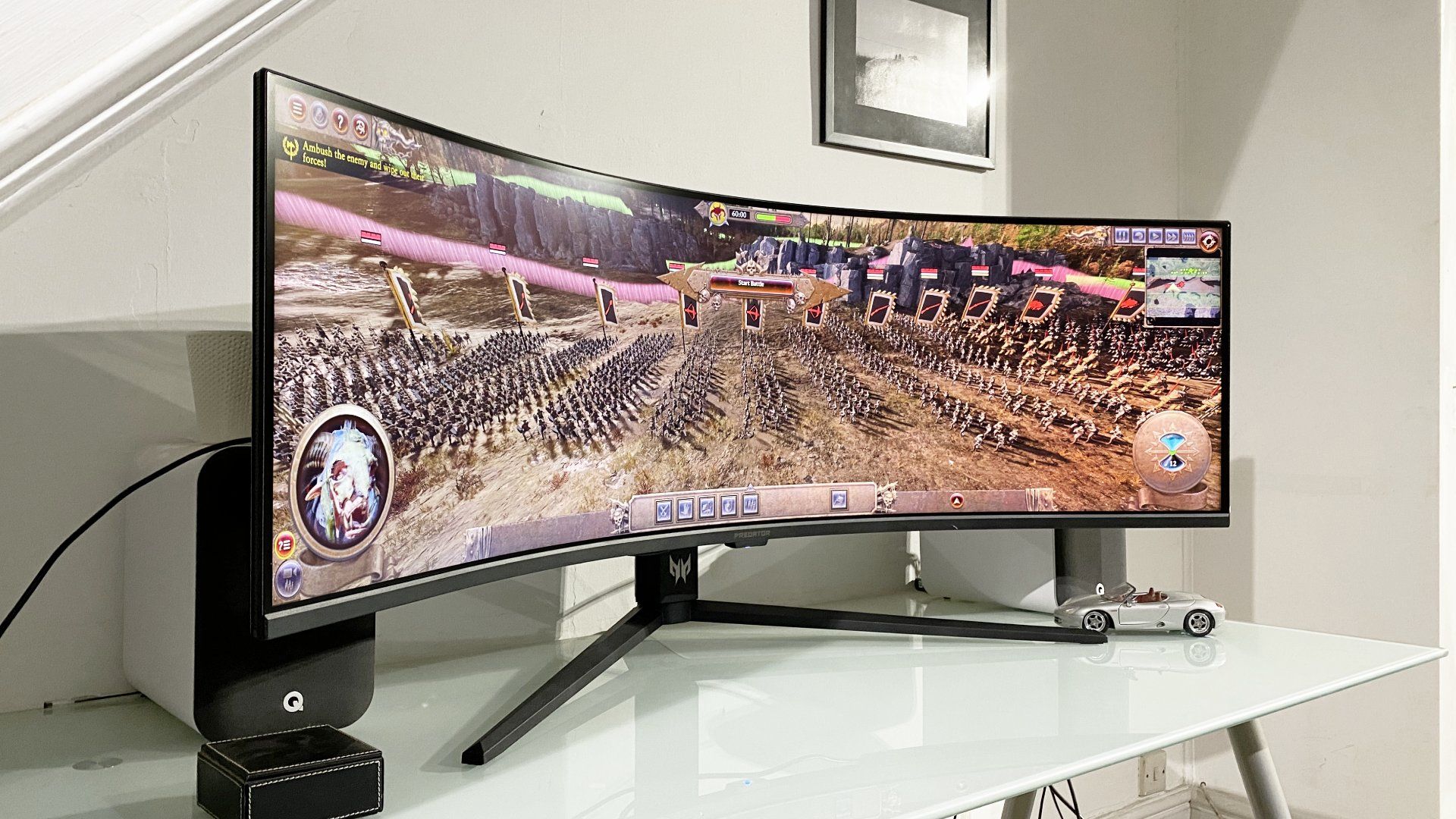
Gaming, where hardware capability often outpaces content support, presents a different but equally problematic scenario. Most modern games can* run in 8K—if your GPU is up to the task. But the hardware requirements are steep. An RTX 5090, the most powerful consumer GPU available, might just scrape by in some titles at 8K with aggressive upscaling. For everyone else, the experience is a frame-rate nightmare. And even then, the practical benefits are limited. The closest thing to a ‘real’ 8K gaming monitor today is a 57-inch dual-4K panel, like the Acer Predator Z57, which stitches two 4K screens together to simulate 8K horizontally. The result? A pixel density roughly equivalent to a 32-inch 4K display—not exactly razor-sharp, but better than nothing on a massive screen.
Upscaling technologies like Nvidia’s DLSS 3 (with its transformer-based AI) can mitigate some of the performance hit by rendering at a lower native resolution (e.g., 4K) and artificially expanding it to 8K. The visual results are impressive, but they come at a cost: the kind of GPU that can handle the workload also costs upward of $1,600. For most gamers, that’s a non-starter. The math doesn’t add up unless you’re building a custom rig with top-tier hardware—and even then, the question remains: Who needs 8K?*
For TVs, the writing was already on the wall. For PCs, the story is more about stubborn persistence than genuine demand. High-end enthusiasts and content creators might cling to 8K for its sheer technical spectacle, but the mainstream has moved on. The industry’s shift away from 8K isn’t just a failure of marketing—it’s a reflection of a fundamental mismatch between what technology can deliver and what consumers actually want.
As for the future? Don’t expect a resurrection. The resources once funneled into 8K R&D are now being redirected toward more practical advancements—like higher refresh rates, better HDR, or even the next leap in resolution (perhaps 16K, but that’s another story). Eight years after its debut, 8K’s legacy is a cautionary tale: even the most ambitious tech can flounder if it doesn’t meet real-world needs.