AMD’s push into large-scale AI computing is running into unexpected hurdles. The company’s upcoming Instinct MI455X accelerator, intended to compete with NVIDIA’s upcoming Vera Rubin platform, is now mired in manufacturing delays. While engineering samples and low-volume production will begin in the second half of 2026, full-scale deployment for AI workloads won’t materialize until mid-2027—leaving NVIDIA’s rack-scale system as the sole high-performance option for the foreseeable future.
The MI455X isn’t just another GPU. It’s AMD’s first rack-scale AI solution, codenamed Helios, combining up to 72 GPUs with 6th Gen EPYC Venice CPUs. The system is designed to function as a unified compute cluster, delivering multi-ExaFLOP performance—a leap forward from its predecessor, the MI350. But scaling production for such a complex architecture is proving difficult.
Key specs for the MI455X include
- Memory: HBM4 with 432 GB capacity, 19.6 TB/s total bandwidth, 300 GB/s scale-out bandwidth
- Compute: Up to 40 FP4 and 20 FP8 PFLOPs—roughly double the MI350’s performance
- AI Formats: Supports FP4 and other emerging data formats for optimized inference workloads
Despite the delays, AMD remains committed to the MI455X’s potential. The GPU’s transition to HBM4—a more advanced memory stack—promises significant bandwidth improvements, but the shift has required extensive validation. Early adopters, including hyperscalers and cloud providers, will have to wait until 2027 for full-scale deployment, creating a temporary gap in AMD’s AI hardware roadmap.
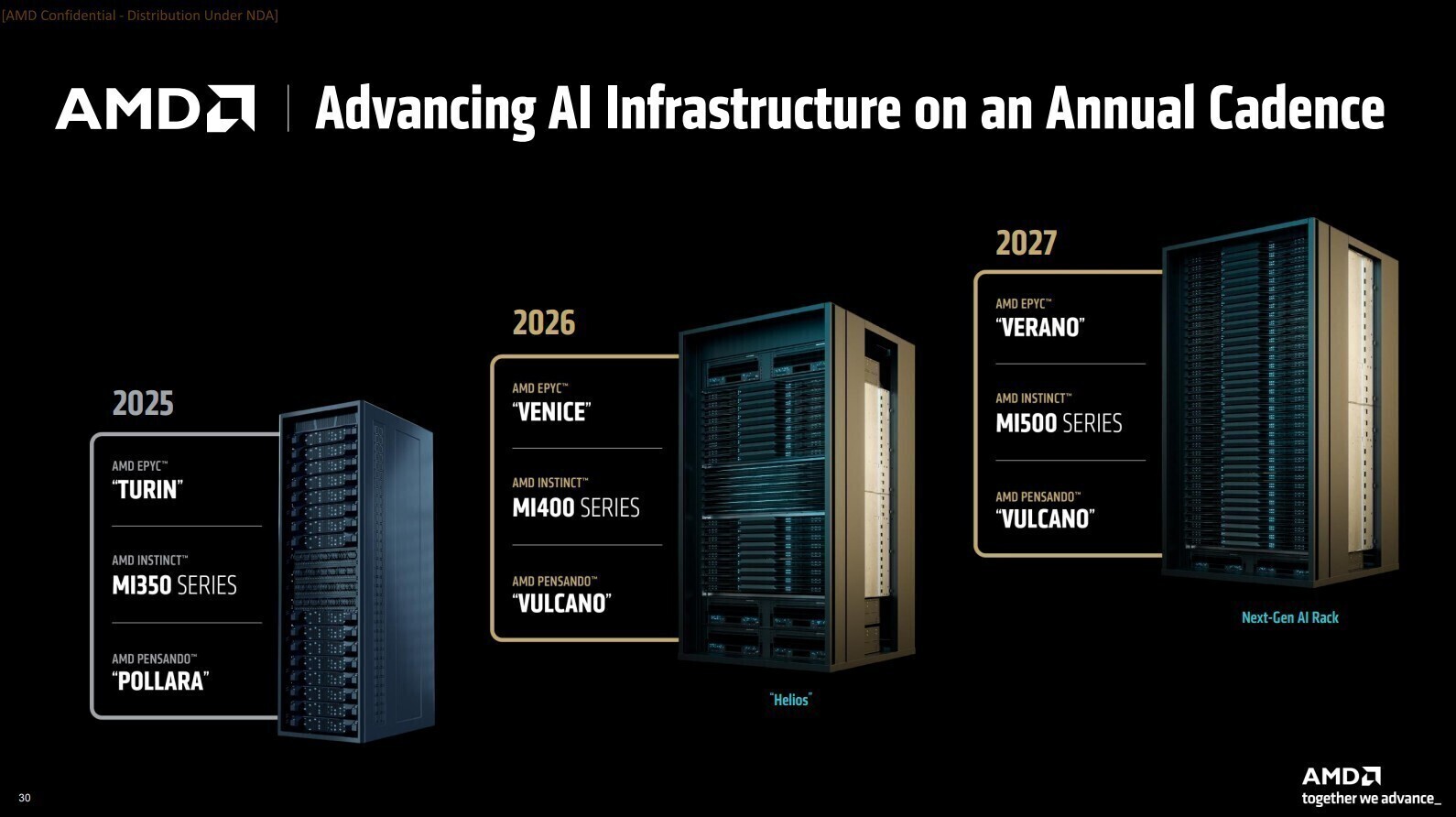
Industry observers note that AMD’s struggles aren’t isolated. TSMC’s fabrication lines are under intense pressure from NVIDIA’s AI chip orders, forcing other vendors to seek alternatives. Samsung and Intel are expected to benefit as some customers redirect production. Meanwhile, AMD’s consumer GPU division continues to face challenges, with the RX 9070 XT ($299) struggling to compete in a market dominated by NVIDIA’s RTX 50-series.
The MI455X’s delays underscore broader tensions in the AI hardware landscape. While NVIDIA’s dominance in data center GPUs remains unchallenged, AMD’s long-term strategy hinges on refining its rack-scale solutions. For now, the company’s first major foray into unified AI computing will have to wait.
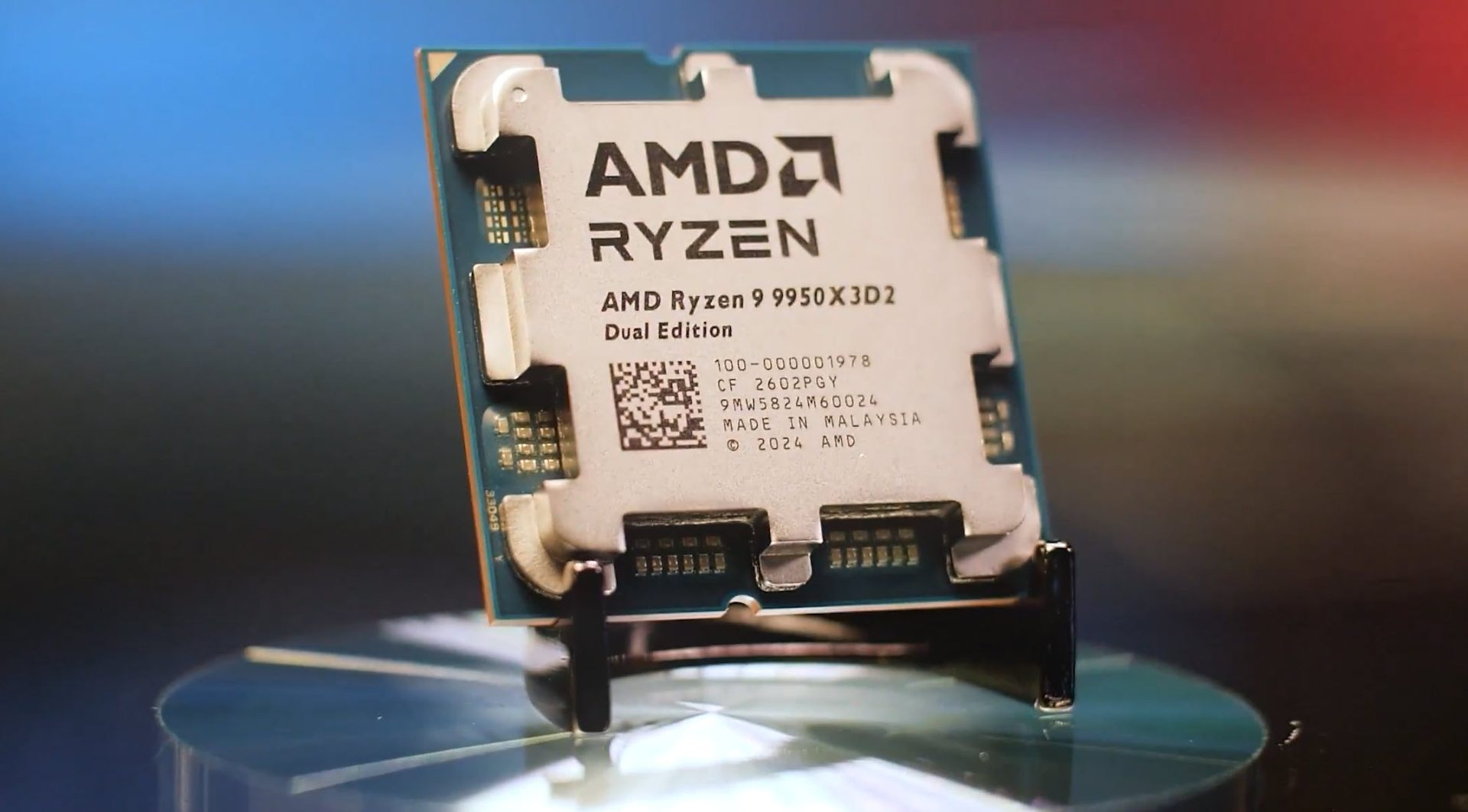
AMD’s next steps will be closely watched, particularly as the Ryzen 9000X3D series (including the 9950X3D2 with 5.6 GHz boost clocks) and Zen 6 processors—built on TSMC’s 2 nm and 3 nm nodes—prepare for their own production challenges.