AMD’s decision to extend Linux support for the Zen 6 microarchitecture suggests a broader strategy beyond its initial focus on high-end desktop processors. While details about additional models remain under wraps, the move reflects a shift toward consolidating software optimization across a wider range of CPUs—from mobile to server-grade chips.
Historically, AMD’s CPU roadmaps have balanced performance gains with ecosystem readiness. The inclusion of Zen 6 in Linux kernels underscores this pattern, ensuring that developers and enterprises can leverage the architecture’s capabilities without waiting for proprietary drivers or delayed support. This approach is particularly relevant as AI-driven workloads and virtualization demands grow, pushing hardware vendors to prioritize software compatibility from launch.
Key specs for Zen 6-based chips, where confirmed, include
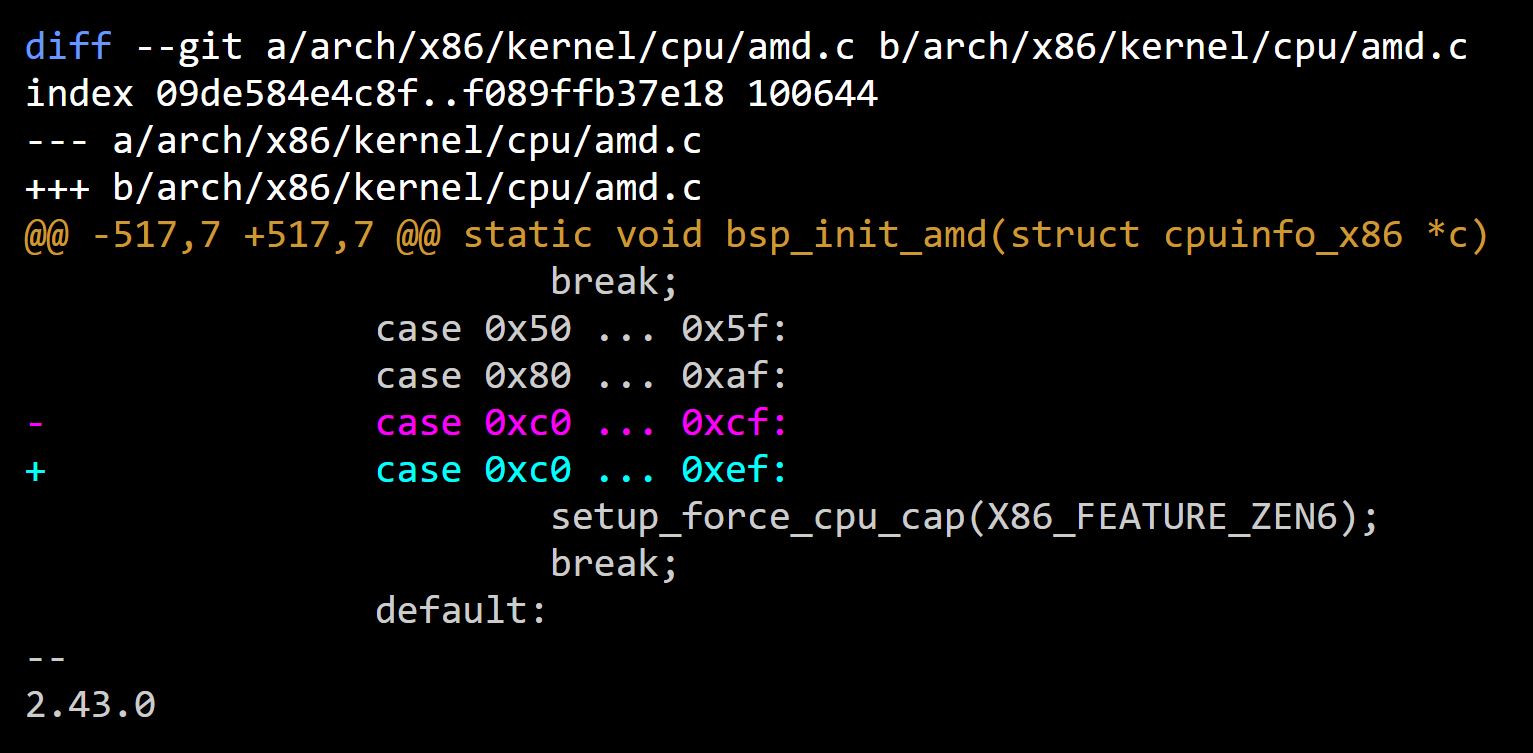
- Core architecture: Zen 6 (Raptor Ridge successor)
- Clock speeds: Up to 5.7 GHz (boost) on desktop models
- Cache hierarchy: Expanded L3 cache, with reported increases in bandwidth for multi-threaded tasks
- Memory support: DDR5-5600+ and future LPDDR5X compatibility
- TDP ranges: 45W to 127W depending on SKU (mobile to desktop)
The architecture’s focus on efficiency—particularly in power draw per performance—positions it as a contender for small businesses and mid-tier servers where operational costs matter more than raw single-thread performance. Early benchmarks indicate that Zen 6 delivers around 15% IPC uplift over Zen 4, with sustained gains in latency-sensitive tasks like database queries and rendering pipelines.
For small businesses, this translates to longer software lifecycles and reduced dependency on vendor-specific optimizations. Linux’s dominance in cloud infrastructure and edge computing means that AMD’s push could accelerate adoption of its chips in environments where cost predictability and open-source tooling are priorities. However, the lack of confirmed mobile or APU variants suggests that AMD may be prioritizing desktop and server segments first.
Looking ahead, the timeline for additional Zen 6 models remains unclear, but the Linux integration sets a precedent for rapid ecosystem adoption. If AMD follows its usual cadence, we could see expanded support by mid-2025, with mobile and embedded variants trailing slightly due to thermal and power constraints.