Turn-based tactics games have long been a double-edged sword: rewarding for those who master their intricacies, but daunting for anyone who hasn’t spent hours memorizing unit stats or optimizing builds. Blightstone, now in early access, flips that script. Instead of overwhelming players with layers of mechanics, it distills combat into sharp, decisive moments where every throw, trap, or spell feels impactful. The result? A game that’s easy to pick up but impossible to put down.
At its core, Blightstone is a roguelike—a genre known for procedural generation and permadeath—meeting turn-based strategy. Players control a trio of characters, each with distinct roles: a brawler who can grapple and hurl foes, a hunter who sets bear traps, and an arcanist wielding telekinetic powers. The catch? No tedious tutorials or stat-heavy menus. Within minutes, players are tossed into a skirmish against villagers, forced to make real-time decisions with only two actions per turn. The learning curve isn’t eliminated; it’s accelerated.
The game’s genius lies in how it turns abstract strategy into visceral, almost physical play. An arcanist’s lightning spell doesn’t just damage a single enemy—it carves through a line of foes, rewarding positioning. A hunter’s bear trap isn’t just a snare; it becomes a tactical tool when paired with telekinesis, allowing players to fling enemies directly into the jaws of steel. Even simple mechanics like shoulder-charging an enemy into an ally or an obstacle transform into combos that feel like small victories. The game doesn’t just teach tactics—it makes them feel satisfying.
What sets Blightstone apart is its emphasis on immediate problem-solving. Early encounters introduce charged attacks—enemies preparing devastating abilities with countdowns—demanding players think in three-move bursts. A wild boar charging forward? Knock it off course with a well-timed throw. An archer about to fire a wide AoE? Use telekinesis to displace an ally or hurl the enemy into the blast radius. These moments force players to engage with the game’s systems without overthinking, turning analysis paralysis into creative bursts of strategy.
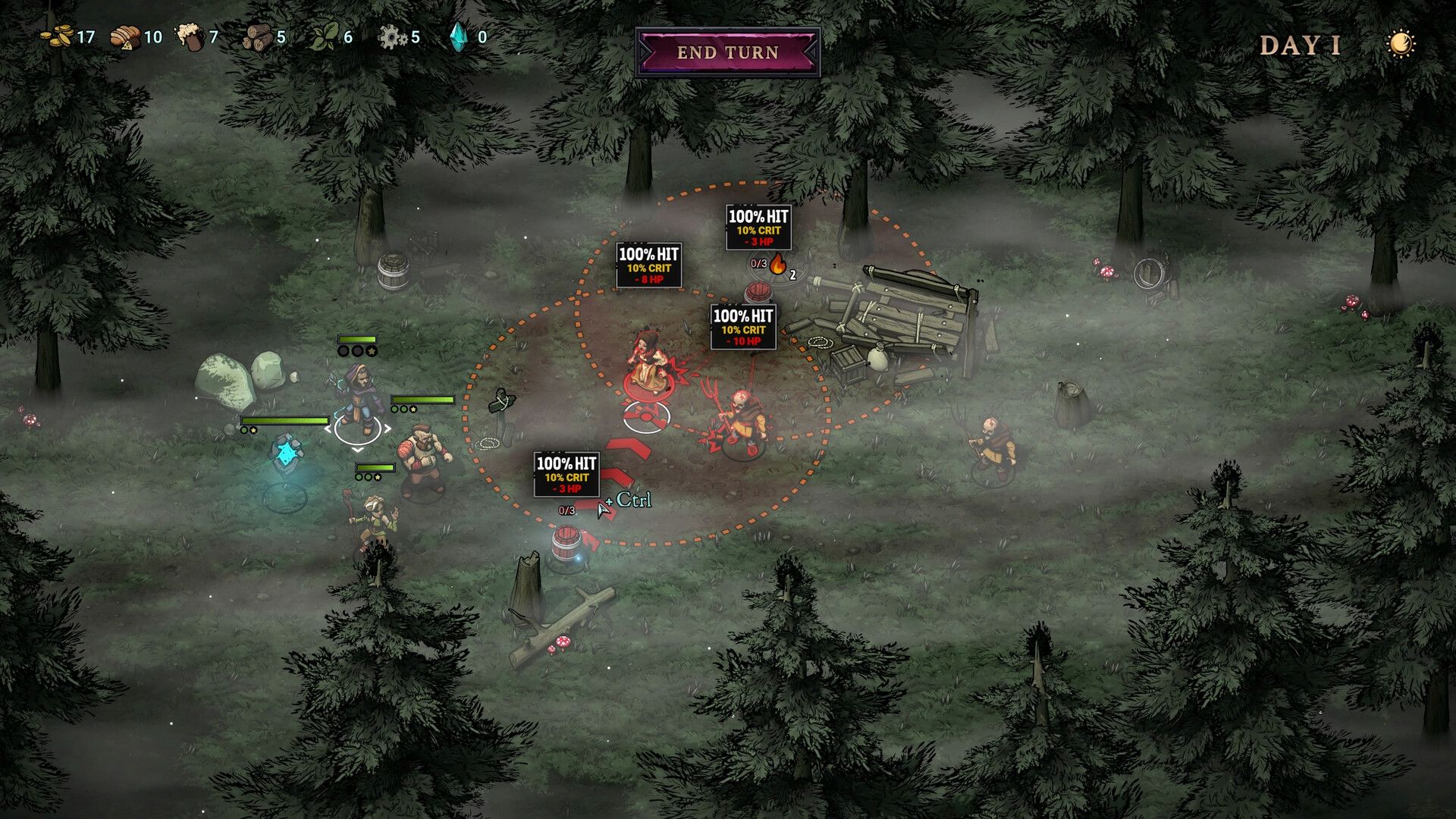
The depth comes later. As players grow comfortable with basic combos, they begin to chain actions for greater effect. Throwing an enemy into a trap isn’t just about eliminating a threat—it’s about setting up the next move, like positioning a hunter for a clean shot or luring an archer into a magical beam. The game’s roguelike structure ensures no two runs are alike, but the core mechanics remain intuitive enough that progress feels organic rather than forced.
Even in its unfinished state—developers estimate another six months to a year in early access—Blightstone succeeds as a gateway to the genre. It doesn’t demand players memorize unit matchups or poring over spreadsheets. Instead, it hands them a brawler, a hunter, and a spellcaster, and says: Now make it hurt. Whether it’s telekinetically tossing a zombie into a tree or using a boar’s charge to clear a path, the game’s combat loop is designed to feel like discovery rather than instruction. For those wary of turn-based tactics, Blightstone isn’t just an entry point—it’s a revelation.
- Combat System: Three characters (brawler, hunter, arcanist) with two actions per turn, emphasizing decisive, combo-driven tactics.
- Physics-Based Mechanics: Telekinesis, grappling, and environmental interactions (e.g., hurling enemies into traps or obstacles).
- Charged Attacks: Enemies prepare devastating abilities with countdowns, forcing rapid, creative solutions.
- Roguelike Structure: Procedurally generated runs with permadeath, ensuring replayability without overwhelming complexity.
- Accessibility: No stat-heavy menus or tutorials—players learn by doing, with immediate feedback.
Blightstone’s approach isn’t about dumbing down tactics; it’s about making them feel alive. The game’s early access phase suggests it’s still evolving, but its foundation is already solid: a turn-based experience that’s as much about throwing things as it is about strategy. For newcomers, it’s the perfect way to fall in love with the genre. For veterans, it’s a reminder of why turn-based combat can still feel fresh.