China’s push to reduce reliance on Western AI infrastructure has taken a new turn with the emergence of Iluvatar CoreX, a startup positioning itself as the nation’s first **high-performance computing (HPC)-specialized** chip developer. Unlike competitors focused on consumer or hybrid markets, the company has set its sights on direct parity with NVIDIA’s upcoming Vera Rubin platform by 2027—a timeline that, if achieved, would mark a significant shift in global AI hardware dynamics.
The roadmap, disclosed through industry reports, reveals two critical milestones: matching NVIDIA’s current Blackwell architecture in performance by late 2026, followed by a full Rubin-level challenge the following year. This strategy hinges on the company’s **Tianshu Zhixin** lineup, an in-house architecture designed to compete not just in benchmarks but in system-level integration—a rare focus in China’s fragmented chip ecosystem.
The HPC Gambit
Iluvatar CoreX’s approach stands in contrast to peers like Huawei, which has pursued high-density rack solutions (e.g., the Atlas 950’s 8,192-chip configuration) to mirror NVIDIA’s NVL144. Instead, the startup is betting on **native architecture** as its differentiator, a move that could address a long-standing weakness in China’s AI chip sector: the lack of a vertically integrated design-to-fabrication pipeline. Early products like the TianGai-100 and TianGai-150—claimed to rival NVIDIA’s Ampere series—suggest a foundation built on performance replication rather than incremental innovation.
Yet the roadmap’s feasibility hinges on overcoming a critical bottleneck: **production scale**. While China has made strides in semiconductor manufacturing, most foundries remain constrained by process node limitations (e.g., 7nm/5nm) compared to TSMC’s leading-edge capabilities. Iluvatar CoreX’s ability to secure high-volume fabrication—potentially through partnerships with SMIC or domestic alternatives—will determine whether its ambitions translate into real-world deployment.
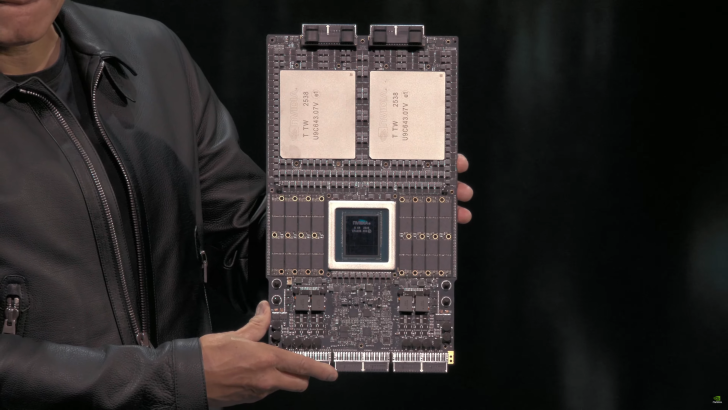
Who Stands to Benefit?
For hyperscalers and research institutions locked out of NVIDIA’s supply chain, Iluvatar CoreX’s timeline could offer a lifeline. If the company delivers on its 2026 Blackwell-equivalent claims, Chinese cloud providers might gain a **domestic alternative** for training large language models, reducing dependency on imported hardware. However, the tradeoff lies in **thermal and power efficiency**—areas where NVIDIA’s optimizations (e.g., Rubin’s 144-chip NVL configuration) currently hold a lead.
Competitors like Huawei and Moore Threads have faced similar challenges, with their Ascend and Threadripper-based solutions often trailing in power-per-chip metrics. Iluvatar CoreX’s HPC specialization suggests a narrower focus: **enterprise AI workloads** over consumer-grade acceleration, a segment where NVIDIA’s dominance is less absolute.
Key Specs and Timeline
- 2026 Target: Blackwell-equivalent performance via Tianshu Zhixin architecture.
- 2027 Target: Vera Rubin-level parity, including NVL-like system integration.
- Current Offerings: TianGai-100/150 (Ampere-class benchmarks, limited public details).
- Design Focus: Native HPC architecture (unlike hybrid consumer/AI chips from rivals).
- Critical Dependency: Access to advanced fabrication (7nm/5nm) for mass production.
The roadmap’s boldness is matched by its risks. Without breakthroughs in packaging or cooling, Iluvatar CoreX’s chips could face the same **thermal bottlenecks** that have plagued earlier Chinese AI accelerators. Yet if successful, the company could carve out a niche by offering **turnkey HPC solutions**—a gap NVIDIA has historically underserved in China.
For now, the focus remains on the 2026 milestone. Whether Iluvatar CoreX can bridge the gap between architecture and production remains the million-dollar question in China’s AI chip arms race.