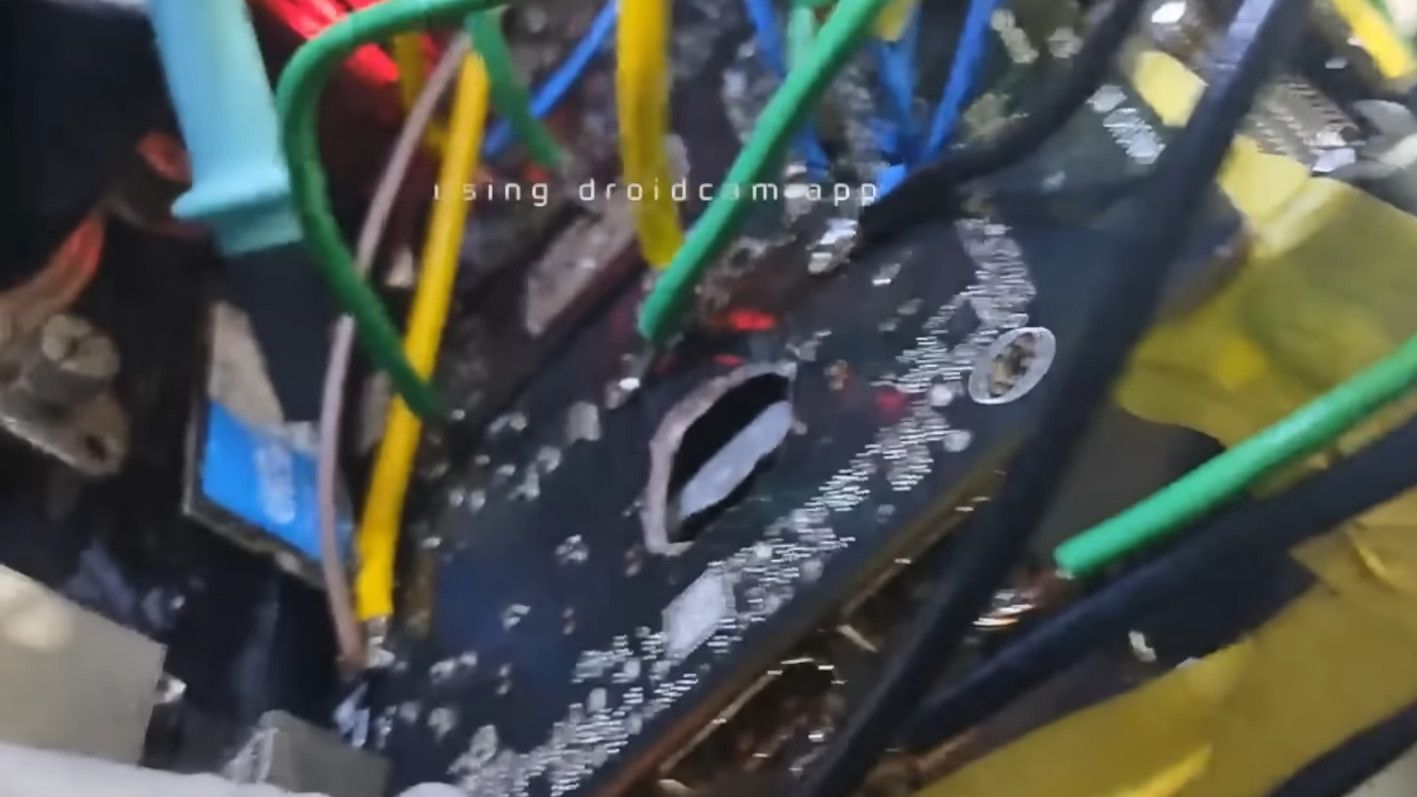
A graphics card that arrived with a literal hole in its core has shattered performance benchmarks in an 8K rendering challenge, proving that even the most visibly damaged hardware can deliver elite results with the right attention.
The RTX 5070 Ti, typically a mid-range powerhouse for high-end gaming and content creation, was salvaged and tuned to outperform competitors in a demanding 8K benchmark. The feat wasn’t just a fluke—it required meticulous troubleshooting and a deep understanding of GPU architecture, revealing how even flawed hardware can be coaxed into high performance when treated as a puzzle rather than a write-off.
The card’s physical damage—a hole in the PCB—didn’t stop its ability to process complex workloads. In fact, after repairs and optimization, it achieved a record in an 8K rendering test, a task that demands both raw computational power and efficient memory bandwidth. The result wasn’t just competitive; it set a new standard, suggesting that even 'broken' hardware can be pushed beyond its intended limits with creative engineering.
Key specs of the repaired RTX 5070 Ti remain unchanged from the factory model
- GPU: Nvidia Ada Lovelace architecture (DLSS 3.5 support)
- CUDA Cores: 7,168
- Memory: 12GB GDDR6X
- Memory Bus: 192-bit
- Memory Bandwidth: 720GB/s
- Base Clock: 1,560 MHz
- Boost Clock: 2,205 MHz
- TDP: 260W
- DisplayPorts: 3
- HDMI: 1
- USB-C: 1
The card’s success in this test underscores a broader truth: modern GPUs are built with redundancy and overclocking headroom that can mask physical imperfections. While the hole in the PCB likely reduced some core functionality, the remaining operational components were still capable of handling intensive workloads—especially when paired with optimized drivers and cooling solutions. This isn’t just a story about a broken card; it’s a testament to how deep customization and persistence can turn limitations into achievements.
For enthusiasts and creators, the takeaway is clear: hardware doesn’t have to be pristine to deliver high performance. With the right adjustments, even a card that might otherwise be discarded can become a benchmark-beating powerhouse. The repaired RTX 5070 Ti now stands as proof that innovation doesn’t always require a flawless starting point.
Availability and pricing for the repaired unit remain unreleased, as this was a one-off experiment rather than a commercial product. However, the broader lesson—about pushing hardware to its absolute limits—applies to any high-performance setup.