Microsoft’s Task Manager has long been a staple of Windows, its utilitarian interface reflecting the operating system’s functional roots. But what if it had been reimagined with the flair of a 1980s arcade game, complete with neon-lit gauges, glitchy synthwave soundtracks, and a dash of cyberpunk edge?
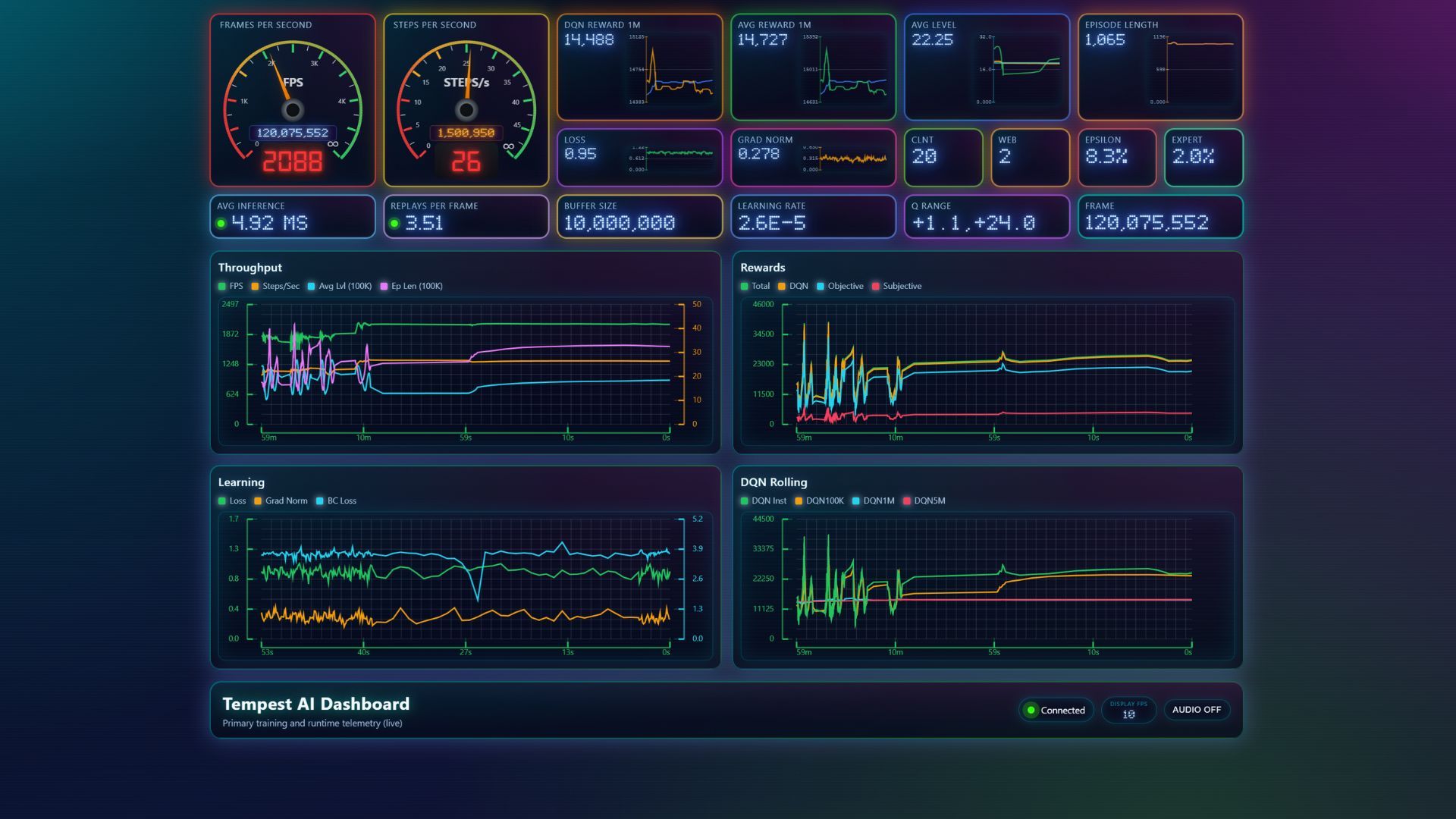
That’s the vision Dave Plummer—a former Microsoft engineer best known for his work on Task Manager and Windows Pinball—has brought to life through his Tempest AI project. The dashboard, designed as a real-time system monitor, is less about practicality and more about pushing the boundaries of what a performance tracker could look and sound like. And it’s a far cry from the understated gray-and-white interface most users are familiar with.
The dashboard features two speedometer-style meters, a cluster of animated graphs, and a retro-futuristic color scheme that would feel at home in a cyberpunk novel. But the real attention-grabber is the audio: a relentless synthwave/rave track that pounds in the background, turning system monitoring into an almost immersive experience. For those who prefer silence, the audio can be muted—but the visual spectacle remains.
Plummer, who holds a world record for high scores in the 1981 Atari game Tempest, built the dashboard as part of his AI project training a neural network to master the game. The connection between Tempest and the AI dashboard isn’t just thematic; it’s functional. The Tempest AI, which Plummer has been developing for years, is designed to replicate the reflexes and pattern recognition required to excel in the game—a task most humans struggle with. The dashboard, in turn, reflects the same high-energy, fast-paced aesthetic that defines Tempest itself.
While the Tempest AI dashboard may not replace the traditional Task Manager, it serves as a playful experiment in how system monitoring could evolve—if Microsoft ever decided to embrace a more visually dynamic approach. The project also highlights Plummer’s enduring passion for retro gaming, blending his technical expertise with a deep nostalgia for the arcade era.
The dashboard is currently accessible online, where users can toggle the audio on or off. For those curious about the full experience, the project’s code is available on GitHub, inviting tinkerers to explore—or even repurpose—the concept for their own systems.
Key Features of the Tempest AI Dashboard
- Visual Style: Cyberpunk-inspired design with neon accents, speedometer gauges, and animated graphs.
- Audio: Synthwave/rave soundtrack that plays in real-time (toggleable).
- Functionality: Real-time system monitoring, though not a replacement for traditional Task Manager.
- Inspiration: Directly tied to Plummer’s Tempest AI project, which trains an AI to play the 1981 Atari game.
- Accessibility: Web-based demo available with adjustable audio settings.
The dashboard’s design is undeniably bold—some might say excessive—but it underscores a broader question: Could modern system tools benefit from a more engaging, visually rich approach? Plummer, ever the pragmatist, acknowledges the impracticality of his creation for everyday use, yet it stands as a fascinating glimpse into how software interfaces might evolve if pushed to their creative limits.