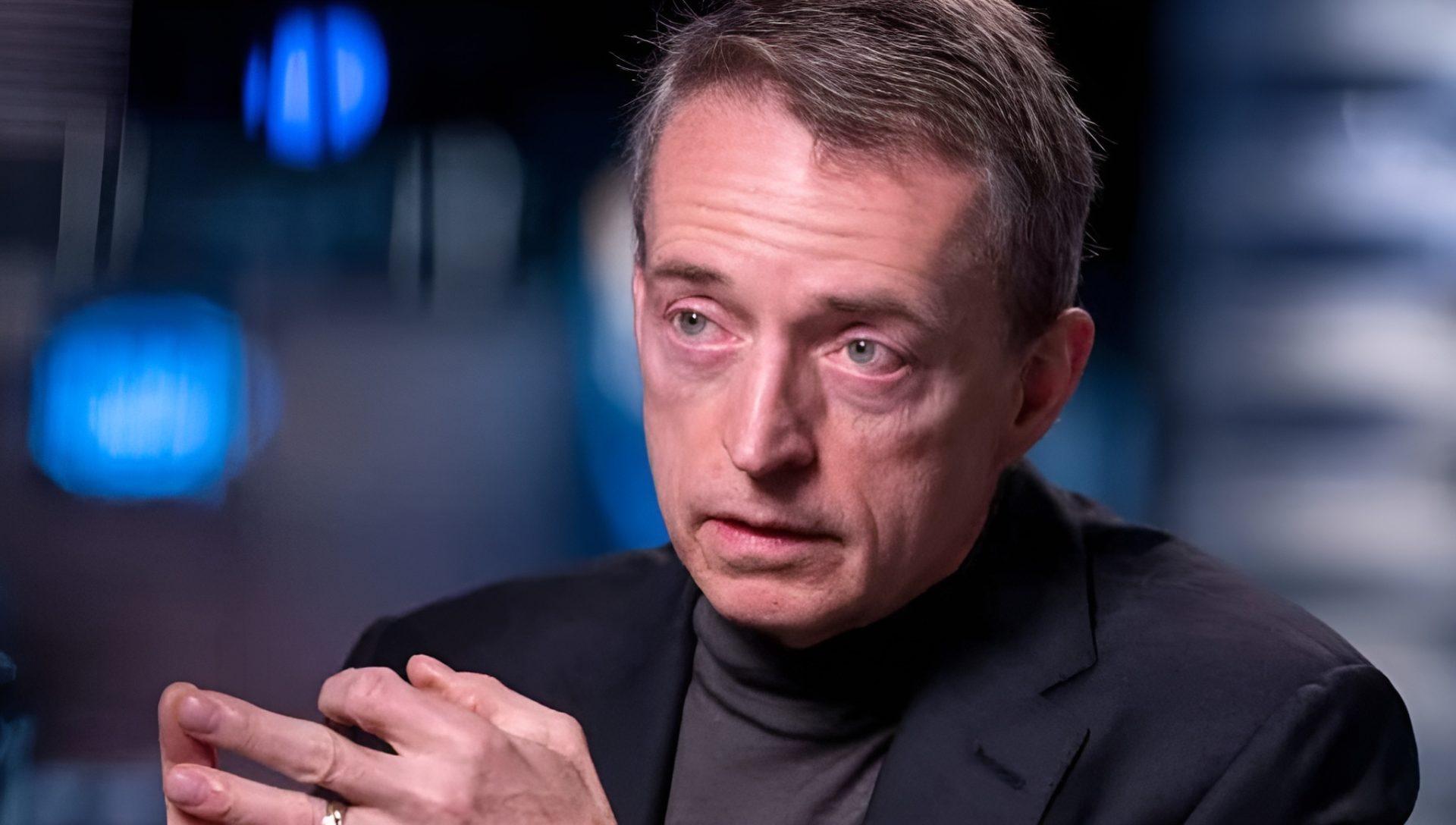
Industry Intel’s Ex-CEO Blames Wall Street’s “Short-Termism” For America Losing the Chip Race, Saying No CEO Can Survive the Backlash Muhammad Zuhair • at EDT Add on Google Intel former CEO Pat Gelsinger Intel's former CEO, Pat Gelsinger, has spoken about the company during his tenure, saying that Wall Street's expectations had stalled his manufacturing ambitions. Intel's ex-CEO Pat Gelsinger Is Disappointed , But He Shows Faith in Lip-Bu Tan The US semiconductor industry has seen dramatic changes over the past few years, mainly driven by government initiatives such as the CHIPS Act, which aim to produce chips on home soil. Intel's former CEO, Pat Gelsinger, has been a key advocate of America's supply chain resilience and was one of the individuals responsible for bringing an "engineering-driven" approach to the company through initiatives like "5N4Y." However, Gelsinger couldn't fully deliver on his plans after he departed from the company in December 2024, and, interestingly, he has blamed Wall Street (via Jodi Shelton) for its approach to "long-term, manufacturing" ambitions. Related Story Intel Reportedly Cancels Ultra 9 290K Plus Launch As It No Longer Deems It Necessary For the Market You know, so I'll say, you know, industrial policy is around building the structure that you need to accomplish the policy objectives. And in this case, you know, our policy objectives were uh I'll say undermined. They were deteriorated by high margin short-termism in Wall Street. You know, we are not as a nation creating incentives for long-term capital heavy industry investments, right? They don't happen here. Because no good CEO can possibly say, "That's right. I'm going to build a factory that doesn't get an economic return for a decade, but it's the right thing. You know, no CEO can survive those kind of decisions. For those unaware, Intel's stock valuation dropped by more than 60% from February 2021 to December 2021 during the ex-CEO's tenure, and Team Blue reported its largest-ever quarterly loss of $16.6 billion. The backlash from Wall Street was more pronounced when Gelsinger decided to slash dividends by 66%, from 36.5 cents to 12.5 cents, and the primary cause was the ex-CEO's ambitions to advance his "IDM 2.0" strategy. The short-termism statement stems from the fact that Wall Street sentiment wasn't factoring in the long-term benefits of the investments Pat Gelsinger is making in the foundry division. Intel's former CEO Pat Gelsinger Pat Gelsinger also called out Intel's management before him, implying that under them, the company went through a period of "financial engineering", where Team Blue had prioritized short-term stock performance, through stock buybacks and dividends to keep the shareholders happy. He says that Intel had given out $70 billion to Wall Street over time, yet not a single factory was built. Gelsinger also went out to claim that while PC demand exploded during the COVID era, it gave the perception that Intel was doing great, but in reality, there was no meaningful progress on the foundry front. And in COVID what happened to PC demand; explodes you know so the business looked better than it really was uh at the time. And, you know they had fallen behind on process technology they went from having a two to three-year lead to a two to three-year lag. How did that happen? Right, you know they hadn't produced a chip on schedule for five or six years. They had taken all of their capital and given it back to shareholders. So, the idea laid down by Gelsinger here is that Wall Street, as well as the broader US semiconductor industry, needs to realize that manufacturing processes, from the very foundations, are intensive and require not only capital but also a long-term strategy. He takes pride in how 18A has turned out as well, saying it is validation that an engineering-driven plan works out in the long term. He also says that Intel's current CEO, Lip-Bu Tan, admires Gelsinger's work turning around the foundry division, and that he will likely continue with a similar strategy. I just saw Lip-Bu recently and he was quick to remind me that, you know, we haven't changed your strategy, Pat, right? So in that… he believes in the strategy. He's continuing to execute the strategy. And I just appreciated that he recognizes, okay, I'm continuing what we started together. Would have I liked to be finishing it? That was my goal, but I'm in a better place today… I don't have remorse over it… I am just so proud of the Intel teams for continuing, because once you fall behind, oh, in this industry, Jody, it is so hard, so deeply difficult to get back. Intel, under Lip-Bu Tan, appears to be on track with the foundry roadmap laid out by Gelsinger, yet the primary focus has been on cost-cutting measures for now, which has helped Tan gain confidence among shareholders as well. At the same time, stakes from the likes of NVIDIA and the USG have also made the world and Wall Street realize that, for America's semiconductor manufacturing ambitions to play out, the focus must shift to native technologies, whether frontend or backend. Intel's CEO holding an 18A wafer | Image Intel Right now, the only constraint Intel faces is mainly tied to customer commitments, as by the looks of it, nodes like the 18A and 18A-PT have turned out to be successful, on par or close to competitors. At the same time, ramping up capacity requires a significant financial investment. Intel's current CEO has clearly stated that any further investments in production lines will only come after customer orders materialize, but for now, no official disclosures regarding external volume have been made. The biggest opportunity Intel sees right now is in its enterprise segment, mainly server CPUs, but, yet again, the firm is constrained by capacity problems, which force Team Blue to make workarounds, whether it is taking volume from the consumer segment or outsourcing products to foundries like TSMC. It would be interesting to see how Intel Foundry navigates the current landscape, since the opportunities are 'too big' for the division, yet execution and results remain to be seen. Follow on Google to get more of our news coverage in your feeds. Further Reading Geekbench Cannot Replicate Intel’s Arrow Lake Refresh Gains From the Binary Optimization Tool, Urging Users to Treat Results With Caution Intel Core Ultra 7 270K Plus & Core Ultra 5 250K Plus Official Benchmarks: Faster Than 14900K & Comparable To Ryzen X In Gaming, Much Faster In Apps, Superb Value Pearl Abyss Announces Crimson Desert Support On Intel Arc GPUs Is Incoming Intel Bartlett Lake Core 9 273PQE Gets Benchmarked On PassMark; 22% Lower Multi-Threaded Performance Than i9-14900K At Half The Core Count Read all on Intel’s Ex-CEO Blames Wall Street’s “Short-Termism” For America Losing the Chip Race, Saying No CEO Can Survive the Backlash