The Galaxy Z Fold 8 arrives as a more polished iteration of Samsung’s foldable smartphone line, focusing on incremental improvements rather than groundbreaking design shifts. While the external design remains largely unchanged from its predecessor, subtle enhancements—particularly in display brightness and software responsiveness—position it as a stronger tool for productivity without disrupting the established formula.
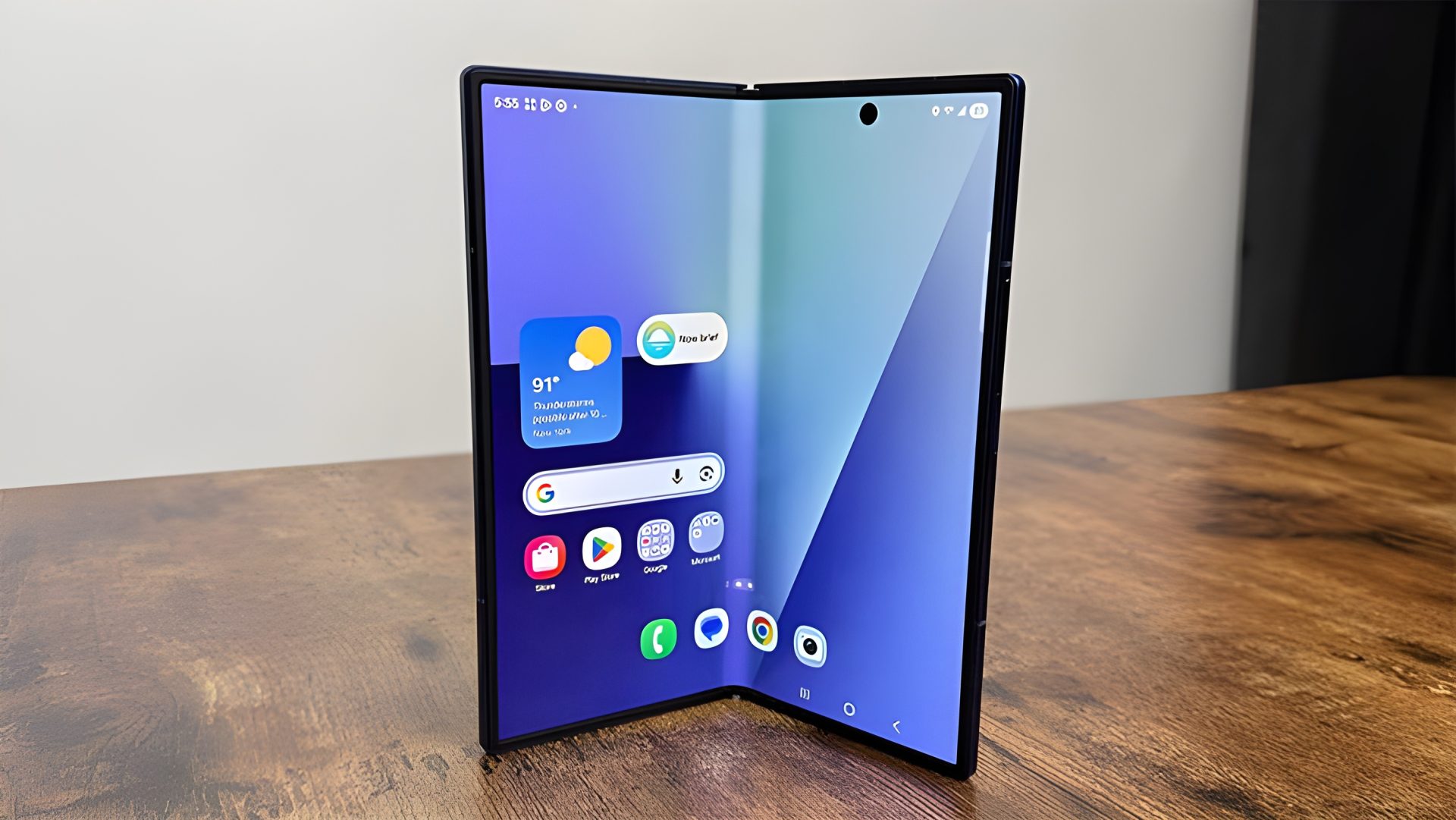
At first glance, the Fold 8 maintains the same ergonomic profile, with a 6.2-inch outer LCD cover screen and a 7.6-inch inner LTPO OLED panel. The fold line follows the same premium metal-and-glass construction, ensuring a familiar feel in handling. However, Samsung has increased brightness significantly: the outer display now reaches 1,300 nits, while the inner screen hits 1,600 nits—a notable upgrade for outdoor visibility and HDR content consumption.
Design: Subtlety Over Revolution
The Fold 8’s build quality continues to emphasize premium materials without introducing radical changes. The outer display still functions as both a protective cover and a secondary workspace, while the inner panel unfolds into a near-bezel-less tablet-like experience. No major adjustments to thickness or weight are present, suggesting Samsung’s priority remains stability over innovation in form factor.
Hardware: Familiar with Fine-Tuning
- Display: Outer: 6.2-inch LCD (1200p, 1300 nits), Inner: 7.6-inch LTPO OLED (1200p, 1600 nits)
- Processor: Qualcomm Snapdragon 8 Gen 2
- RAM: 12GB LPDDR5X
- Storage: 256GB UFS 4.0 (microSD expandable)
- Battery: 3,980mAh
- Cameras: Outer: 10MP main + 12MP ultrawide; Inner: 50MP periscope telephoto (5x optical zoom)
- Connectivity: 5G, Wi-Fi 6E, Bluetooth 5.3
- Ports: USB-C (no headphone jack)
Under the hood, the hardware remains largely consistent with its predecessor. The Snapdragon 8 Gen 2 processor continues to power the device, paired with 12GB of LPDDR5X RAM and 256GB of UFS 4.0 storage—unchanged from last year’s model. Battery capacity stays at 3,980mAh, a persistent limitation in this category that has yet to be addressed meaningfully.
Performance: Smoother but Still Bound by Constraints
The Fold 8 excels where it matters most for its target audience: productivity. Multitasking feels more fluid, with fewer stutters when toggling between apps on the inner display. Samsung’s One UI has been optimized for foldable workflows, offering deeper customization for split-screen modes and a more responsive pen input experience—key advantages for digital artists or note-takers.
The Future of Foldables: A Cautious Step Forward
Despite its refinements, the Galaxy Z Fold 8 does not break new ground in areas that have long plagued foldable phones. Battery life remains a notable weakness, and while the display’s 120Hz refresh rate is smooth, it hasn’t evolved significantly since its debut. Samsung’s approach here is to make the experience more enjoyable rather than redefine it.
This isn’t a device for those seeking dramatic leaps in technology. Instead, it’s a tool that refines what already works, appealing to users who prioritize immediate usability over future-proofing. If you’re already invested in foldable productivity, the Fold 8 offers a worthy upgrade. But if you’re waiting for a true paradigm shift—longer battery life, a more flexible form factor, or a display that breaks new ground—the wait continues.
The next major milestone for foldables will likely come when battery life finally catches up to performance demands or when a truly dynamic, multi-mode design emerges. Until then, the Galaxy Z Fold 8 stands as a solid, if unremarkable, step forward in Samsung’s evolution of foldable smartphones.