The Predator Atlas 8 isn’t just another step forward in handheld gaming—it’s a paradigm shift. Traditional handhelds have long been constrained by either weak processors or impractical battery life, leaving users to choose between performance and portability. Acer’s latest device dismantles that trade-off by integrating Intel’s Arc G3 Extreme GPU, which delivers 14 compute units, into a package small enough to fit in one hand. This isn’t about incremental gains; it’s about redefining what handheld gaming can achieve.
The Atlas 8 arrives at a moment when the boundaries between mobile and desktop computing are dissolving. While other manufacturers have focused on refining existing designs or squeezing more power from older architectures, Acer has taken a different path. The result is a device that combines an 8-inch display with a 120Hz refresh rate—something previously unthinkable in such a compact form factor—alongside a battery that lasts for hours rather than minutes. This balance of performance and endurance is what sets the Atlas 8 apart.
At the core of this transformation is Intel’s Arc G3 Extreme GPU, which benchmarks suggest can rival mid-range desktop GPUs in raw performance. However, the real challenge lies in how Acer manages power consumption when both the GPU and display are pushed to their limits. Early estimates indicate that at lower settings, users can expect around 4-5 hours of continuous use—a significant leap for a handheld device but far from revolutionary compared to modern gaming laptops. The question remains: Can this level of performance be sustained without compromising battery life or generating excessive heat?
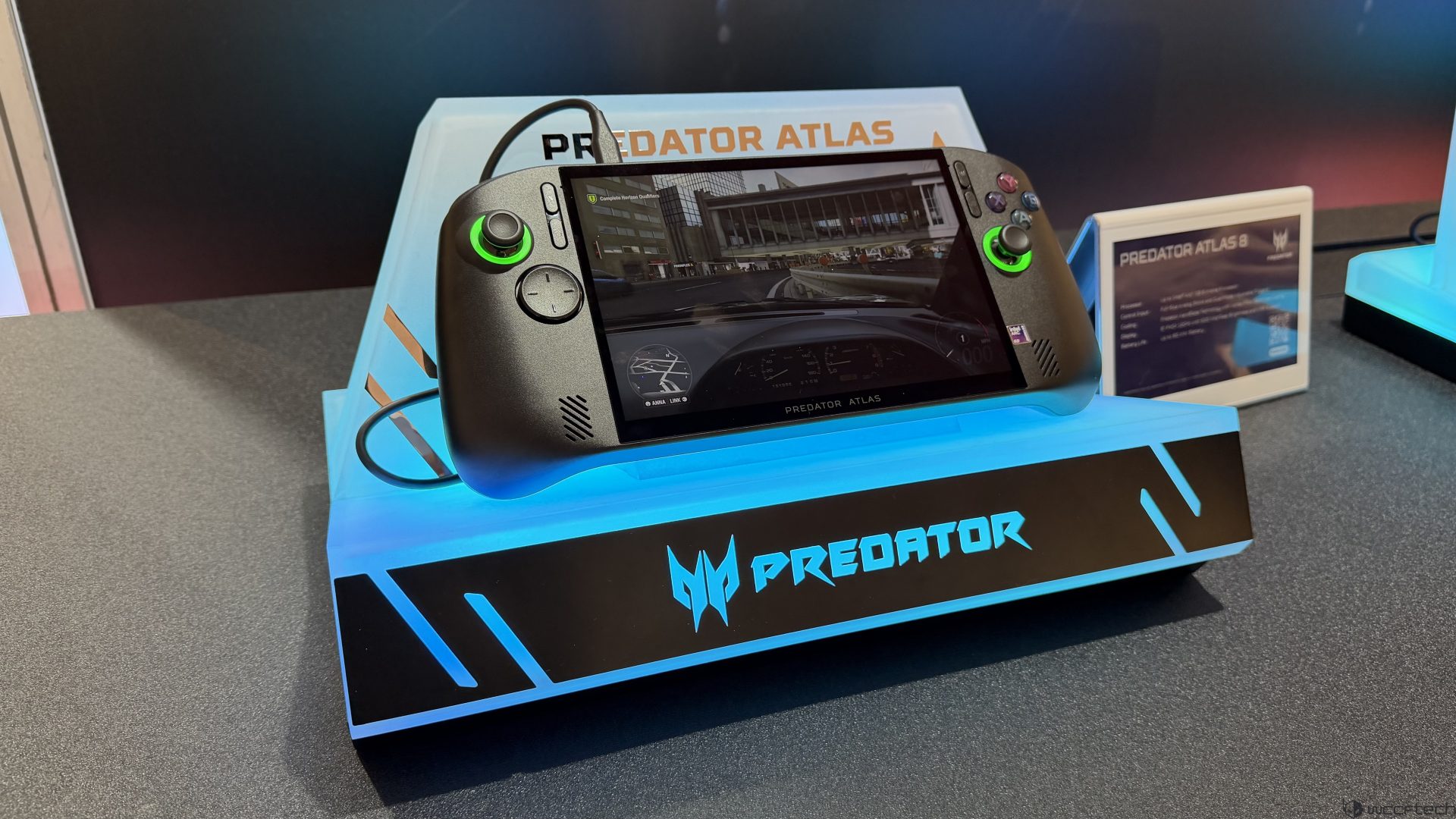
For power users, the implications are immediate and profound. Developers, streamers, and gamers who demand both high performance and mobility now have a new option that bridges the gap between traditional handhelds and full-fledged gaming setups. The Atlas 8 isn’t just about playing AAA titles on the go; it’s about redefining what a handheld device can accomplish when freed from legacy mobile constraints. However, this power comes with inherent risks. Thermal management will be critical, as will software optimization to ensure the GPU doesn’t become a bottleneck in battery efficiency.
Looking ahead, the success of the Predator Atlas 8 will depend on two key factors: how effectively Acer optimizes the hardware for sustained performance and whether developers embrace this platform as a viable alternative to traditional gaming setups. If both conditions are met, we may witness the emergence of a new ecosystem where handheld devices evolve from mere accessories into primary computing platforms capable of handling tasks once reserved for desktops. For now, the Atlas 8 stands as a proof of concept—a device that pushes boundaries while acknowledging the limitations of current technology.