Thermal Grizzly’s CEO and overclocking enthusiast Der8auer has turned liquid cooling into an unexpected science experiment, testing the structural limits of water block windows under extreme pressure. The results? Acrylic holds strong at nearly double the force of glass—but even glass can surprise you.
Using a submerged setup to contain any potential shrapnel, Der8auer subjected both acrylic and glass water block windows to relentless hydraulic stress. The goal wasn’t just to break them—it was to measure how much abuse they could take before failure. The findings offer a rare look at the real-world durability of these components, far beyond what most users will ever encounter.
The first test featured a GPU water block with a standard PMMA (acrylic) window. When pressurized to between eight and nine bars—far beyond the 0.5 bar typical in real-world use—the acrylic cracked cleanly but didn’t shatter into dangerous fragments. A second attempt confirmed the result, with the acrylic failing at a corner under nine bars of pressure. The material’s flexibility proved its worth, surviving pressures most systems will never see.
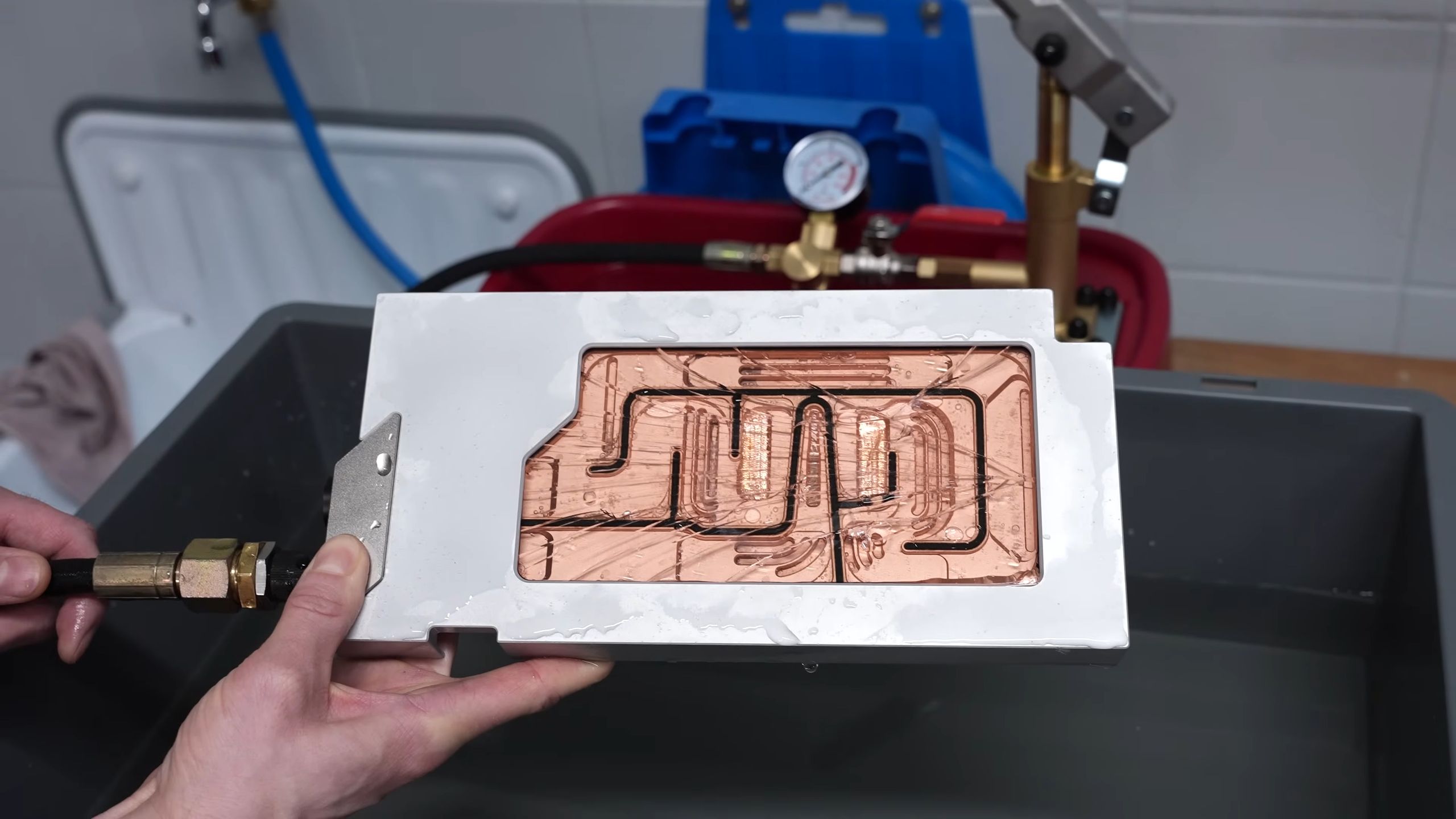
Glass, however, performed differently. A GPU water block with a glass window shattered at around five bars, its brittle nature leading to a more chaotic fracture pattern. Yet when the test moved to a smaller CPU water block with glass, the window defied expectations, enduring up to ten bars before breaking. This suggests that size and design play a role in glass’s durability—though it still falls short of acrylic’s resilience.
For most users, these results are reassuring. Even glass windows, which are more prone to cracking under extreme conditions, far exceed the pressures encountered in everyday liquid cooling setups. The real risk isn’t the window itself but the hoses, clamps, or pumps that might fail first. Still, Der8auer’s experiments highlight why acrylic remains the preferred choice for high-performance setups—unless, of course, you’re the type who enjoys watching hardware explode for science.
The tests weren’t just about data; they were about fun. Der8auer’s playful approach to destruction testing underscores a broader trend in the overclocking community, where pushing limits often blurs the line between engineering and entertainment. And while the lab might not be inviting to everyone, the insights gained could shape future designs in liquid cooling.