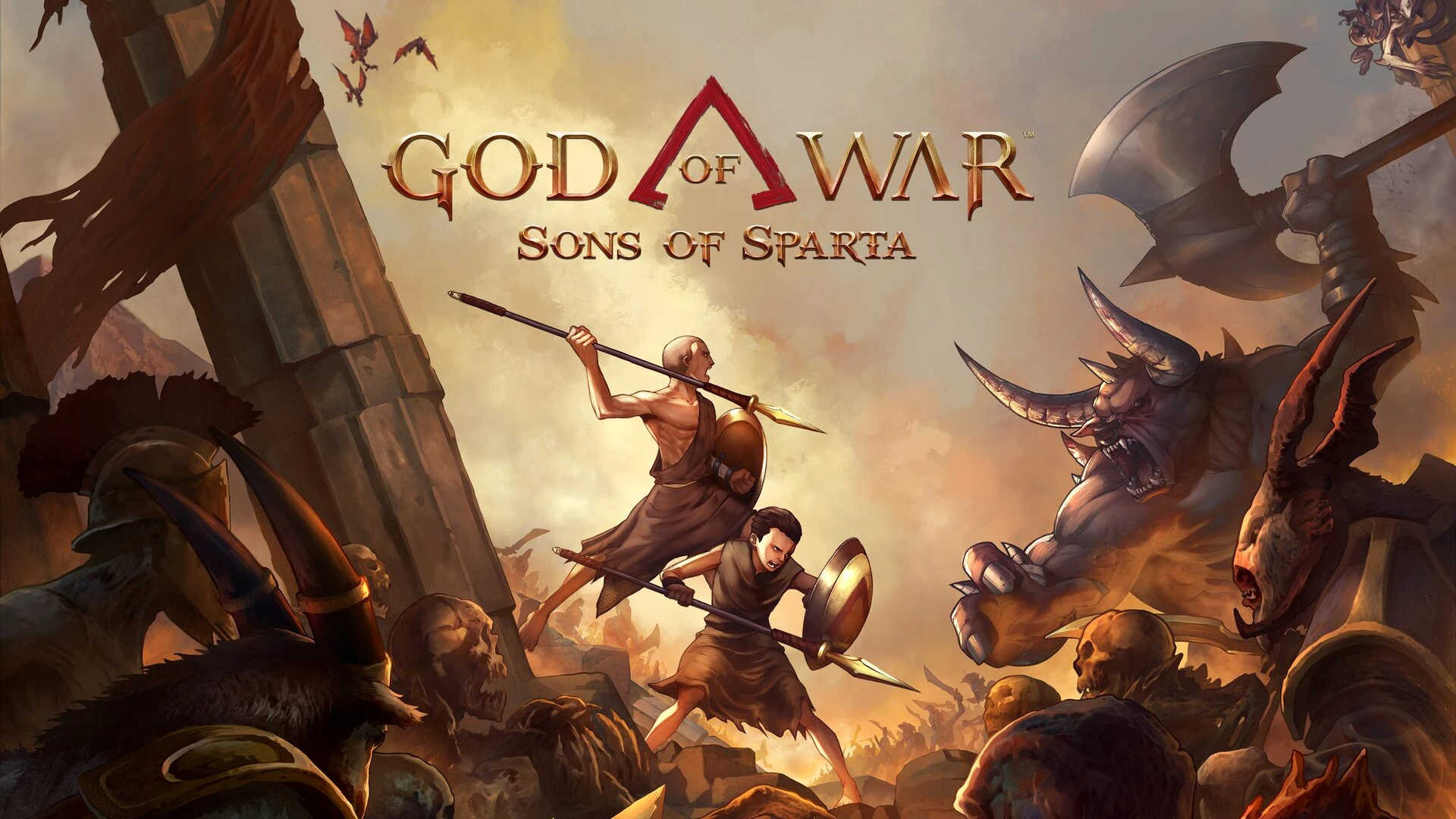
A God of War* game without bloodshed, without the Blades of Chaos, and without the towering, cinematic weight of Santa Monica’s blockbusters? That’s exactly what Sons of Sparta delivers—a prequel developed by Mega Cat Studios, a team better known for reviving classic Sega Genesis titles than crafting AAA epics. Released earlier this year for PlayStation 5, this entry reimagines Kratos’ origins as a Spartan cadet, but the result is less a legendary saga and more a generic Greek tragedy repackaged with pixel art.
The game’s premise is simple: Kratos searches for his missing brother, Deimos, while navigating the harsh landscapes of Laconia. Along the way, he receives divine gifts—abilities granted by the gods—that serve as both traversal tools and combat enhancements. Yet for all its ambition, Sons of Sparta struggles to justify its existence outside the God of War brand. The story could belong to any two Spartan brothers; the combat, though mechanically interesting, feels rigid compared to the fluidity of past entries; and the co-op mode, promised as a highlight, is buried deep in postgame content with limited appeal.
The Problem With Being a God of War Without the Fury
At its core, Sons of Sparta is a Metrovania—a genre Mega Cat Studios excels in, as seen in titles like Castlevania’s pixel-art revivals. The game’s strength lies in its exploration: biomes unfold gradually, rewarding players with new abilities that unlock hidden paths and secrets. The pixel art shines, making Laconia’s forests, mountains, and ruins feel distinct. Yet the combat, limited to a spear and shield, lacks the dynamic weapon-switching that defined earlier God of War games. Enemies, especially in later stages, become health sponges, forcing players to grind through Spirit-based stun mechanics rather than engaging in fluid, satisfying duels.
The co-op mode, a rare addition to the series, is a disappointment. Unlocked only after beating the game, it restricts players to a handful of combat challenges—hardly the shared experience fans might hope for. Even the narrative, while visually striking, fails to resonate beyond its surface-level Spartan themes. The brotherhood between Kratos and Deimos is the game’s emotional anchor, but without deeper ties to the franchise’s lore, it risks feeling like a missed opportunity.
A Pixel-Perfect World with Flawed Fundamentals
Despite its flaws, Sons of Sparta delivers on one front: exploration. The game’s world is packed with collectibles, secrets, and biome-specific objectives, ensuring no two playthroughs feel identical. Players can craft tools, solve puzzles, and uncover hidden lore—though the payoff is often overshadowed by the slog of combat. The 30-hour runtime is bloated, with padding that drags even the most dedicated completionists.
For $30, the game offers a polished but forgettable experience. It’s a solid Metrovania in its own right, but one that struggles to live up to the God of War name. Fans expecting a prequel that deepens Kratos’ mythos will leave disappointed. Those seeking a fresh, if generic, adventure might find it passable—but not legendary.
In the end, Sons of Sparta* is a game that plays it safe when the franchise has never done so before. It’s a Spartan’s tale, yes—but one that feels like any other.