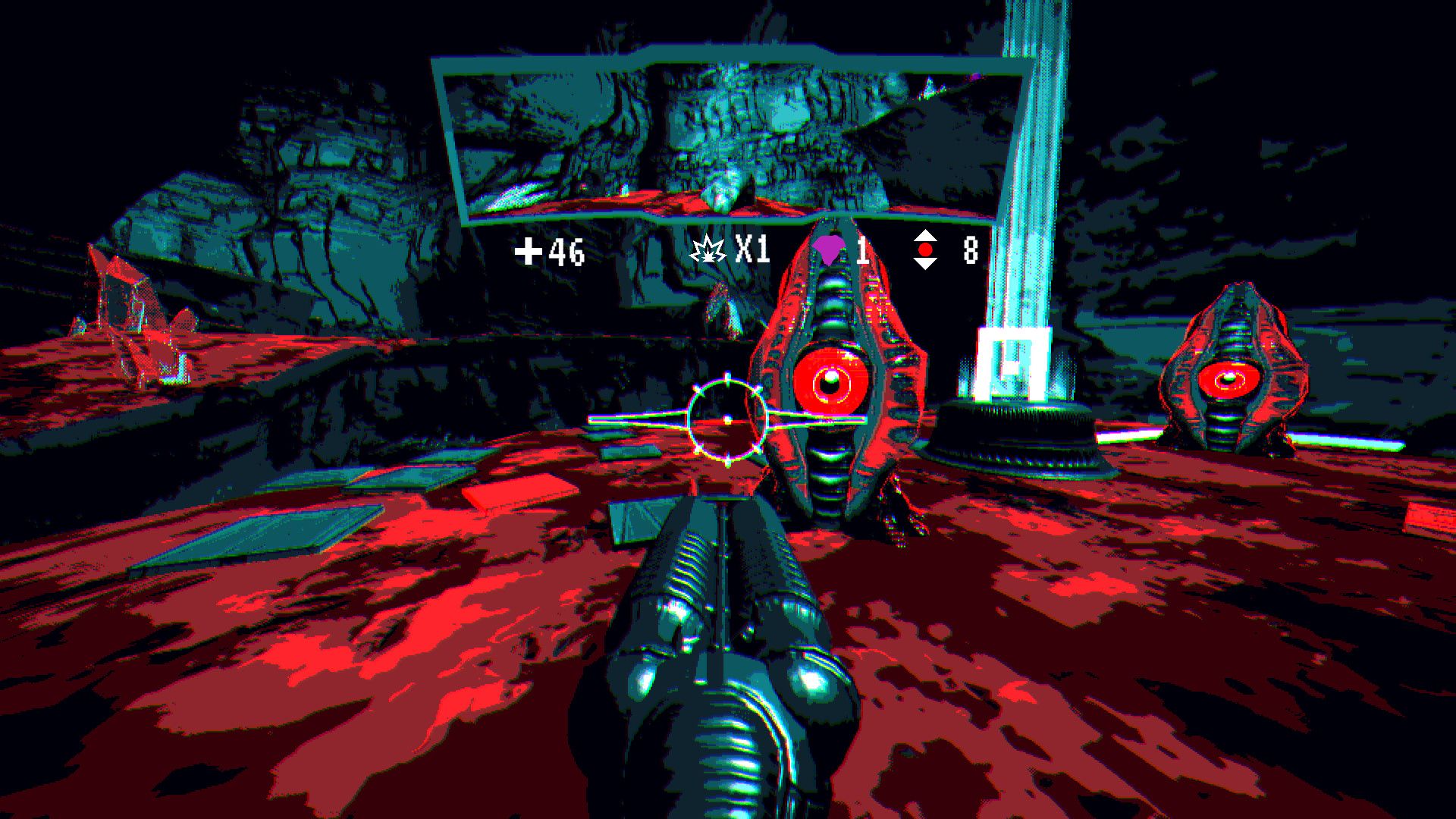
Few mechanics in first-person shooters are as divisive as the idea of fighting backward. Most games demand forward momentum, where players sprint into battle, flank enemies, and rely on peripheral vision for threats. Hellscreen flips that logic entirely. Left-click fires forward. Right-click fires backward—with a quadruple damage bonus when sprinting—and a secondary screen in the top-left corner toggles between a mini-map and a rear-view mirror. The result? A combat system where spatial awareness isn’t just helpful—it’s mandatory.
The game’s release as a standalone 1.0 version marks the end of a long, uncertain journey. Originally conceived as a three-episode campaign blending Metroidvania exploration with hub-world progression, Hellscreen entered Early Access in 2021 with high expectations. What followed was silence—a development lull that left players wondering if the project would ever see completion. Now, with two episodes cut due to budget constraints, the question remains: Is this a truncated dream or a refined experiment?
The Assumption: A Full Vision
When Hellscreen first emerged, its design document painted a vivid picture. Players would traverse a hub world, collecting Soul Orbs to unlock new areas and progress through three distinct episodes. Each episode would expand the map, introduce new enemies, and layer in narrative fragments hidden behind the player’s back—literally. The rear-view mechanic wasn’t just a gimmick; it was the foundation of a puzzle-like combat system where every decision mattered. Early builds demonstrated its potential: enemies lurking in blind spots, environmental traps triggered by movement, and a dynamic feel that rewarded players who mastered the art of looking backward.
Yet as development dragged on, the reality set in. The game’s creator, a solo developer with limited resources, faced a stark choice: scale back or abandon the project entirely. The Steam page’s disclaimer became a harbinger of what was to come: external funding was nonexistent, and the full vision was no longer feasible. For many, this signaled the death of Hellscreen*—or at best, a shadow of its former self.
What’s Actually Here
The game now available is a single, self-contained episode, but its core mechanics remain untouched. The rear-view mirror is still operational, enemies still ambush from behind, and the hub world retains its portal-based structure. What’s changed is the scale. Where players once anticipated a sprawling, multi-part journey, they now encounter a tighter, more focused experience—one that feels deliberate rather than incomplete.
To soften the blow, the developer has bundled *Hellscreen with Vaporwave Pinball*, another of their titles, at a 40% discount. The deal effectively makes *Vaporwave Pinball nearly free while reducing the cost of Hellscreen*, positioning the release as a value-driven opportunity. It’s a pragmatic move, but one that underscores the game’s evolution: from an ambitious, underfunded passion project to a polished, if smaller, experience.
The hub world, though smaller, still functions as the game’s backbone. Players collect Soul Orbs to unlock new areas, and the Metroidvania-inspired design ensures that every corner of the map holds secrets. The reduction in content hasn’t diminished replayability; instead, it has sharpened the focus, making *Hellscreen feel less like a half-finished product and more like a concentrated test of its core ideas.
Why It Still Stands Out
The rear-view mechanic isn’t just a novelty—it’s a fundamental rethinking of FPS combat. By forcing players to constantly monitor their surroundings, Hellscreen turns the genre’s usual forward-only focus into a dynamic, almost dance-like interaction. Even in its truncated form, the game delivers on its promise: a shooter where looking backward isn’t optional—it’s essential.
For the developer, the release is a bittersweet milestone. The game they envisioned—a sprawling, multi-episode experience requiring external funding—has instead become a testament to what can be achieved with limited resources and relentless iteration. Looking ahead, they’ve already expressed interest in revisiting first-person mechanics in future work, suggesting that Hellscreen may be the first chapter of a broader experiment.
Whether it becomes a cult classic or a footnote in gaming history, Hellscreen*’s legacy is already secure. It’s not just another shooter. It’s proof that even in an era of blockbuster FPS titles, there’s still room for bold, unconventional ideas—if players are willing to look beyond the usual perspective.
*Hellscreen is now available on Steam as a standalone purchase or as part of the discounted bundle with *Vaporwave Pinball*.