Intel has quietly begun shipping its most powerful **Arc Pro** GPUs yet, the **B70** and **B65**, under the codenamed ‘Battlemage’ lineup. These cards are not designed for gamers but for AI workloads and professional visualization, where massive memory and compute power are critical. The move signals Intel’s push into high-end markets traditionally dominated by AMD and NVIDIA, though with a key caveat: gaming variants remain on hold.
At the heart of both GPUs is the **BMG-G31** die, a high-end architecture previously rumored but now confirmed in production. The **Arc Pro B70** packs **32 Xe2 cores**—equivalent to **4,096 FP32 cores**—paired with **32GB GDDR6** memory over a **256-bit bus**. This doubles the core count and memory capacity of Intel’s previous **Arc Pro B60**, making it a serious contender for AI training and rendering tasks.
The smaller **Arc Pro B65** scales down the die to **20 Xe2 cores** (2,560 FP32 cores) but retains **32GB GDDR6**, a notable upgrade over the **Arc Pro B60’s 24GB**. Both cards are expected to launch in the first quarter of this year, with industry leaks suggesting February or March timelines.
Why the focus on professionals?
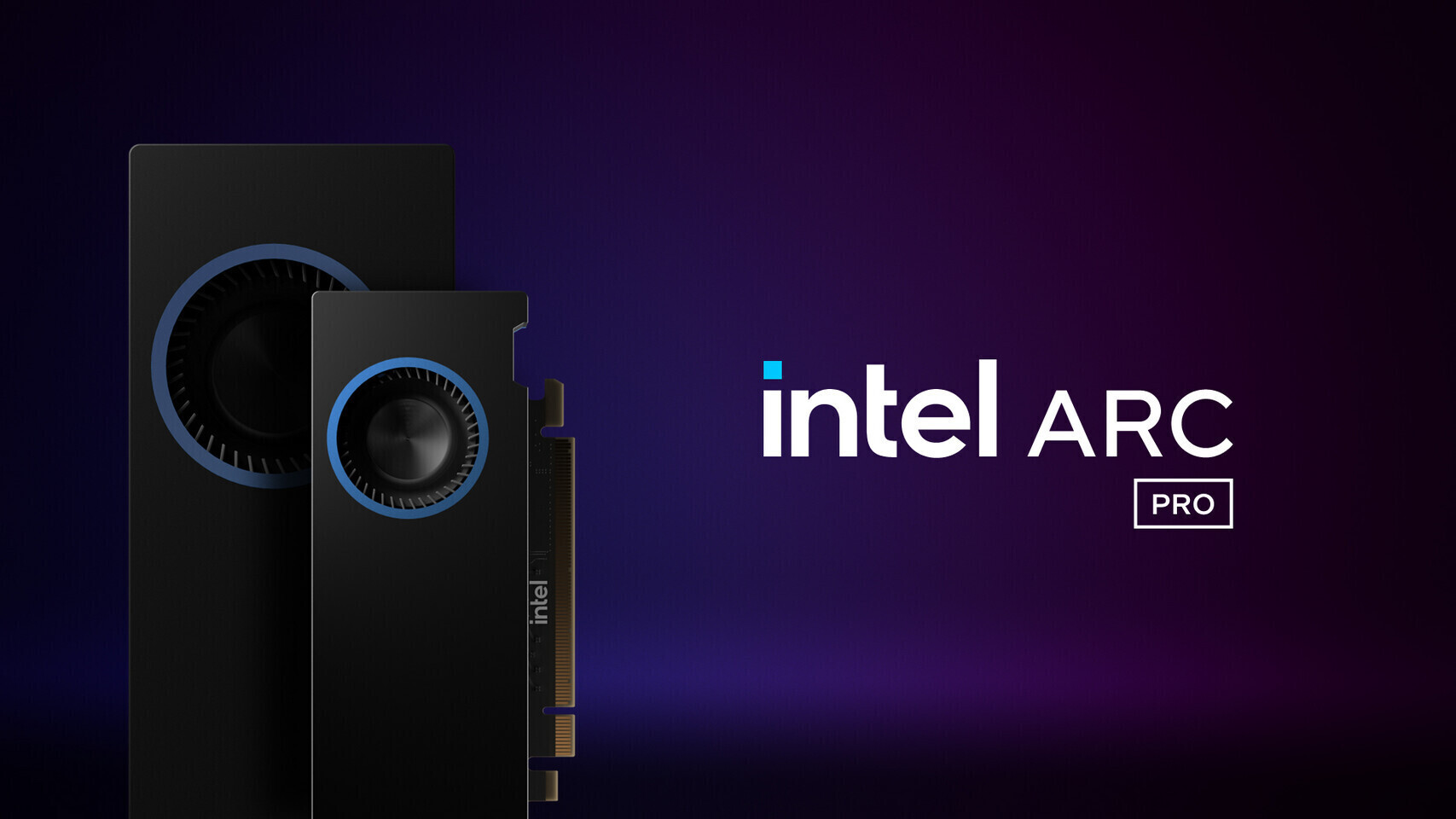
While Intel’s **Arc Pro** lineup has struggled to gain traction in gaming, the company is betting on AI and workstation markets where memory bandwidth and compute density matter more than raw gaming performance. The **B70** and **B65** address a growing demand for high-memory GPUs, particularly for **LLM development** and **3D rendering**, where NVIDIA and AMD currently hold strong leads. Pricing details remain under wraps, but Intel’s **Arc Pro B50** ($349) suggests these may target the mid-to-high-end workstation segment.
A gaming GPU still missing in action
Despite the ‘Battlemage’ branding—evoking power and performance—Intel’s **Arc B770** gaming GPU, which would use the same BMG-G31 die, has not shipped. Reports indicate board partners have received the dies for **professional-only** designs, with no gaming variants in sight. The delay suggests Intel is prioritizing its **Pro-Viz** (professional visualization) strategy over consumer gaming, where competition from AMD’s **RX 9000** series and NVIDIA’s dominance remains fierce.
For now, Intel’s **Core Ultra 300** series and upcoming **DDR6** advancements may take center stage at **CES 2026**, while the ‘Battlemage’ GPUs carve out a niche in AI and workstation markets. Whether this shift will translate into broader adoption—or simply reinforce Intel’s role as a secondary player in high-performance computing—remains to be seen.