Intel has unleashed its most ambitious mobile chip yet—the Core Ultra X9 388H—marking the debut of its Panther Lake series. Built on an 18A process node, this 16-core beast (4 P-cores, 8 E-cores, and 4 LPE cores) isn’t just a performance upgrade; it’s a full-stack reimagining of how mobile CPUs handle computation, AI, and graphics. The question now is whether Intel’s bold bet on a unified architecture—one that ditches the dual-chip approach of Lunar Lake and Arrow Lake—can outpace competitors in a market still grappling with memory shortages and AI-driven demand.
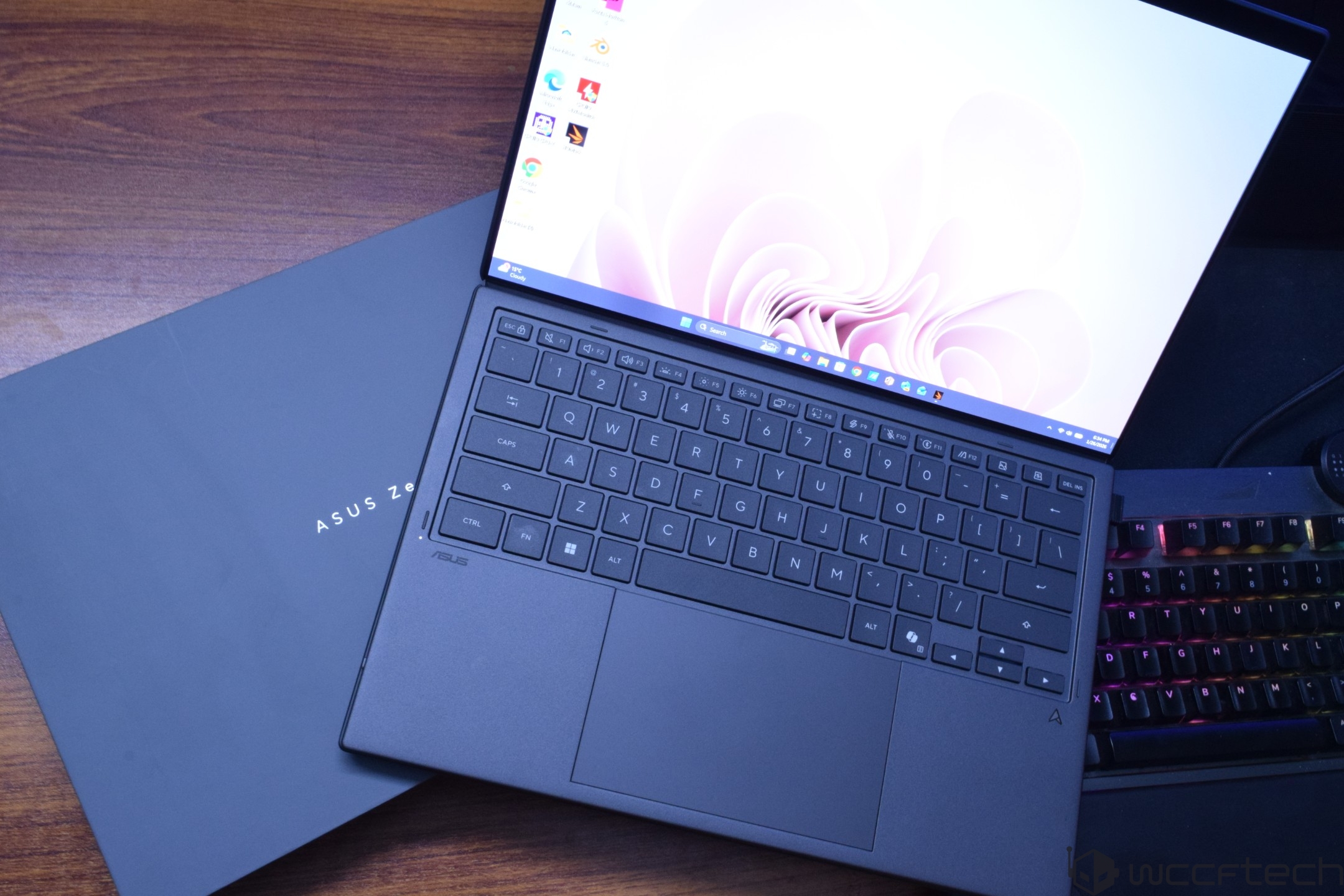
The ASUS Zenbook Duo 2026 (UX8407), equipped with the X9 388H, serves as Intel’s flagship showcase. It’s a machine designed for power users, blending brute-force processing with AI capabilities that could redefine everything from creative workloads to on-device machine learning. But with AMD and Qualcomm closing the gap—and Intel’s own past missteps fresh in mind—this chip has to deliver.
What Power Users Get: A 16-Core Juggernaut with AI Built In
The Core Ultra X9 388H isn’t just faster—it’s a rearchitecture. Intel’s hybrid design now includes LP-E (Skymont) cores, optimized for efficiency while still contributing to performance. These join the Cougar Cove P-cores and Darkmont E-cores in a package that hits 5.1 GHz on P-cores and 3.8 GHz on E-cores, with a 25W–80W TDP range that lets it scale from thin-and-light to high-performance configurations. The inclusion of an Arc B390 iGPU (12 Xe3 cores, 2.5 GHz, 120 TOPS INT8) means this chip can handle everything from light gaming to AI-accelerated workloads without needing a discrete GPU.
For those who need raw power, the numbers speak for themselves
- 3DMark CPU Profile: 24.4% multi-core boost over last-gen, with near-linear scaling across thread counts.
- AIDA64 Memory: Sub-90ns latency at 9600 MT/s LPDDR5X, outperforming competitors in both bandwidth and efficiency.
- Geekbench 6: 17,819 multi-core score—nearly 40% ahead of AMD’s Ryzen AI 9 365 in pure computational throughput.
- AI Performance: 50 TOPS NPU5 acceleration, with support for OpenVINO, DirectML, and ONNX—making it a contender for on-device AI tasks like text generation and real-time inference.
This isn’t just about brute numbers, though. The XeSS MFG upscaling in the Arc B390 could make integrated graphics viable for 1080p gaming, while the NPU’s efficiency means AI tasks like video transcription or image processing won’t drain battery life as quickly as they might on less optimized chips.
Advanced Features: The Fine Print for Enthusiasts
Intel hasn’t just ticked boxes—it’s redefined them. Here’s what sets the X9 388H apart
- Hybrid Core Flexibility: The 4 LP-E cores (Skymont) act as a buffer between P-cores and E-cores, improving efficiency in workloads where traditional E-cores might struggle. These cores clock up to 3.7 GHz and are optimized for low-power tasks while still contributing to performance.
- Cache and Memory: A massive 18 MB L3 + 21 MB L2 cache ensures data stays close to the CPU, while the 9600 MT/s LPDDR5X (soldered) delivers 77 GB/s bandwidth—critical for AI and memory-intensive apps.
- AI Frameworks: Support for OpenVINO, DirectML, ONNX RT, and WebNN means developers can leverage the NPU for everything from object detection to neural network acceleration without sacrificing compatibility.
- Thermal and Power: The 15W–80W range is deceptive—this chip can throttle aggressively under load, but in the right chassis (like the Zenbook Duo’s vapor chamber cooling), it sustains high clocks for extended periods.
- Graphics Capabilities: The Arc B390 isn’t just about raw TOPS. It includes Xe3 architecture with ray tracing units and AV1 encode/decode, making it a viable option for content creators who need both compute and media acceleration.
That said, there are tradeoffs. The soldered LPDDR5X means no future upgrades, and the 1 TB SSD in the ASUS model is generous but not future-proof. Power users who need expandability will want to check for configurations with discrete GPUs or PCIe slots.
Where It Fits—and Where It Falls Short
The Core Ultra X9 388H is Intel’s answer to a fragmented market. It competes with
- AMD’s Ryzen AI 400 (e.g., Ryzen AI 9 365): Better single-thread performance but less cache and AI acceleration.
- Qualcomm’s Snapdragon Elite X2: More efficient but lacks the raw multi-core punch for demanding workloads.
- Intel’s own Core Ultra 9 285H: Similar architecture but with fewer cores and lower TDP.
For creators, AI researchers, and power users who need both compute and graphics, this chip is a standout. The Arc B390 can handle light gaming or rendering, while the NPU makes on-device AI practical. However, gamers and professionals relying on discrete GPUs may find the integrated solution limiting—though XeSS MFG could bridge that gap for some.
The real test will be battery life and thermal management in real-world use. Early benchmarks suggest efficiency is improved, but only time will tell how the X9 388H handles sustained workloads in a thin-and-light chassis like the Zenbook Duo.
Who Should Care?
- AI Enthusiasts: The NPU5 and framework support make this a compelling choice for on-device machine learning.
- Content Creators: AV1 encode/decode and Xe3 graphics mean faster video editing and rendering.
- Power Users: The 16-core hybrid design excels in multi-threaded workloads, from compilation to virtualization.
- Gamers (with caveats): Integrated Arc B390 can handle esports titles at 1080p with upscaling, but AAA games will still need a discrete GPU.
- Budget-Conscious Buyers: The lack of upgradeability (soldered RAM) and reliance on integrated graphics may be dealbreakers.
Intel’s Panther Lake series is a high-stakes gamble. The Core Ultra X9 388H delivers on paper, but whether it can outpace AMD and Qualcomm in the real world remains to be seen. For now, it’s the most capable mobile chip Intel has ever shipped—and a sign that the company is doubling down on unified architectures in an era where AI and performance are merging.