Intel is going all-in on desktop dominance. The company’s upcoming Nova Lake-S lineup isn’t just an incremental upgrade—it’s a full architectural reset, targeting everything from mainstream gaming to high-end workstation loads. With a top-tier 52-core CPU, a new LGA 1954 socket, and power limits that spike to 700W, Nova Lake-S is Intel’s most aggressive play yet to reclaim performance leadership from AMD.
The catch? This isn’t for everyone. The dual-compute-tile designs and bLLC (Big Last-Level Cache)—Intel’s answer to AMD’s 3D V-Cache—are aimed squarely at professionals, not gamers. But even for creatives, the power demands and socket change mean motherboard manufacturers face a steep challenge. Here’s what’s changing, who it’s for, and why Intel’s gamble could reshape the desktop CPU market.
Key specs at a glance
- Top-tier model: Core Ultra 9 (16 P-Cores + 32 E-Cores + 4 LP-E Cores, 150W)
- High-end workstation: 52-core dual-compute-tile config (2x 8+16 cores + 4 LP-E, 700W peak)
- Cache: Up to 288MB bLLC (vs. AMD’s 3D V-Cache on a single tile)
- Memory: DDR5-8000 MT/s (1DPC 1R), PCIe 5.0 (36 lanes max)
- Socket: LGA 1954 (replacing LGA 1851)
- Power limits: PL1/PL2/PL3 up to 150W/496W/854W (dual-tile)
- iGPU: Xe3P (25% faster than Xe3, hybrid Xe3P/Xe4 architecture)
- NPU: NPU6 (74 TOPS, 5.6x Arrow Lake)
- Chipset: 900-series (Z990, W980, Q970, B960) with PCIe 5.0 PCH support
- Launch: H2 2026 (likely Computex)
The numbers tell a clear story: Intel isn’t just refreshing Arrow Lake. It’s building a platform that competes head-on with AMD’s Ryzen 9000 series—with more cores, more cache, and far higher power budgets. But the real question is whether motherboard makers can keep up.
The dual-tile dilemma: Why 700W isn’t for gamers
Intel’s new dual-compute-tile design is the most radical change since the shift to multi-chip modules. Instead of cramming all cores onto a single die, Nova Lake splits performance cores across two tiles, each paired with 144MB of bLLC cache. The result? A symmetric cache layout that avoids AMD’s 3D V-Cache scheduling headaches—but at a cost.
That cost is power. A fully unlocked 52-core Nova Lake-S can hit 700W under PL3 limits, nearly double Arrow Lake’s peak. But here’s the twist: most motherboards won’t support that level of power. Intel’s 900-series chipsets are designed to scale back, with only high-end Z990 and W980 boards handling the full workload. For gamers, the message is simple: stick with a single-tile config (like the 16-core Ultra 9) or face motherboard limitations.
Even then, Intel isn’t forcing users to max out power. The platform supports per-core power gating, letting you disable entire compute tiles for efficiency. A 4-core E-core workload? Nova Lake can run on a single tile with minimal overhead. It’s a feature that could make it appealing to power-conscious creators—but only if motherboard makers implement it.
Cache war: Intel’s bLLC vs. AMD’s 3D V-Cache
AMD’s 3D V-Cache has been a thorn in Intel’s side for years. By stacking cache vertically on select cores, Ryzen 9000 models deliver massive performance spikes in latency-sensitive workloads—at the cost of uneven cache distribution. Intel’s answer? bLLC (Big Last-Level Cache), spread evenly across both compute tiles.
The top-tier 52-core and 44-core models get 288MB of bLLC total (144MB per tile), while mid-range chips like the 24-core Ultra 5 get 144MB. The symmetry matters. Unlike AMD’s approach, where the OS must carefully schedule tasks to avoid cache-starved cores, Intel’s design ensures every core has equal access. For rendering, simulation, or AI workloads, that could translate to smoother performance—but only if software is optimized to use the cache effectively.
There’s a catch: not all Nova Lake-S chips will have bLLC. Entry-level models (6-core to 12-core) stick with traditional L3 cache, making them more akin to Arrow Lake refreshes. The high-end bLLC SKUs are explicitly for professionals who need every ounce of cache bandwidth.
Who’s this for? A three-tier platform

Nova Lake-S isn’t a single product line—it’s three. Understanding which tier fits you depends on your needs
- Gamers & mainstream users: Single-tile configs (8P+16E to 16P+32E cores, 65W–150W). These will run on standard Z970/W980 motherboards with PCIe 5.0 and DDR5-8000 support. Think of them as Arrow Lake on steroids—better for productivity but not a game-changer for pure FPS.
- Creators & power users: Mid-range bLLC models (24–40 cores, 125W–150W). These target video editors, 3D artists, and engineers who need cache headroom but don’t require 700W setups. The 24-core Ultra 5 with 144MB bLLC is likely the sweet spot here.
- High-end workstations: Dual-tile bLLC (48–52 cores, 150W–700W). For rendering farms, AI training, or scientific computing where every thread and every MB of cache counts. Expect these to compete directly with Threadripper, but at a fraction of the price—if motherboards can handle the power.
The platform also introduces Intel’s Xe3P iGPU, a 25% upgrade over Xe3 with hybrid Xe4 support for display outputs. While not a gaming GPU, it could be useful for light content creation or as a fallback for budget builds.
The motherboard crunch: LGA 1954 and the 900-series gamble
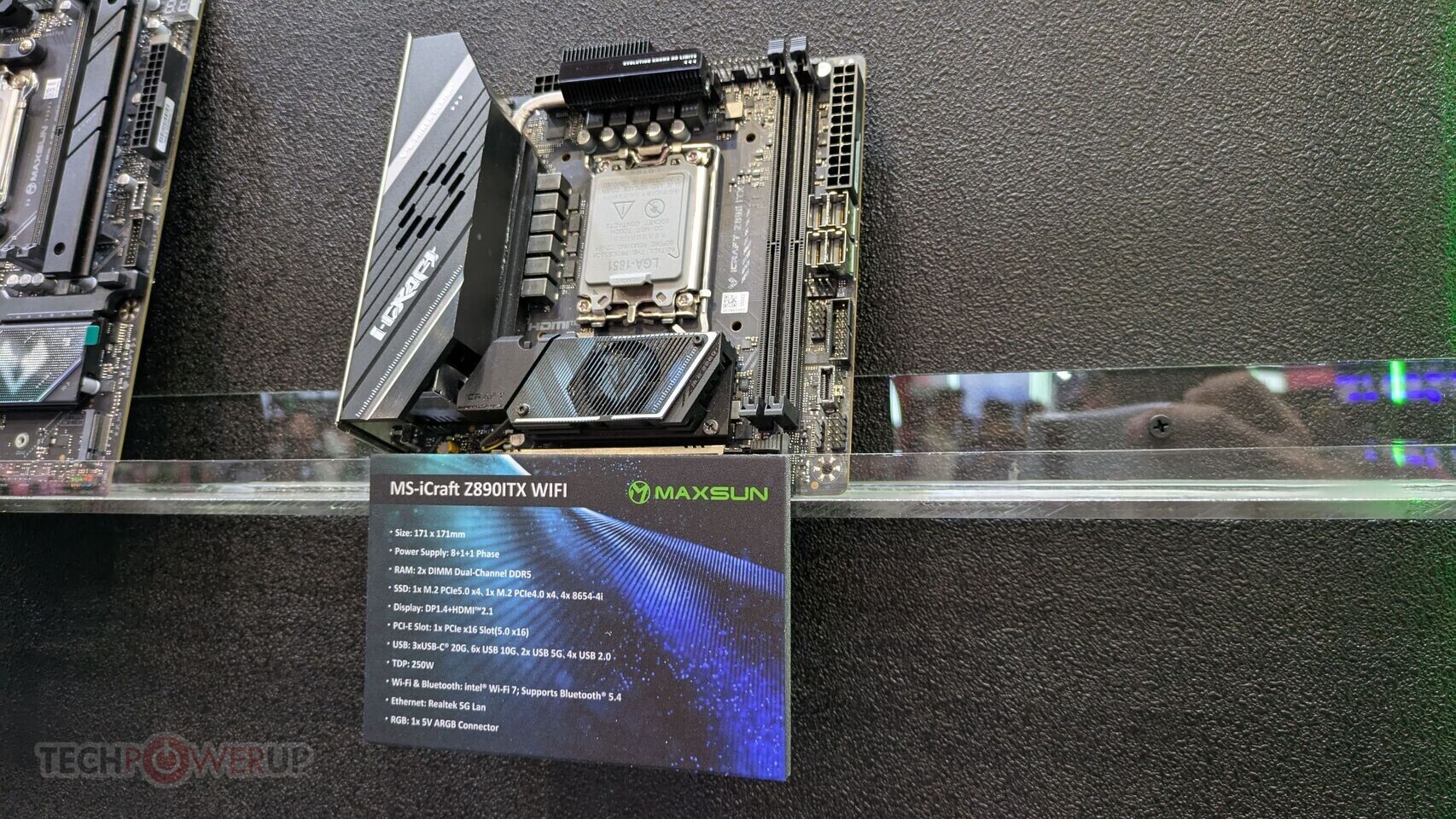
Intel’s shift to LGA 1954 is a double-edged sword. On one hand, it future-proofs the platform; on the other, it forces motherboard makers to redesign everything from scratch. The 900-series chipsets—Z990, W980, Q970, and B960—bring PCIe 5.0 PCH lanes and up to 48 PCIe lanes total, but support varies wildly
- Z990: Full PCIe 5.0, 48 lanes, USB4, and overclocking for enthusiasts.
- W980: Workstation-focused with ECC memory support and no overclocking.
- Q970: Mid-range with PCIe 4.0 PCH and limited USB4.
- B960: Budget-friendly, PCIe 4.0 only, no overclocking.
The power delivery challenge is real. A 52-core Nova Lake-S could push 854W under PL3, but most Z990 boards won’t support that. Early leaks suggest only high-end models will include VRM upgrades for dual-tile CPUs. For everyone else, Intel is banking on dynamic power scaling—letting users cap TDP via BIOS or software.
and the NPU6: A foot in the data center
Nova Lake-S isn’t just about brute-force performance. Intel’s NPU6 delivers 74 TOPS of AI acceleration—5.6x faster than Arrow Lake’s NPU. That puts it in the same league as Apple’s M-series chips and NVIDIA’s RTX 40-series for inference tasks. While not a replacement for a dedicated GPU, it could be a game-changer for AI-driven workflows like upscaling, denoising, or real-time transcription.
The NPU6’s integration with the Xe3P iGPU suggests Intel is positioning Nova Lake-S as a unified compute platform—one that handles AI, graphics, and general workloads without external hardware. For developers, that could mean simpler software stacks; for end users, it might translate to longer battery life in future laptops (if Intel ever brings Nova Lake to mobile).
When can you buy it?
Intel’s official launch is targeted for H2 2026, with Computex as the most likely venue. However, supply chain hurdles—including reliance on TSMC’s N2 node for compute tiles—could push delays. If Arrow Lake’s rollout is any indication, expect a staggered release with high-end SKUs arriving first.
For now, the biggest unknown is adoption. Motherboard makers have until mid-2026 to design LGA 1954 boards, and not all will support the full power range. If Intel’s gamble pays off, Nova Lake-S could redefine high-end desktop computing—but only if the ecosystem follows.
One thing is certain: this isn’t Arrow Lake 2.0. Intel is betting that by combining dual-tile symmetry, bLLC cache, and extreme power scaling, it can finally outflank AMD in the performance wars. Whether that works depends on whether the rest of the industry is ready to play along.