When AMD’s Ryzen 9 9950X3D pushes power draw to 300W, most microATX motherboards falter. Not this one. Maxsun’s new MS-Terminator B850M PRO II WIFI7 defies expectations with a 12+2+1 VRM configuration, ensuring stable operation for the platform’s most demanding chips—including the 9950X3D—without sacrificing space efficiency.
The board’s feature set reads like a wishlist for productivity and gaming: two PCIe 5.0 x4 M.2 slots for NVMe SSDs, a single PCIe 4.0 x4 M.2 for secondary storage, and a full-length PCIe 5.0 x16 slot for GPUs like the RTX 5090. Connectivity upgrades include Wi-Fi 7 (via MediaTek MT7825), Bluetooth 5.4, and a 2.5G Ethernet port (Realtek RTL8125D), catering to users who need both speed and low latency. USB connectivity is equally thorough, with dual 10G USB-C ports at the rear and a mix of USB 5G and USB 2.0 options.
Memory support tops out at DDR5-8000 across four slots, though the board lacks DDR6 compatibility—a limitation that may matter less as DDR6 adoption remains speculative for consumer platforms.
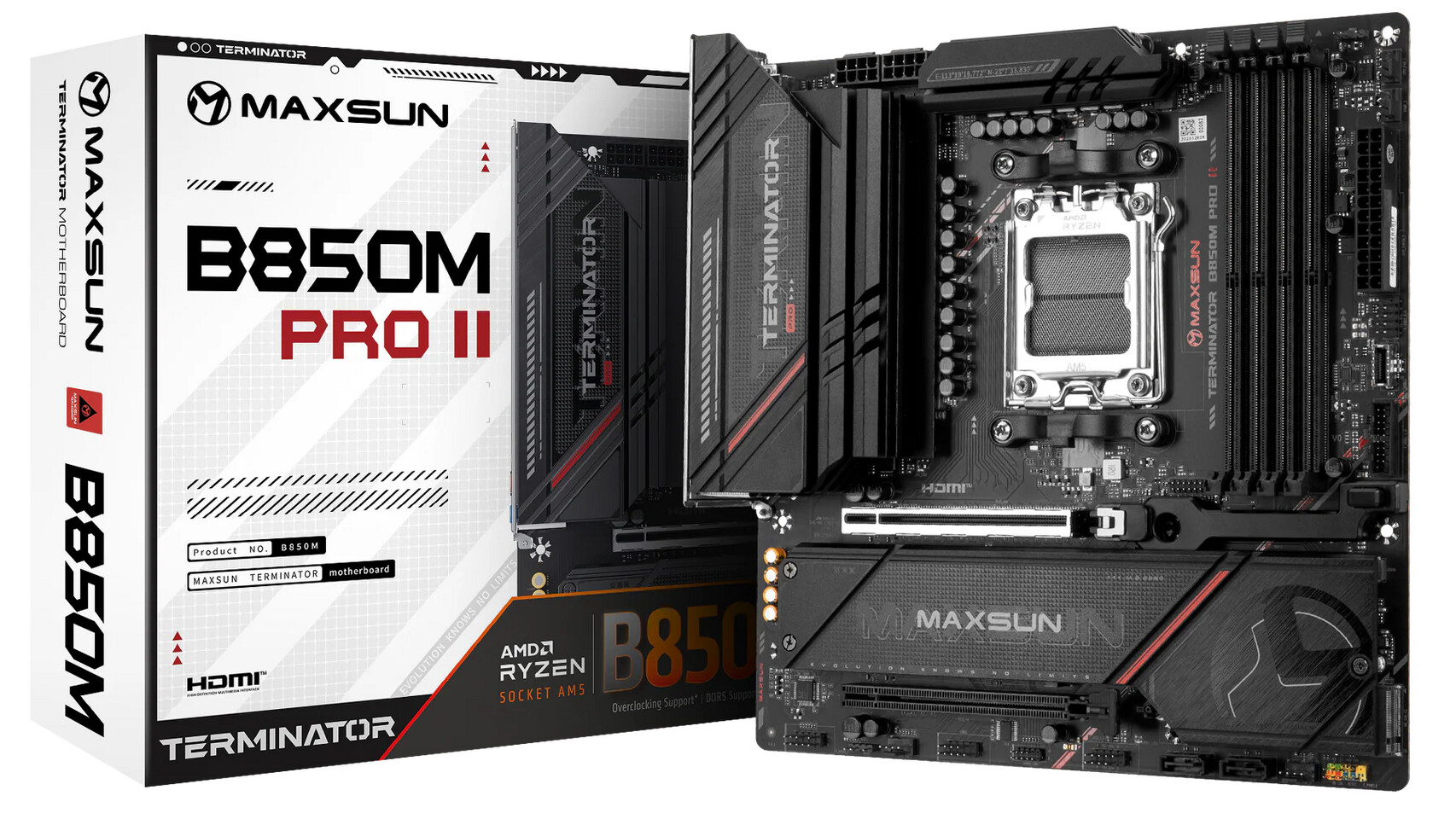
Key specs
- Form factor: MicroATX
- Chipset: AMD B850
- Socket: AM5
- VRM: 12+2+1 phase, supports up to 300W CPUs
- Memory: 4x DDR5 DIMM slots, up to 192GB, DDR5-8000
- Storage: 2x PCIe 5.0 x4 M.2, 1x PCIe 4.0 x4 M.2
- Expansion: 1x PCIe 5.0 x16, 1x PCIe 4.0 x4
- Connectivity: Wi-Fi 7 (MTK MT7825), Bluetooth 5.4, 2.5G Ethernet (Realtek RTL8125D)
- USB: Dual USB-C 10G (rear), 6x USB 5G, 8x USB 2.0
- Audio: Realtek ALC897
- BIOS: PTM UI (redesigned with mobile-inspired navigation)
This isn’t just about raw specs, though. The B850M PRO II WIFI7’s VRM design—uncommon in microATX—allows it to handle the Ryzen 9 9950X3D’s thermal demands without requiring a full ATX case. For content creators or power users constrained by space, that’s a game-changer. The inclusion of Wi-Fi 7 and 2.5G Ethernet also positions it well for future-proofing, though real-world benefits will depend on router and peripheral support.
One caveat: Maxsun hasn’t disclosed pricing or a release date. Given the board’s feature density, it may command a premium, but the lack of DDR6 support could offset some costs for early adopters. For now, it’s a compelling option for those building high-performance AM5 systems in compact enclosures.