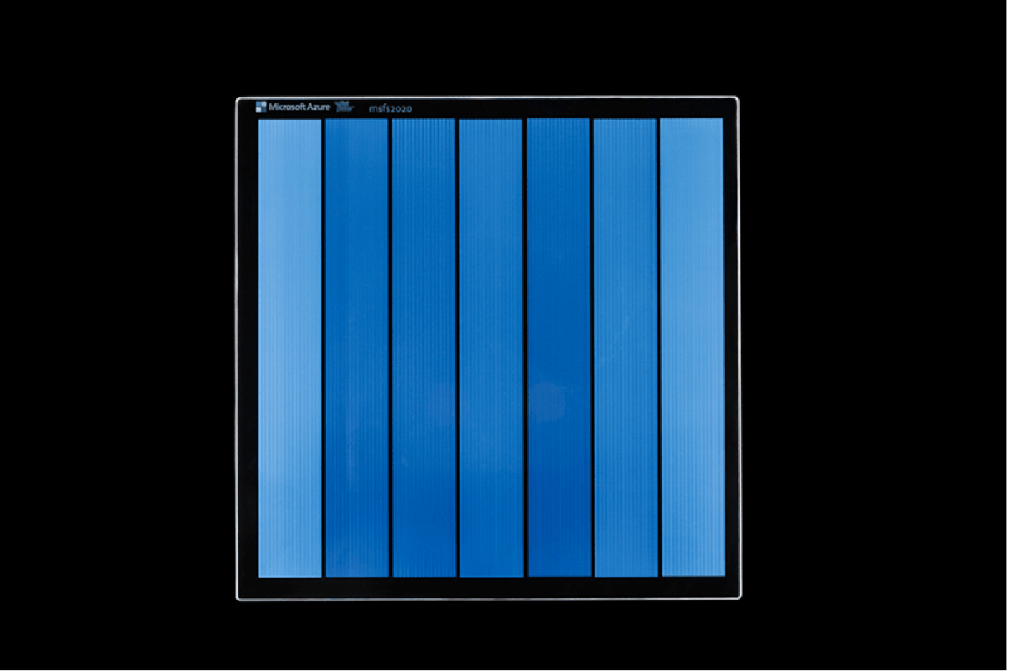
For centuries, humanity has struggled to preserve knowledge across generations. Paper degrades, ink fades, and even the most robust digital storage—like hard drives or optical discs—eventually succumbs to bit rot or physical decay. Now, Microsoft has taken a step toward solving this problem by making its Project Silica glass storage technology work with a far more accessible material: borosilicate glass, the same kind used in Pyrex ovenware.
The breakthrough addresses a critical hurdle. Since its inception in 2019, Project Silica has relied on specialized fused glass, limiting its practicality. By switching to borosilicate—a material already mass-produced for kitchenware and lab equipment—the project could one day offer a 10,000-year archival solution without requiring exotic or expensive ingredients.
How it works remains rooted in holographic data encoding. Instead of storing bits as magnetic fields or laser pits, Silica etches information into glass using phase voxels—tiny, three-dimensional changes in the glass’s refractive properties. These voxels, written in parallel, allow for far denser storage than traditional methods. The latest advancement simplifies the writing process: where polarization-based voxels once required complex setups, phase voxels now need just two pulses to encode data.
Machine learning plays a dual role. First, it optimizes how data is arranged within the glass to minimize degradation over time. Second, it predicts how the glass itself might age, helping engineers design storage that remains legible for millennia. The goal isn’t just longevity—it’s permanence. While no medium lasts forever, borosilicate glass resists corrosion, temperature shifts, and even nuclear radiation far better than plastic or metal.
A Solution for What Ails Archival Storage
Traditional archival media—tape, DVDs, even flash drives—face an existential threat: obsolescence. Formats become unreadable when hardware dies, software updates break compatibility, or physical media degrades. Microsoft’s test cases underscore the stakes. In 2019, the company etched Superman* onto glass to demonstrate its durability. More recently, it archived music for future generations, proving the concept could preserve cultural artifacts long after current storage tech is dust.
The shift to borosilicate glass isn’t just about materials. It’s about feasibility. Pyrex is cheap, abundant, and easy to work with—qualities that could finally bridge the gap between lab research and real-world deployment. Yet challenges remain. Reading the data requires specialized lasers and decoders, and no one knows if civilizations 10,000 years from now will have the tools—or inclination—to revive it. But if Microsoft’s research translates to commercial products, it could redefine what ‘permanent’ storage means.
From Lab to Market: What’s Next?
The company has completed the research phase, publishing its findings in Nature*. But production timelines are unclear. Microsoft emphasizes learning from the process rather than rushing to market, suggesting this is still an experimental phase. Phase voxels, while faster to write, may not yet match the density of earlier methods—a tradeoff that could influence adoption.
For institutions like libraries, governments, or media archives, the promise is undeniable: a storage medium that outlasts human history. Yet for most consumers, the technology remains years away. If Microsoft ever commercializes Silica, it won’t replace USB drives or cloud backups. Instead, it would serve as a last-resort vault for data that must survive—no matter what.