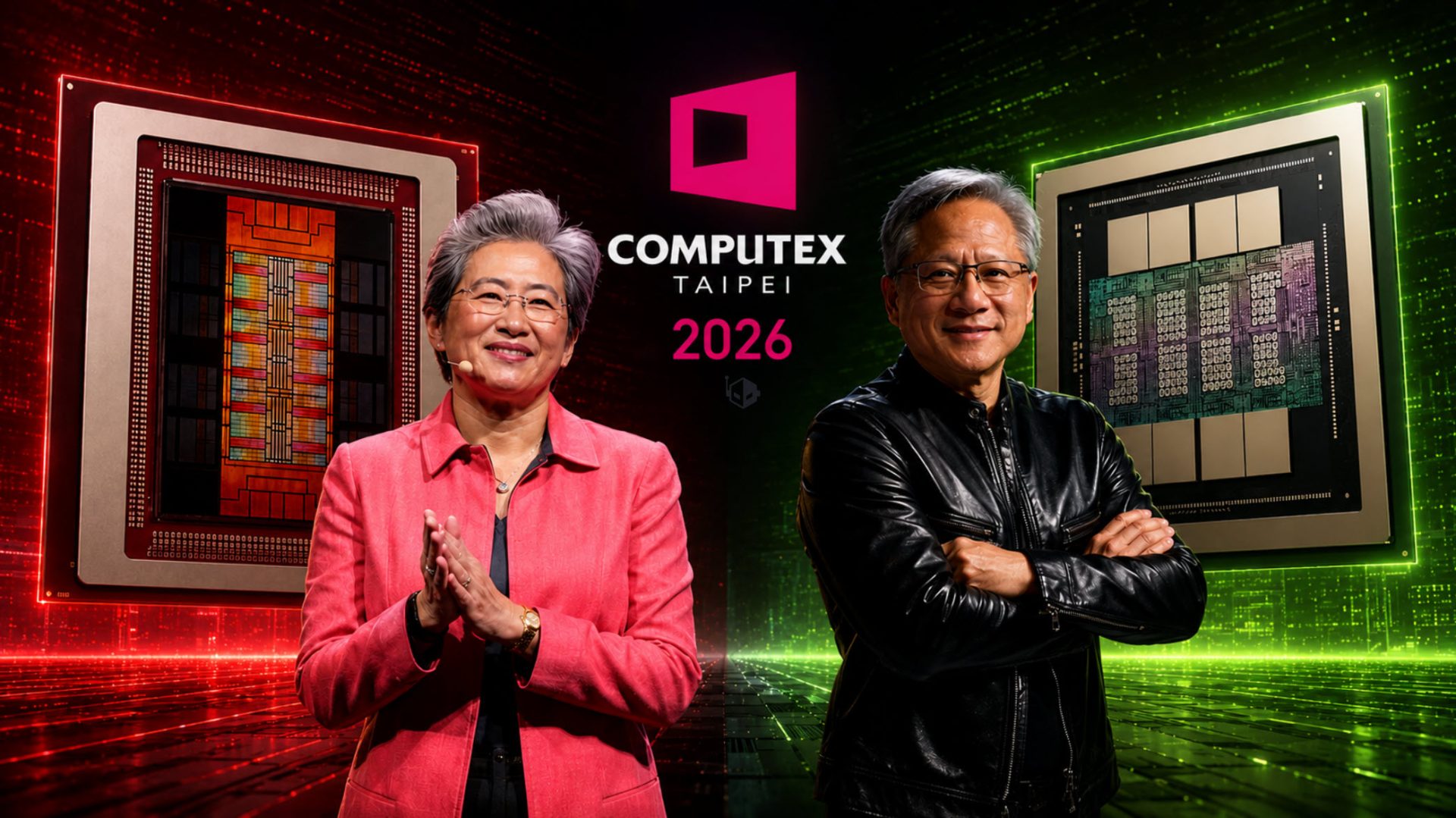
Computex has long been a stage for GPU announcements, but this year’s lineup from NVIDIA and AMD feels different. The focus isn’t just on raw power—it’s on redefining what creators can do with that power.
The RTX 50 series, with its DLSS 4 support and AI-accelerated workflows, and AMD’s RDNA 4 GPUs, pushing ray tracing to new heights, are more than just incremental upgrades. They’re signals of a broader shift: computing is becoming smarter about how it handles creative workloads.
For the enthusiast
The specs tell part of the story. NVIDIA’s RTX 5090, for example, packs 18,432 CUDA cores and a 24GB VRAM configuration, pushing the boundaries of what’s possible in real-time rendering. AMD isn’t far behind with its RDNA 4 GPUs, offering competitive performance while refining ray tracing efficiency.
- NVIDIA RTX 50 series: 18,432 CUDA cores (RTX 5090), DLSS 4 support, 24GB VRAM options
- AMD RDNA 4 GPUs: Improved ray tracing, increased core counts, optimized memory bandwidth
That’s the upside—here’s the catch. These cards aren’t just about raw numbers. They’re about how those numbers translate into real-world productivity. For creators, that means smoother workflows, but it also means higher expectations for software to keep up.
For everyday use
The real impact isn’t in benchmarks; it’s in the day-to-day. NVIDIA’s AI-driven features, like DLSS 4, aren’t just about boosting frame rates—they’re about making rendering more intuitive. AMD’s focus on ray tracing efficiency means creators can experiment with lighting and materials without waiting for hours between iterations.
But not every creator will see immediate value. The RTX 50 series, in particular, is a premium offering, meaning the benefits are most pronounced for professionals who can afford the investment. For hobbyists or those on tighter budgets, the jump to these new GPUs might feel less transformative.
The bigger picture
The shift at Computex isn’t just about hardware—it’s about how that hardware integrates into broader ecosystems. NVIDIA is doubling down on AI acceleration, making its GPUs more than just rendering powerhouses. AMD, meanwhile, is refining its approach to ray tracing, aiming to make it a more accessible tool for creators.
For those who rely on these cards daily, the changes are meaningful. The RTX 50 series and RDNA 4 GPUs aren’t just faster—they’re smarter about how they handle creative tasks. That’s the kind of progress that matters most to professionals who live in their workflows.