NVIDIA has announced a strategic partnership with CoreWeave, injecting $2 billion into the neocloud provider while securing first access to its upcoming **Vera CPU** architecture. The deal marks a significant pivot for NVIDIA, which is positioning Vera as a standalone high-performance CPU option—one that could redefine how data centers handle compute workloads beyond GPUs.
This isn’t just another investment. It’s a calculated move to address a growing bottleneck in AI infrastructure: the CPU. As agentic AI applications demand more processing power, NVIDIA is betting that its custom ARM-based **Olympus** cores—packed into Vera—will deliver the performance needed to keep pace with GPU advancements.
Why Vera CPUs Matter: A Leap Beyond Grace
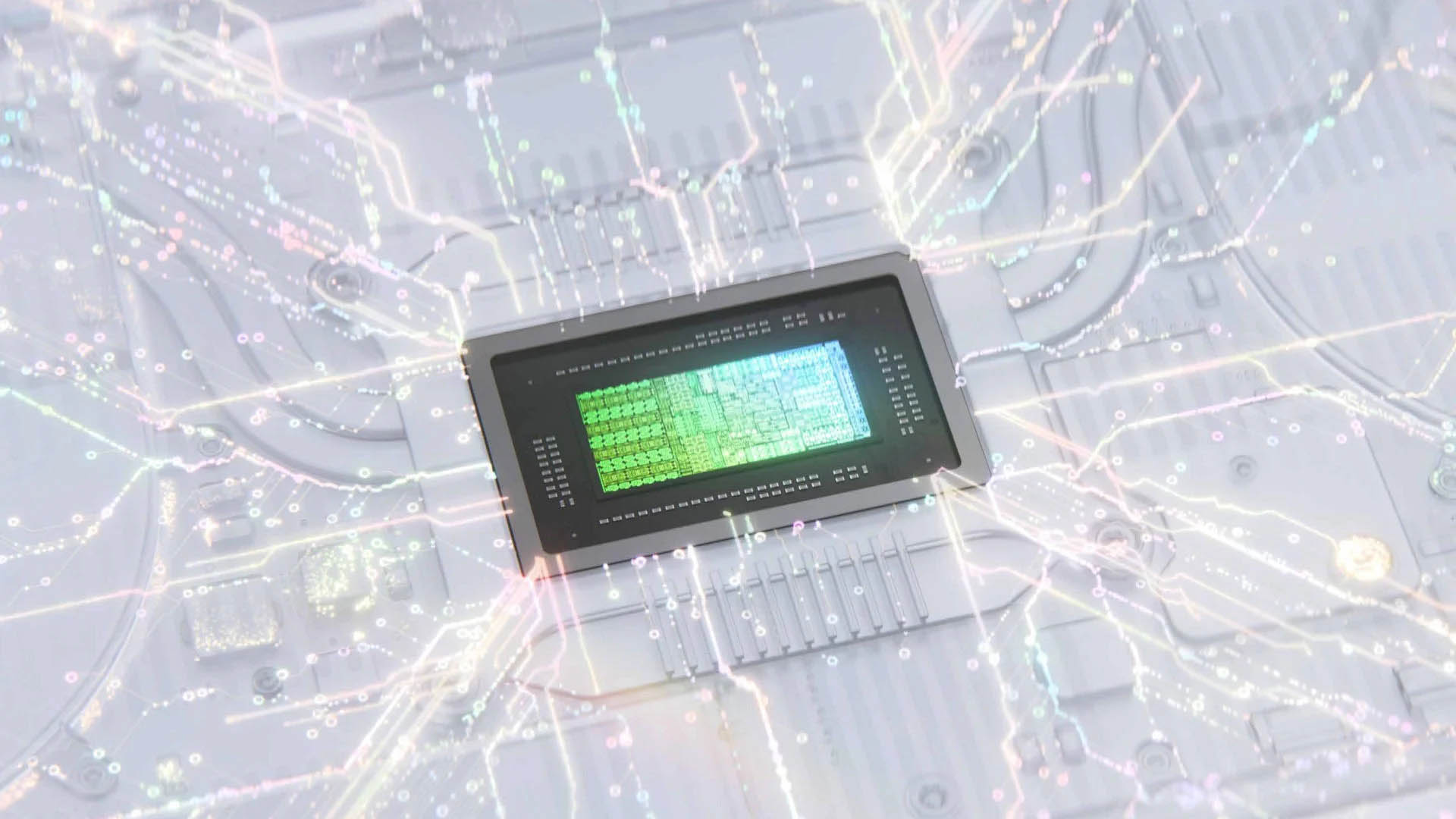
The Vera architecture represents a generational jump from NVIDIA’s previous Grace CPUs. Key specifications include
- Architecture: Custom ARM-based **Olympus** cores (88 cores, 176 threads with Spatial Multi-Threading).
- Memory: 1.5TB of system memory (triple the capacity of Grace) using **SOCAMM LPDDR5X** for 1.2TB/s bandwidth.
- Interconnect: **NVLink-C2C** coherent memory interconnect at 1.8TB/s, enabling seamless scaling across racks.
- Compute: Rack-scale confidential compute for security-sensitive workloads.
- Power: Designed to pair with NVIDIA’s upcoming **Rubin** GPUs, which support up to **1950W TDP** cooling demands.
This level of performance isn’t just incremental—it’s a direct response to the limitations of traditional x86 CPUs in AI workloads. By offering Vera as a standalone option, NVIDIA is giving data centers a choice: stick with legacy CPUs or opt for a unified NVIDIA stack that spans GPUs, CPUs, and networking.

A $2 Billion Stake in the Future
The $2 billion investment—structured as a purchase of CoreWeave’s Class A stock at $87.20 per share—underscores NVIDIA’s long-term commitment to the neocloud provider. CoreWeave, in turn, is positioned to become the first to deploy Vera CPUs, giving it a competitive edge in the AI infrastructure race. The goal? To build **5 gigawatts of AI capacity by 2030**, a target that aligns with NVIDIA’s vision of a fully integrated AI ecosystem.
CEO Jensen Huang’s remarks hint at broader ambitions. While Vera is the first standalone CPU offering, it’s part of a larger strategy to dominate both server and consumer markets. The upcoming **N1/N1X** SoCs—ARM-based chips for AI PCs—suggest NVIDIA is applying the same principles of customization and performance to desktops that it’s now bringing to data centers.
What This Means for the Industry
For data centers, Vera CPUs could eliminate the need to mix and match vendors. No more juggling x86 CPUs with NVIDIA GPUs—just a seamless, high-performance stack. For competitors like AMD and Intel, the move is a direct challenge to their dominance in the server CPU space. And for customers, it means a potential cost advantage: standalone Vera CPUs may offer better performance-per-dollar than full rack-scale solutions.
The real test will be adoption. If Vera delivers on its promises, we could see a shift toward NVIDIA-dominated AI infrastructure—one where the GPU giant isn’t just accelerating workloads but controlling the entire compute stack.