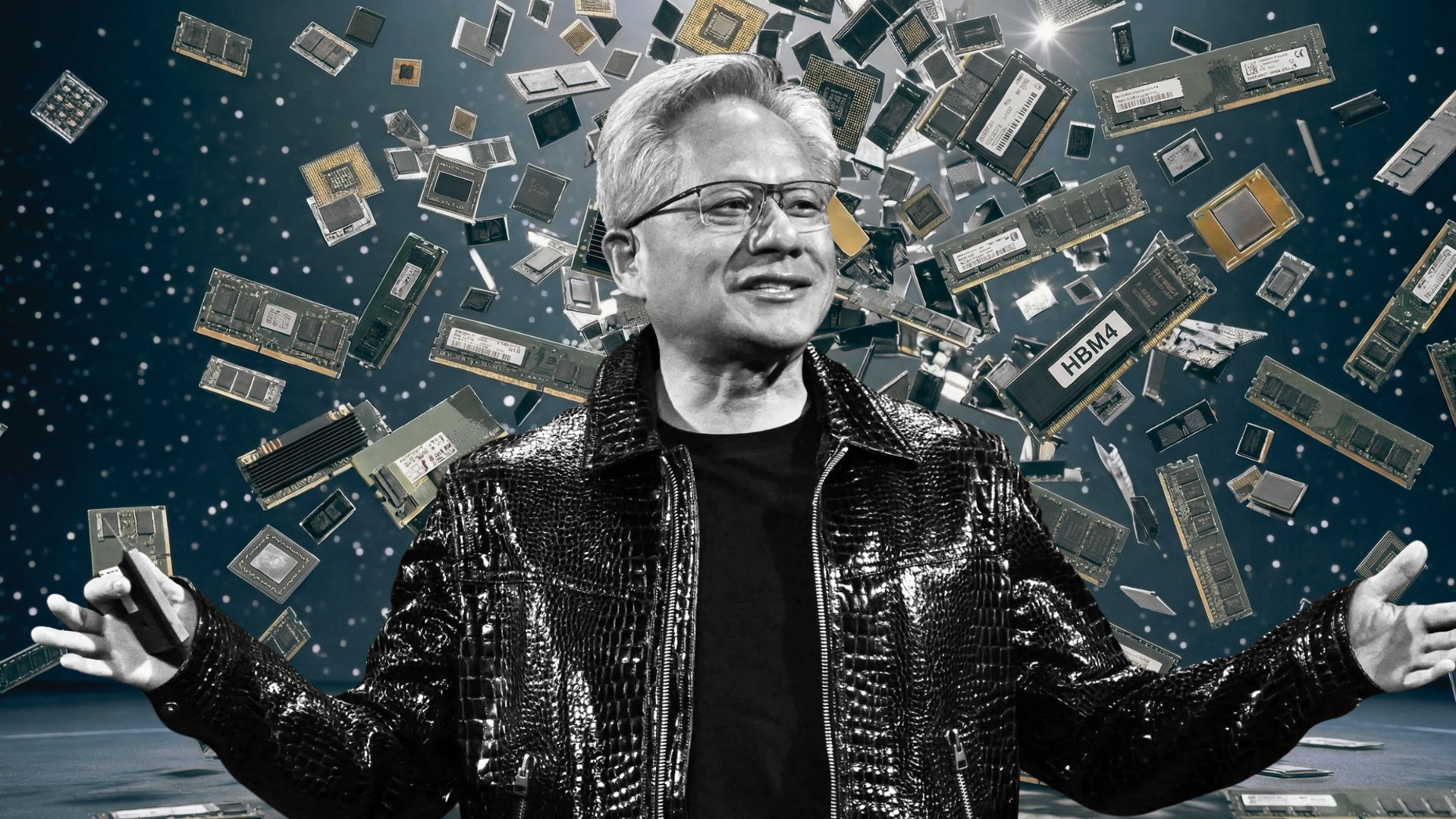
Industry Hyperscalers Are ‘Scratching Their Heads’ with Rising Memory Costs, But NVIDIA Might Be the Only One Smiling Muhammad Zuhair • at EDT Add on Google Image NVIDIA enjoys an exclusive position in the supply chain. DRAM Contract Prices Have Increased Significantly In the Past Few Quarters, But This Doesn't Bother NVIDIA For Now DRAM shortages have disrupted broader supply chains, affecting segments like AI and consumer markets, but, interestingly, for hyperscalers, there are few options other than buying DRAM at outrageous prices, either on spot or contract terms. Based on information from SemiAnalysis and supply chain reports, memory prices have started to influence hyperscaler investments to a much greater extent, to the point that they now account for up to 30% of total spend, which is a shocking figure to say the least. Memory inflation is a serious concern for AI giants right now, yet there are no signs that spending is being affected. Related Story Google’s Gemma 4 Model Can Now Be Deployed on NVIDIA’s RTX GPUs, Delivering Optimized Performance for a ‘Personalized’ Agentic AI Environment Memory is taking over Hyperscaler CapEx.In CY23 and CY24, memory was ~8% of total Hyperscaler spend. We estimate it hits 30% in CY26 and moves higher in CY27. That's a near-4x shift in just four years. (1/4) 🧵 pic.twitter.com/fUxpwUYfcO— SemiAnalysis (@SemiAnalysis_) April 3, 2026 SemiAnalysis says that the increase in memory spending could rise significantly higher in CY2027 as well, which is an indirect indication that the ongoing DRAM shortages are here to stay. When we talk about hyperscalers in particular, the need for memory rises from memory pools connected via CXL switches to work alongside the rack-scale infrastructure. Technologies like DDR5 and LPDDR5 have seen massive adoption by hyperscalers in recent times, which is why shortages have been much more brutal for markets dependent on general-purpose DRAM. Another area where memory is important for hyperscalers is their custom silicon and rack efforts. Image NVIDIA received a VVP (Very Very Preferred) DRAM customer status within the supply chain, which gives the company both a capacity and a pricing leverage that allows the firm to beat competition, at least in getting the best memory deal. This is also in line with Jensen's past about memory shortages, claiming that NVIDIA isn't affected at all because the firm saw the aggressive demand coming in well ahead of others, which is why it entered into extensive supply contracts. We have talked about how NVIDIA, and its close relations with supply chain partners, have helped the company gain the edge in the modern-day infrastructure buildout, and this isn't just limited to DRAM; this superior position extends to other key dynamics such as semiconductors, advanced packaging, and other elements within the broader AI supply chain. On one end, you have high-end infrastructure; on the other, being unfazed by the supply crunch is one of the reasons competing with NVIDIA requires far more than the general perception suggests. About the : Muhammad Zuhair is a hardware and technology for , specializing in the semiconductor industry and the complex interplay between technology, manufacturing, and geopolitics. His coverage focuses on the corporate strategies and technological roadmaps of industry giants like TSMC, NVIDIA, Samsung, and Intel. Zuhair's expertise lies in deconstructing complex topics such as fabrication nodes (e.g., 2nm process), the economic impact of policies like the CHIPS Act, and the strategic development of AI infrastructure from NVIDIA, AMD and Intel. Follow on Google to get more of our news coverage in your feeds. Further Reading Chinese Memory Vendors Are Claiming to Be “Doomed”, Tossing Aside Stockpiled DDR Modules as Dropping Prices Cause Panic NVIDIA Is Among the First to Submit MLPerf Inference v6.0 Benchmarks With Blackwell Ultra, and It’s Total Domination Over Competitors NVIDIA’s Rubin Ultra Reportedly Scaled Back to Dual-Die Design, Instead of the Ambitious Four-Die One, Amid Supply Chain Concerns NVIDIA CEO Reveals How The Company Survived an “Existential Threat” After Forcing CUDA On Gaming GPUs; Now, It’s Their Biggest Moat Read all on Hyperscalers Are ‘Scratching Their Heads’ with Rising Memory Costs, But NVIDIA Might Be the Only One Smiling