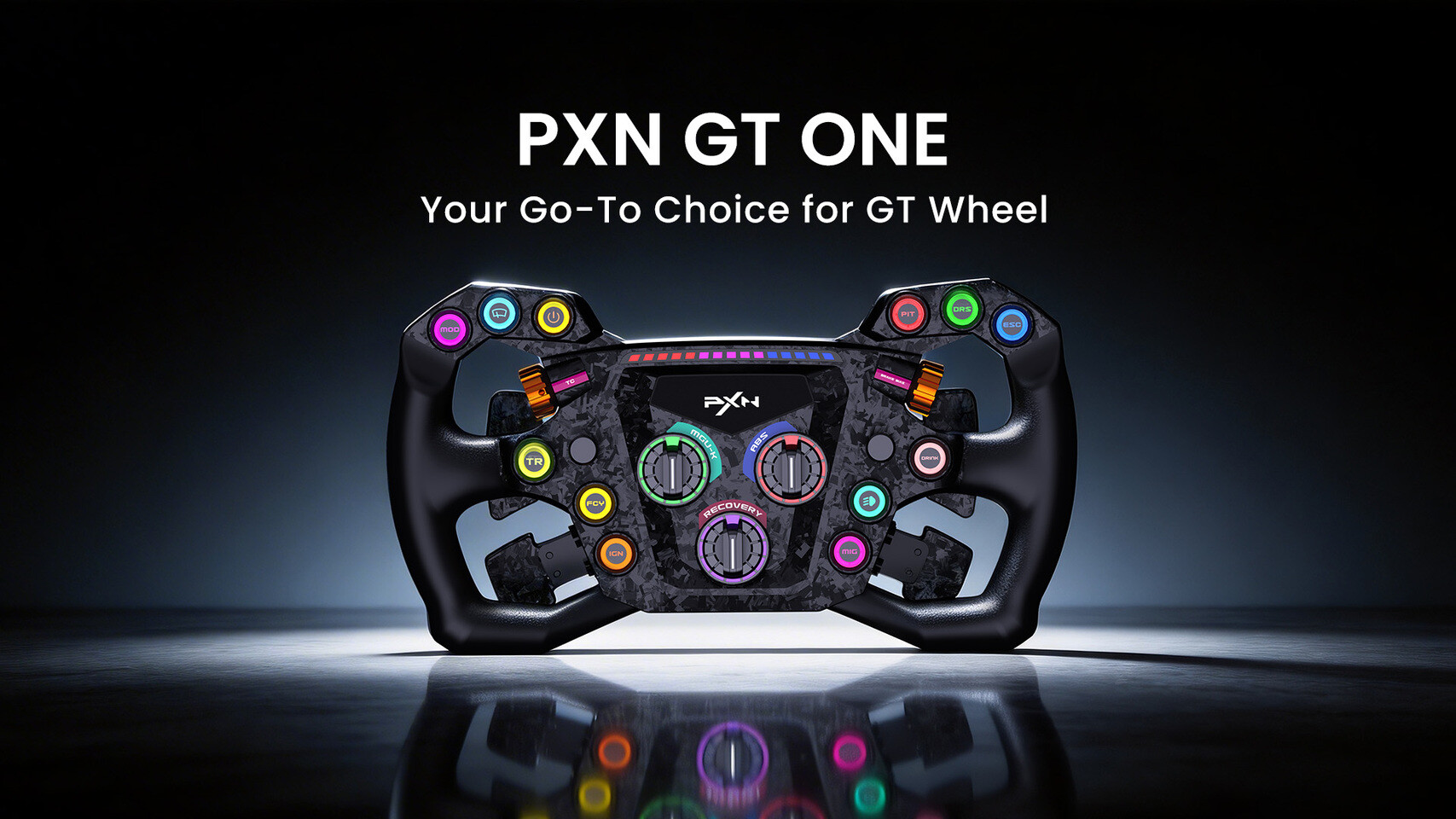
The PXN GT ONE steering wheel isn’t just another entry in the crowded sim racing market—it’s a deliberate step toward making high-end features accessible without sacrificing performance. Designed with both casual and competitive racers in mind, the GT ONE introduces a level of input complexity that traditionally reserved for premium setups, while keeping the price point significantly lower.
At its core, the GT ONE is built around 78 programmable inputs, a figure that dwarfs many mid-tier wheels. This includes four carbon fiber paddle shifters, twelve customizable buttons, three absolute encoders, two thumb encoders, and two seven-way funky switches. The sheer volume of controls suggests it’s aimed at users who want to map nearly every function—from brake bias to pit strategy—to a dedicated input, rather than relying on in-game menus or limited button configurations.
The wheel itself measures 300 mm in diameter, designed for multiple hand positions and built with engineered TPE materials for grip and durability. The frame is a fiberglass composite with carbon fiber accents, striking a balance between weight distribution and premium aesthetics. This construction isn’t just for show; it’s meant to handle long sessions without compromising responsiveness or comfort.
Where the GT ONE stands out is in its telemetry and lighting integration. All buttons are fully backlit, and 15 RPM LEDs provide real-time engine data feedback. The lighting supports 8-bit color customization, allowing users to tailor the visual experience to their rig or game preferences. This level of immersion is typically found in wheels priced significantly higher, making it a standout feature for those looking to enhance both functionality and aesthetics.
The GT ONE isn’t just about raw inputs—it’s also designed for flexibility. It supports PXN’s VD Series wheelbases (VD6 and VD10) through a quick-release system, ensuring seamless integration with direct drive setups for maximum force feedback realism. For users with alternative wheelbase preferences, it can also operate via USB coiled cable or third-party adapters, broadening its compatibility without locking racers into a single ecosystem.
Software-wise, the GT ONE plays well within PXN’s growing sim racing environment. Full support for both PXN SimRacing software and SimHub means users have multiple avenues for customization, from button mapping to lighting effects. This open approach is smart—it future-proofs the wheel against software updates while keeping it adaptable to different racing styles.
But there’s a reason to approach this launch with cautious optimism. While the feature list is impressive, sim racing hardware often suffers from trade-offs in build quality or driver adaptation time when cramming too many inputs into a single unit. The GT ONE’s 78-input configuration could overwhelm casual users, making it less of an upgrade path and more of a learning curve for those new to advanced setups. Additionally, the durability of materials like engineered TPE and carbon fiber composites is always worth verifying over time—some high-end wheels promise similar specs but show wear in prolonged use.
The GT ONE’s pricing strategy adds another layer of intrigue. An early-bird price of $199 (or equivalent in euros/pounds) drops to a regular retail price of $219 after the launch window. This is competitive, but it remains to be seen whether the wheel can sustain that value without compromising on long-term reliability or performance consistency.
For now, the GT ONE positions itself as a bridge between hobbyist and professional sim racing setups. It’s not the first wheel to offer extensive input mapping, nor is it the most expensive—but its combination of affordability, open compatibility, and immersive features could make it a strong contender for those looking to step up their rig without breaking the bank.