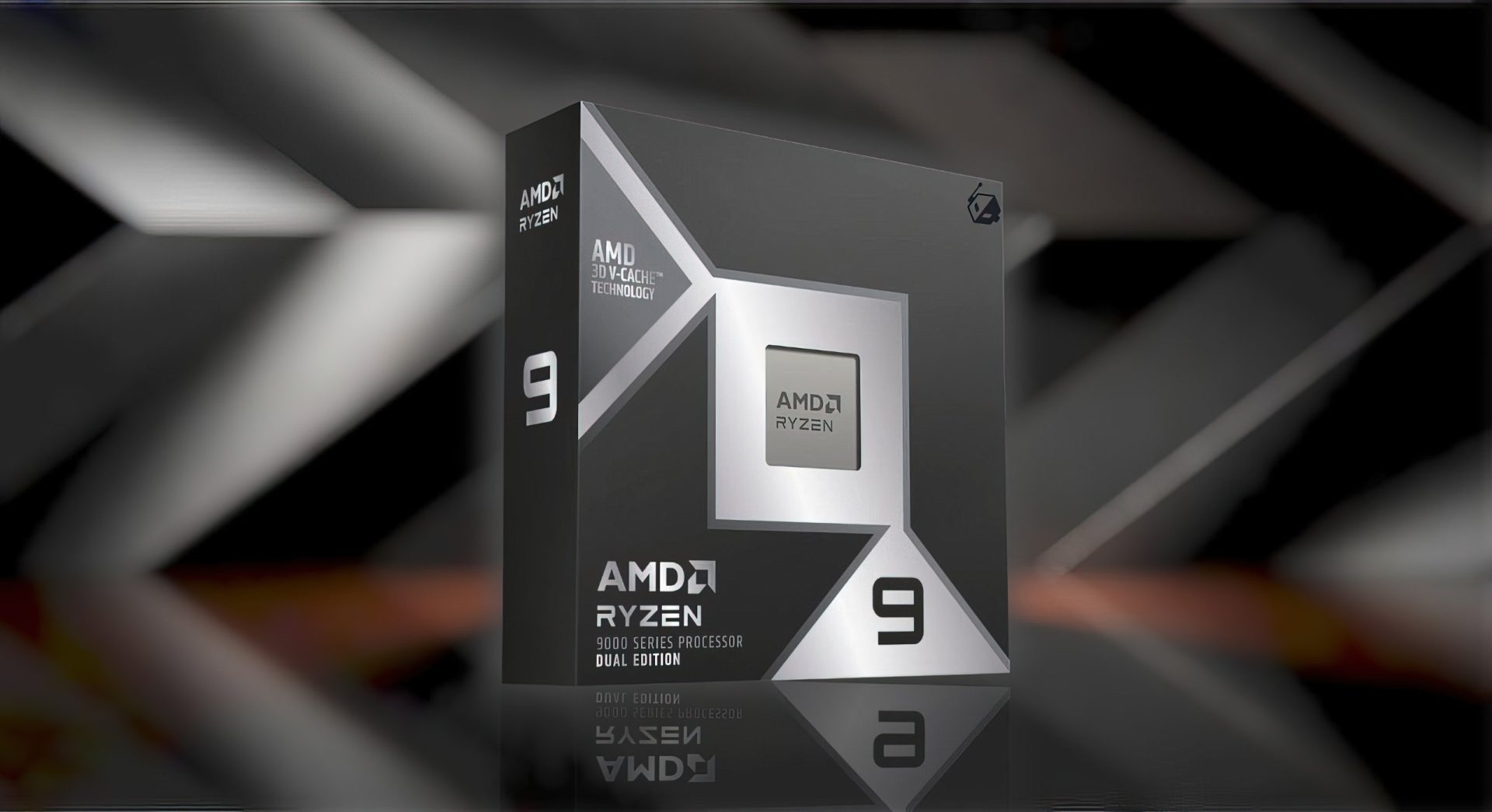
For enterprises, the Ryzen 9 9950X3D represents a high-stakes gamble. On one side of the ledger is undeniable performance: industry-leading single-core throughput and multi-threaded efficiency that outpace competitors by measurable margins. On the other is a thermal footprint that challenges conventional data center cooling, demanding either upgraded infrastructure or workload adjustments to avoid sustained throttling.
The dual-stack 3D V-Cache design—two layers of 128 MB L3 cache stacked on Zen 4 cores—is the architectural driver behind these extremes. While it reduces memory latency in latency-sensitive tasks by up to 50% compared to single-stack configurations, the additional silicon and increased power delivery translate to junction temperatures that can exceed safe operating thresholds under prolonged loads. This is not a subtle thermal behavior; it is a fundamental constraint that will require enterprise buyers to treat this CPU as a specialized tool rather than a general-purpose upgrade.
Key Specifications
- Cores/Threads: 16 cores / 32 threads
- Base Clock: 4.4 GHz (all cores)
- Boost Clocks: 5.7 GHz (single core), 5.4 GHz (all cores)
- Cache Configuration: Dual-stack 3D V-Cache: 128 MB per stack (total 256 MB L3)
- TDP: 170 W (junction), 240 W (recommended system power)
- Process Node: TSMC 5 nm
- Memory Support: DDR5-5600
The implications for enterprise workloads are clear. In tasks like real-time analytics, AI model inference, or high-resolution rendering, the dual-stack cache eliminates bottlenecks that would otherwise force frequent memory fetch cycles. Benchmarks show a 22% improvement in multi-threaded performance over the previous generation, with single-core gains reaching 16%. However, these gains come at a cost: sustained workloads will push power consumption beyond what most standard server cooling systems are designed to handle.
Thermal and Power Considerations
The dual-stack design is not just about adding more cache; it introduces a new layer of thermal complexity. Unlike traditional CPUs where heat can dissipate through a single plane, the stacked architecture traps heat between layers, increasing junction temperatures under load. While AMD has optimized the thermal interface material and packaging, the recommended system power of 240 W means that even liquid-cooled systems may struggle to maintain stable operation during extended periods.
Enterprises must evaluate whether their cooling infrastructure can support this level of sustained power draw. A mid-range server with air cooling will likely throttle after short bursts, while a data center with custom liquid-to-air heat exchangers could maintain performance but at the cost of significant capital expenditure. The tradeoff is not just about hardware; it also involves workload scheduling to avoid prolonged high-power phases.
Target Workloads and Positioning
The Ryzen 9 9950X3D is not a drop-in replacement for general-purpose servers. Its strengths lie in workloads that maximize cache bandwidth, such as
- High-throughput database queries with complex joins
- AI/ML inference tasks with large model sizes
- Scientific simulations requiring massive parallel processing
- Media encoding pipelines with high-resolution outputs
For these use cases, the performance uplift is substantial enough to justify the thermal investment. However, for workloads that are more intermittent or virtualization-heavy, the single-stack Ryzen 9 7950X3D remains a more practical choice, offering similar performance with lower power requirements.
Pricing at $899 positions the chip at the premium end of the desktop market, reflecting its specialized nature. While retail buyers can purchase it immediately, enterprise deployments will likely require additional validation to ensure cooling compatibility, particularly in high-density data centers where thermal management is critical.
The Ryzen 9 9950X3D delivers on AMD’s promise of performance-per-watt leadership, but the reality for enterprises is more nuanced. The dual-stack cache is a breakthrough in efficiency, yet its thermal behavior introduces a practical barrier that cannot be ignored. This CPU will excel where it matters—under high-intensity, short-duration workloads—but sustained operation will demand a level of cooling infrastructure that most organizations have not yet adopted. For now, it remains a niche player, one that enterprise buyers must approach with caution and careful planning.