Samsung Electronics and POSTECH have published a breakthrough research paper in Nature detailing a metasurface-based display system capable of dynamically transitioning between 2D and 3D imaging without mechanical moving parts.
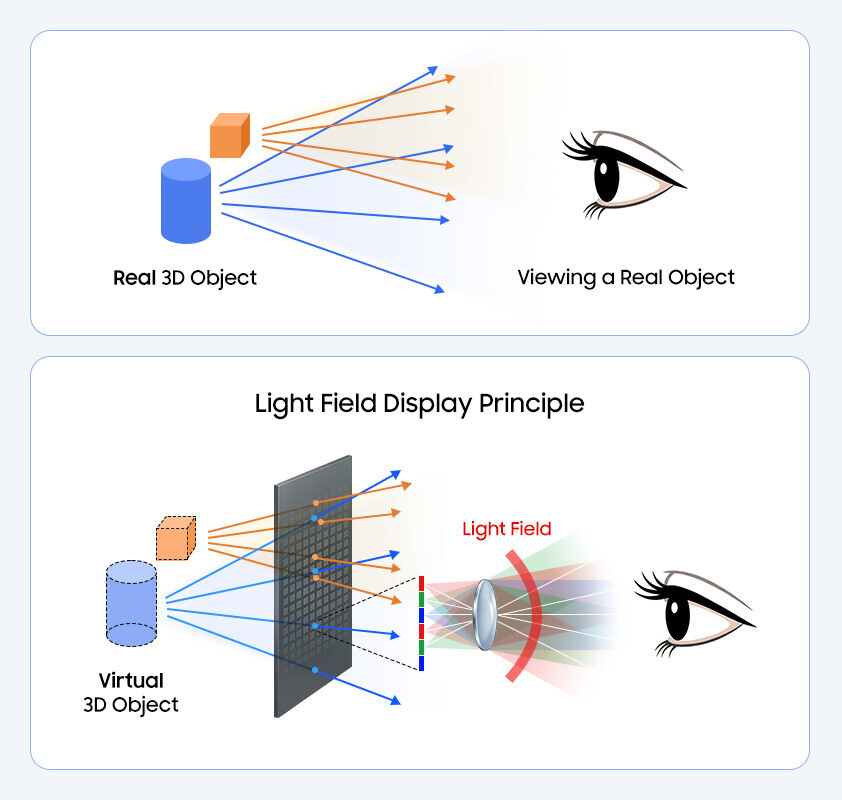
This technology, built around an ultra-thin metalens composed of nanoscale structures, promises to redefine the future of glasses-free 3D displays. Traditional light field displays have struggled with commercial viability due to bulky optics, narrow viewing angles (typically around 15 degrees), and reduced resolution. The new metasurface approach eliminates these limitations by leveraging polarization control to switch between concave and convex lens modes in a single device.
For end users, the system offers practical flexibility: high-resolution 2D mode for everyday tasks like reading or browsing, and immersive multi-view 3D mode for video content. The metalens measures just 1.2 mm thick while achieving an unprecedented viewing angle of up to 100 degrees—a sixfold improvement over conventional designs.
Beyond technical specifications, this research represents a significant step toward commercialization. Samsung and POSTECH have demonstrated the system's viability on OLED panels, which are widely used in mobile devices. The collaboration brings together Samsung Research's Visual Technology Team with POSTECH's Nanoscale Photonics & Integrated Manufacturing Laboratory.
While the technology remains in research stages, its potential applications span smartphones, tablets, and augmented reality systems. This development strengthens Samsung's position in meta-optics and next-generation display technologies, building on recent advancements like PCIe 5.0 QLC SSDs and glasses-free 3D gaming monitors.
What to watch: Large-scale fabrication processes, integration with existing OLED production lines, and the timeline for consumer adoption remain key unknowns in this advancement.