Samsung’s most ambitious foldable phone to date is now available in the US, though its $2,899 price tag makes it a rare splurge for most consumers. The Galaxy Z TriFold, a triple-folding smartphone with a 10-inch inner display, goes on sale January 30 through Samsung’s official stores.
Pricing starts at $2,899 for the 512GB model, while the 1TB variant remains unpriced. The device’s foldable hinge, tested to endure 200,000 cycles, begins showing wear around 61,000 folds—far beyond typical daily use but still a fraction of the Galaxy Z Fold 7’s 500,000-cycle rating.
Sales have been slow globally, with estimates suggesting fewer than 4,000 units sold by late 2025, and projections of 30,000–40,000 total units. For context, the device is a premium experiment: Samsung’s own figures suggest it’s targeting a niche audience willing to pay for its unique form factor.
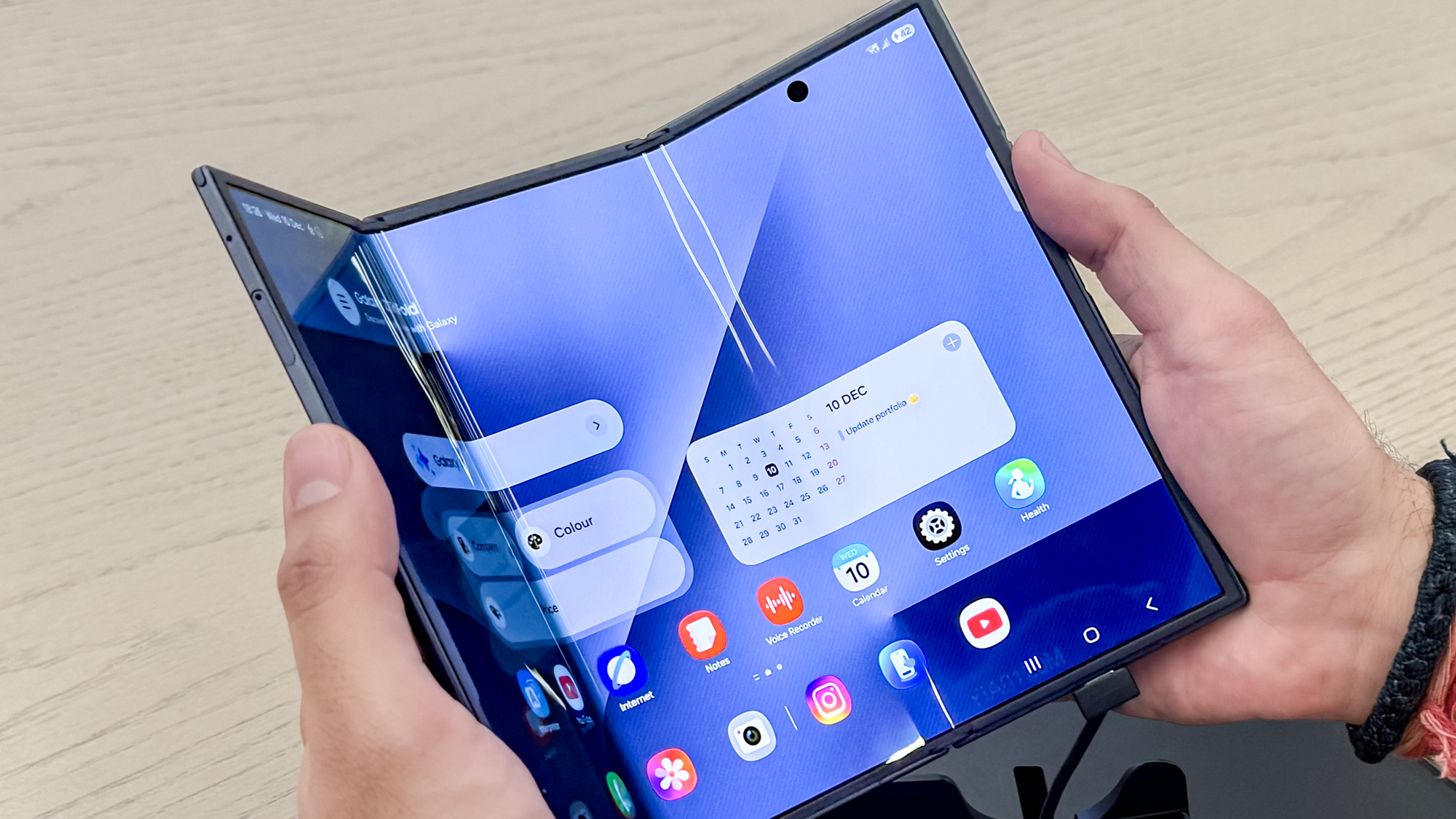
- Display: 10-inch Dynamic LTPO AMOLED (inner, 2,160 × 1,584, 1,600 nits peak) + 6.5-inch FHD+ Dynamic LTPO AMOLED (outer, 2,520 × 1,080, 2,600 nits peak). Both support 1–120Hz adaptive refresh.
- Chip: Exynos 2600 (2nm), paired with 16GB RAM.
- Storage: 512GB or 1TB (pricing TBA for 1TB).
- Battery: 5,600mAh with 45W wired charging.
- Cameras: 200MP main, 12MP ultrawide, 10MP telephoto, and a dual 10MP selfie camera (inner/outer).
- Software: Android 16 with One UI 8.0, guaranteed 7 OS updates.
- Durability: IP48 dust/water resistance.
- Price: $2,899 (512GB) starting January 30.
The Galaxy Z TriFold’s standout feature is its 10-inch inner display, offering a tablet-like experience in a foldable form factor. However, the 16GB RAM and Exynos 2600—while capable—lag behind competitors like the Snapdragon 8 Elite in efficiency and raw performance. The 5,600mAh battery is generous, but the 45W charger means slower top-ups compared to faster alternatives.
Who’s it for? Creatives needing a large canvas, power users who prioritize form over performance, or those intrigued by foldable tech’s future. The tradeoff? A hefty price, limited software longevity (7 years is solid but not unprecedented), and a hinge that, while durable, isn’t as robust as Samsung’s newer designs.
The device’s arrival in the US marks a milestone for foldable phones, but its success hinges on whether Samsung can convince buyers the experience justifies the cost. With global sales stagnant, the US launch may serve as a test for broader appeal—or another proof point that foldables remain a luxury curiosity.