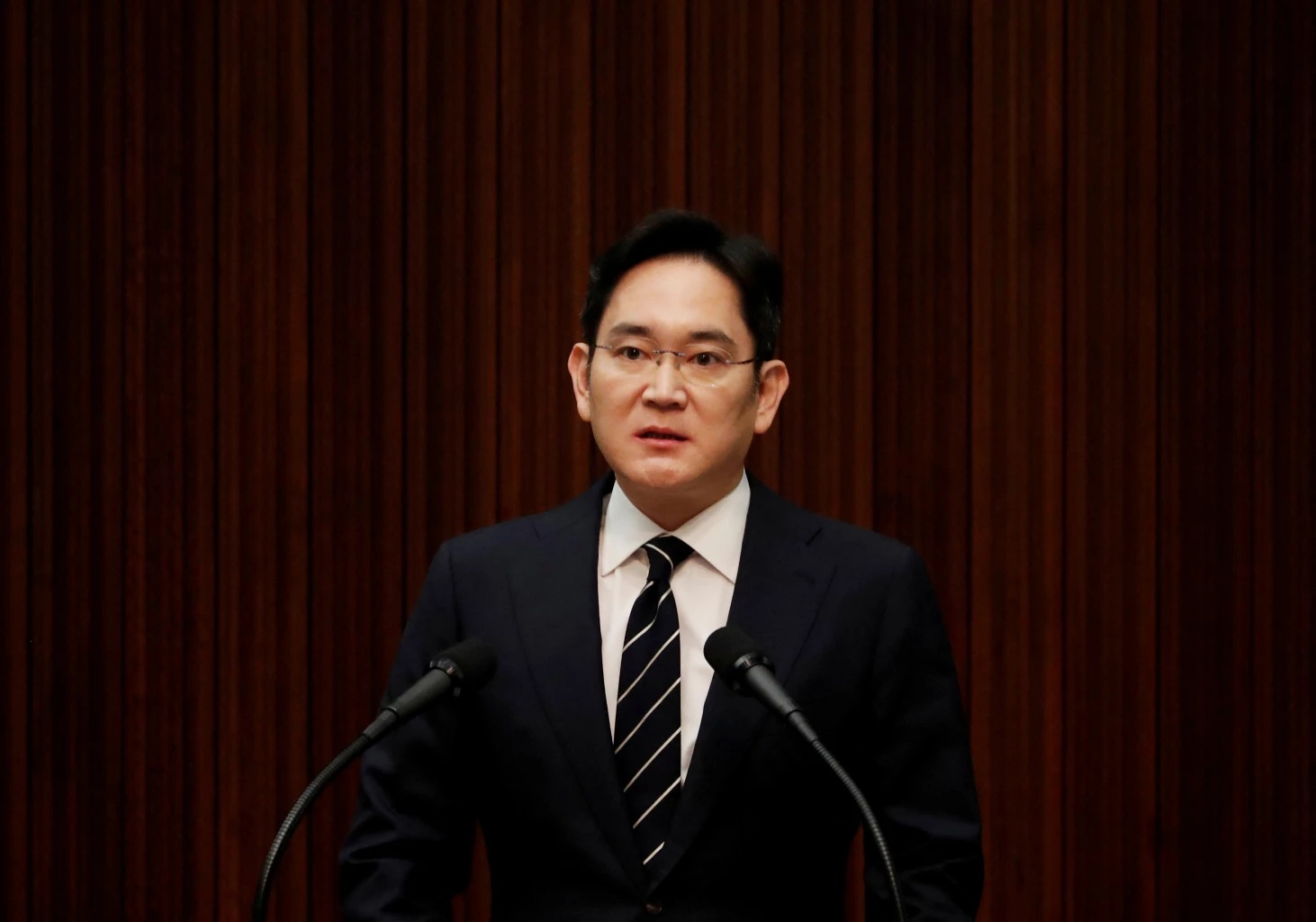
Samsung’s semiconductor arm is sitting on a financial windfall, but the party may be shorter than expected. The company posted an operating profit of $13.8 billion in the final quarter of 2025—a figure so large it eclipses the annual revenues of most tech firms. Yet beneath the headlines, Samsung’s chairman, Lee Jae-yong, has delivered a blunt message to 2,000 executives: this is not a time for celebration. It’s a deadline.
The warning comes as Samsung leverages a global memory chip shortage to pad its bottom line, with full-year profits projected to hit $69 billion. But Lee framed the moment as a fragile opportunity, echoing a 2007 caution from his late father, Lee Kun-hee, about Korea’s economy being ‘sandwiched’ between Japan’s technological dominance and China’s rapid ascent. Today, the threat is clearer: TSMC’s foundry dominance. Samsung’s non-memory divisions—once a bleeding wound—have trimmed losses from $1.36 billion per quarter in 2023 to a more manageable $680 million in Q3 and Q4 of 2025. Yet the company’s foundry operating rate remains stuck at 60%, far behind TSMC’s near-capacity utilization.
To turn the tide, Lee is pushing for aggressive action. AI-centric management, poaching top talent, and accelerating innovation are now corporate imperatives. The 2nm GAA process, Samsung’s latest gambit in the chip arms race, is slowly gaining traction with deals like Tesla’s, but yields remain a concern—some industry estimates suggest early production rates hover below 40%. Even if those figures improve, Samsung’s path to profitability in foundries by 2027 will require more than incremental gains.
The urgency is palpable. Just three years ago, Samsung’s semiconductor division was in freefall, a casualty of oversupply and shifting market demands. Today, the memory crisis provides a temporary reprieve, but Lee’s language—‘do or die’—suggests he sees this as the last chance to reverse a decade of relative stagnation. The question isn’t whether Samsung can compete; it’s whether it can do so before the memory boom fades and the foundry race accelerates beyond reach.
Key specs: The stakes in Samsung’s comeback
- Memory profits: $13.8 billion (Q4 2025), with full-year estimates at $69 billion.
- Non-memory losses: Shrunk from $1.36B/quarter in 2023 to $680M/quarter in late 2025.
- Foundry operating rate: 60% (vs. TSMC’s near-full capacity).
- 2nm GAA process: Early yields reportedly under 40%; targeted for Tesla and other high-end clients.
- Cultural shift: AI-driven management, talent acquisition, and innovation mandates from leadership.
- Historical context: 2007 ‘sandwich crisis’ warning from Lee Kun-hee about Korea’s tech gap.
For Samsung, the numbers tell only part of the story. The memory crisis has bought time, but the real test lies in execution. The company’s Exynos 2600 chip, built on a 2nm process, has shown promise in benchmarks, outperforming Qualcomm’s Snapdragon 8 Elite Gen 5 in sustained performance. Yet hardware alone won’t win the foundry war. Samsung’s heat-pass block technology—designed to extend clock speeds—is now being adopted by rivals, signaling a shift where even incremental advantages are scrutinized.
The roadmap is clear: Samsung must prove its 2nm process can deliver at scale, lure high-profile clients like Tesla away from TSMC, and redefine its innovation culture. The alternative? Becoming another cautionary tale in the annals of tech—once a leader, now a follower.
Availability and pricing
While Samsung’s memory chips remain in high demand—with distributors reportedly hiking prices by up to 80%—the company has not disclosed public timelines for its 2nm foundry services beyond 2027. The Exynos 2600, however, is already in production, with devices expected to hit shelves in early 2026 starting at $680 for flagship models.