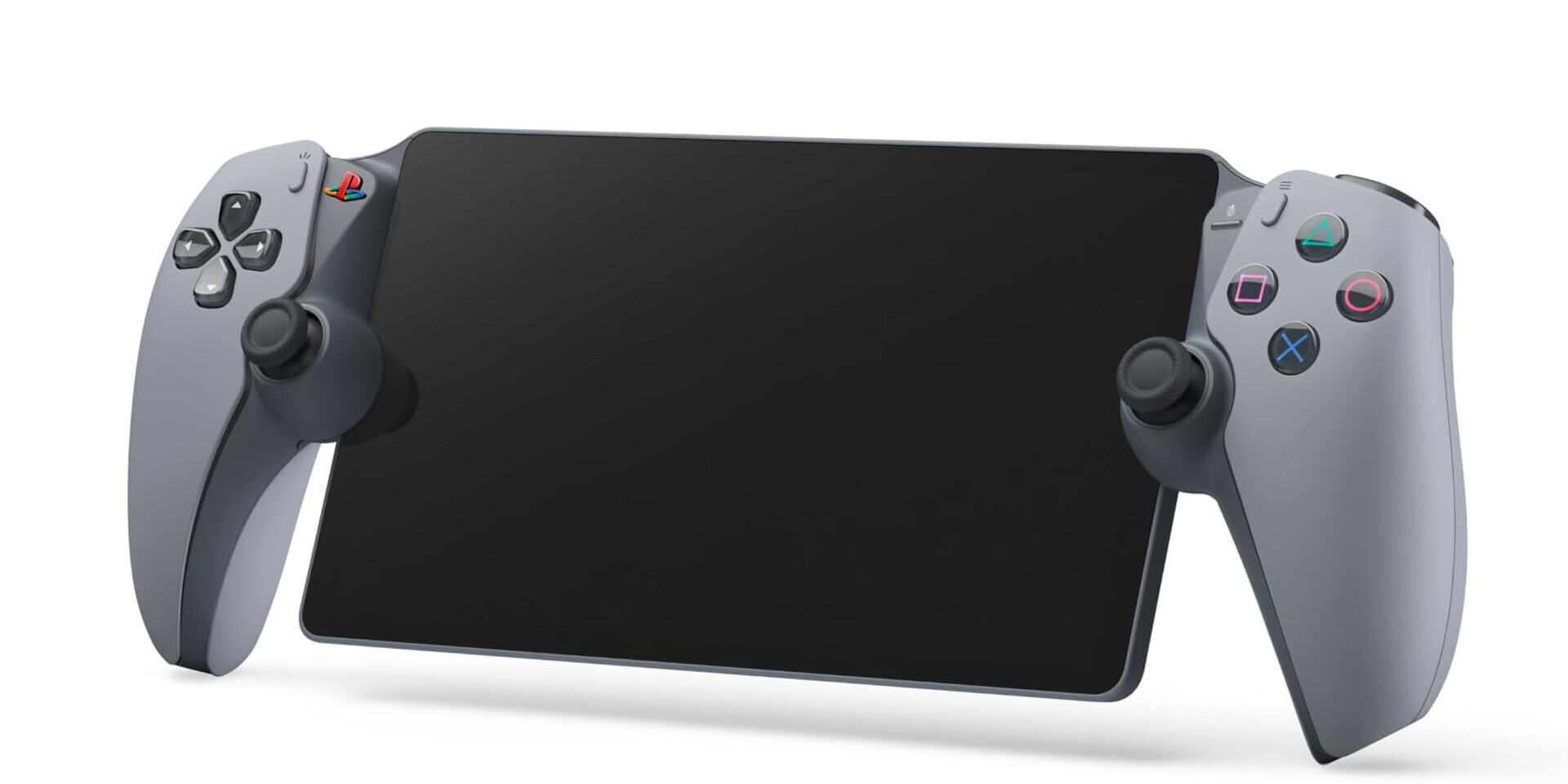
Sony’s handheld gaming ambitions are evolving faster than expected. While the original PlayStation Portal—essentially a remote streaming device for PS5 games—struggled to capture enthusiast attention, leaks now suggest two major upgrades are in the works: an OLED display refresh for the existing Portal and a standalone PlayStation 6 portable powered by AMD’s next-gen RDNA 5 GPU. The shift from RDNA 4 to RDNA 5 isn’t just a generational leap; it hints at a hardware architecture tailored for mobile efficiency, potentially with as few as 16 compute units (CUs) compared to the RX 9000 series’ 48.
The OLED Portal refresh, slated for a 2026 launch, addresses the biggest criticism of the original: its LCD screen. OLED would improve contrast, peak brightness, and power efficiency—critical for handhelds where battery life is a constant tradeoff. Meanwhile, the standalone PlayStation 6 portable, rumored to compete directly with Valve’s Steam Deck and ASUS’s Xbox Ally, could redefine Sony’s mobile strategy by ditching the streaming-only model for a self-contained console.
For power users, the RDNA 5 architecture is the most intriguing piece. Unlike the RX 9000 GPUs, which prioritize raw performance with 48 CUs, the handheld’s 16-CU design suggests Sony is optimizing for thermal throttling, battery life, and portability. This aligns with AMD’s mobile-focused RDNA 3.5 (used in Strix Halo iGPUs) but takes it further with potential advancements like hardware-accelerated ray tracing or AI upscaling—features that could finally make a PlayStation handheld viable for demanding titles.
Key Specs and What They Mean
The standalone PlayStation 6 portable’s hardware remains speculative, but leaks confirm these critical details
- GPU: AMD RDNA 5 (estimated 16 CUs, down from RX 9000’s 48). Focus on efficiency over brute force.
- Display: OLED (Portal refresh) or high-refresh OLED (standalone). Likely 720p–1080p with adaptive sync.
- Performance: Likely 1.5–2x the original Portal’s power, but thermal limits will dictate real-world performance.
- Battery: Improved efficiency from OLED and RDNA 5, but still likely 4–6 hours for demanding games.
- Storage: Not confirmed, but likely 256GB–512GB UFS 4.0 (similar to Steam Deck).
- Connectivity: 5GHz Wi-Fi 6E, Bluetooth 5.3 (essential for cloud streaming and accessories).
The reduced CU count isn’t a downgrade—it’s a recalibration. Sony appears to be targeting a sweet spot between the Steam Deck’s raw power and the Xbox Ally’s efficiency. For users who prioritize portability over desktop-level performance, this could be a game-changer. However, Sony’s history of underpowered handhelds (like the Vita) means skepticism remains. If the RDNA 5 implementation delivers on its promise of hardware-accelerated features, it might just justify the hype.
Limitations and Unanswered Questions
No upgrade is without compromises. The 16-CU RDNA 5 GPU, while efficient, will struggle with next-gen AAA titles at high settings. Expect Sony to rely on cloud streaming for heavy lifts, much like the original Portal. Battery life, even with OLED, will likely max out at 6 hours for graphically intensive games. And without a clear roadmap for software (e.g., native PlayStation exclusives), the standalone portable risks becoming a niche device for emulation and indie titles.
The bigger question is whether Sony will finally embrace a more open ecosystem. The Steam Deck’s success hinged on Linux support and third-party game compatibility. If the PlayStation 6 portable remains locked into Sony’s walled garden, it may appeal only to hardcore PS5 fans—limiting its market potential.
Availability for the OLED Portal refresh is rumored for late 2026, with the standalone PlayStation 6 portable potentially launching in 2027. Pricing hasn’t been confirmed, but given the Portal’s $299 starting point, the standalone version could land between $499 and $699—closer to the Steam Deck’s $599 than the Ally’s $399.