India’s industrial transformation is often framed as a story of steel mills and solar parks, but the real engine of change is invisible: software. The $134 billion influx into manufacturing—spanning everything from electric vehicles to semiconductor fabs—is being accelerated by AI-driven tools that eliminate guesswork from factory design. Yet the shift isn’t just about faster simulations. It’s about redefining what a factory even looks like.
Many assume these advancements will only benefit large corporations with deep pockets. The reality? Startups and mid-sized manufacturers are already leveraging the same AI frameworks to compete. Take Addverb Technologies, which uses NVIDIA’s Omniverse to train humanoid robots entirely in virtual environments before a single motor turns. No physical prototypes. No wasted materials. Just AI-driven precision. This approach isn’t just cutting development time—it’s slashing costs by up to 40% for companies that would otherwise rely on trial-and-error testing.
The myth that digital twins are passive 3D models is fading fast. In practice, they’re now active decision engines. Larsen & Toubro Semiconductor, for instance, is running 10x faster simulations on Cadence’s Millennium M2000 supercomputer, powered by NVIDIA’s CUDA-X. The result? AI chips that go from concept to validation in weeks, not months. This isn’t just efficiency—it’s a competitive moat for firms racing to supply India’s growing demand for AI hardware.
But the biggest surprise may be who’s adopting these tools first. While automakers like Hero MotoCorp and Tata Motors dominate headlines, energy and infrastructure firms are leading the charge. Reliance New Energy is using Siemens’ digital twin technology to validate entire gigafactory layouts in simulation—before breaking ground. The payoff? A 30% reduction in construction delays by catching design flaws before they become physical problems. Meanwhile, Tata Consulting Engineers’ Cognitive Twin platform is optimizing power grid and rail projects by simulating real-world stresses before construction begins.
What’s Actually Changing?
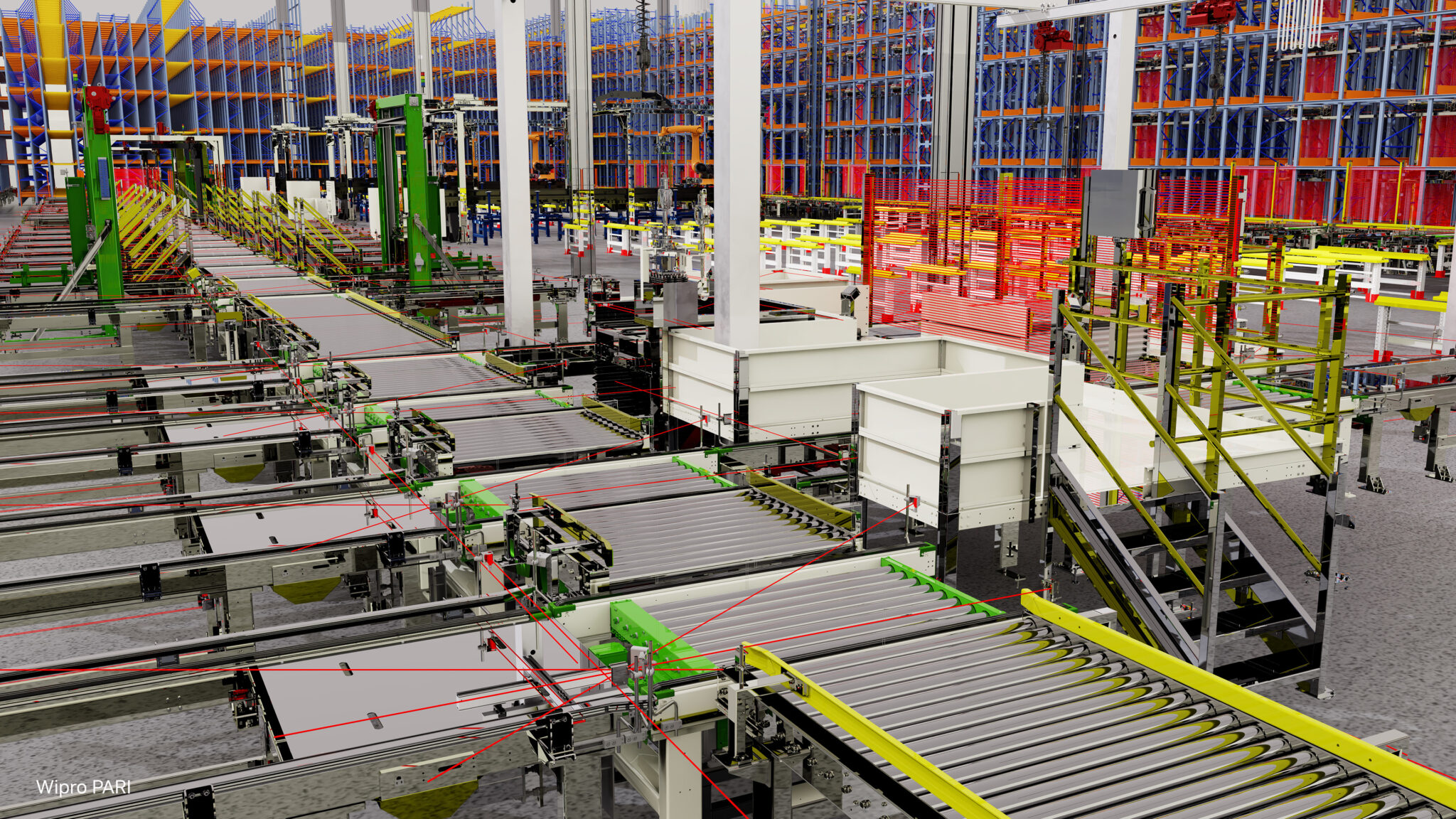
The shift isn’t just about design. It’s about autonomous operations. Wipro PARI is deploying NVIDIA Isaac and Omniverse to simulate robotic workflows in virtual warehouses—complete with clutter, human interference, and unpredictable loads. The robots that emerge aren’t just programmed; they’re trained for chaos. This means fewer on-site adjustments, fewer errors, and a workforce that can focus on oversight rather than manual tuning.
Even quality control is being redefined. Havells India Limited, a leader in electrical equipment, has seen a 6x speedup in fluid dynamic simulations using Synopsys’ Ansys Fluent with CUDA-X. The implication? Products that meet global efficiency standards without the usual round of physical testing. For a company competing in a price-sensitive market, this isn’t just a convenience—it’s a cost-saving revolution.
But the most disruptive change may be in supply chain visibility. Tata Consultancy Services (TCS) is embedding NVIDIA Metropolis into Tata Motors’ assembly lines, turning standard cameras into AI-powered inspectors. No human eyes needed. Defects are flagged in real time, and production lines self-correct before defects escalate. This isn’t just automation—it’s predictive manufacturing, where the factory itself learns from every cycle.
Who’s Left Behind?
The $350 billion IT services sector—India’s current crown jewel—faces a critical question: Can it pivot fast enough? Firms like TCS and Wipro are already positioning themselves as the software architects of this new manufacturing era. But traditional factories, especially SMEs, may struggle to adopt these tools without heavy investment. The good news? Cloud-based versions of these platforms are emerging, making AI-driven design accessible to smaller players.
For now, the early adopters are clear: clean energy, semiconductors, and automotive. Reliance, Larsen & Toubro, and Hero MotoCorp are using these tools to cut R&D cycles by half and bring products to market faster than ever. But the real test will be whether mid-sized manufacturers can follow. The tools exist. The question is whether India’s industrial ecosystem can keep up.
The bottom line? India’s manufacturing future isn’t just about building more factories. It’s about building smarter ones—where every decision is data-driven, every robot is self-improving, and every simulation eliminates waste. The revolution has begun. The question is who will lead it—and who will get left in the digital dust.