The Elder Scrolls* series thrives on contradictions. Its worlds are vast yet intimate, its gods capricious yet deeply embedded in history, and its lore both meticulously crafted and deliberately ambiguous. Now, a core narrative device—one that allowed Bethesda to reconcile Daggerfall’s five possible endings with the continuity of later games—has been labeled as a ‘lore regret’ by the man who helped define Skyrim: Bruce Nesmith.
That device is the Dragon Break, a cataclysmic rupture in time where Akatosh, the dragon god of time itself, fractured reality to make every possible outcome of Daggerfall’s climax exist simultaneously. It’s a solution so audacious it feels like the kind of storytelling Bethesda once pioneered—before it became synonymous with sprawling open worlds and minimal narrative risk.
Yet Nesmith, now reflecting on the series’ deeper lore, has framed the Dragon Break as a missed opportunity. By refusing to resolve the contradictions of Daggerfall’s endings, he argues, the franchise left itself with an unresolved puzzle. But what if that refusal was the point?
- The Dragon Break was Bethesda’s answer to Daggerfall’s five endings—making all of them ‘true’ by splitting time.
- Nesmith calls this approach a ‘lore regret,’ arguing it could have been ‘handled better.’
- Yet the move preserved the series’ signature ambiguity, a hallmark of Morrowind and Oblivion.
- Later games like Skyrim and Fallout have embraced similar narrative flexibility.
- Nesmith now advocates deeper exploration of the Daedric Lords as a way forward.
The Dragon Break wasn’t just a plot device; it was a philosophical statement. In a series where history is fluid and gods are as fallible as mortals, time itself could bend to accommodate every possible future. The Khajiit, ever the chroniclers of the impossible, recorded it all—because in The Elder Scrolls, even the laws of physics are subject to interpretation.
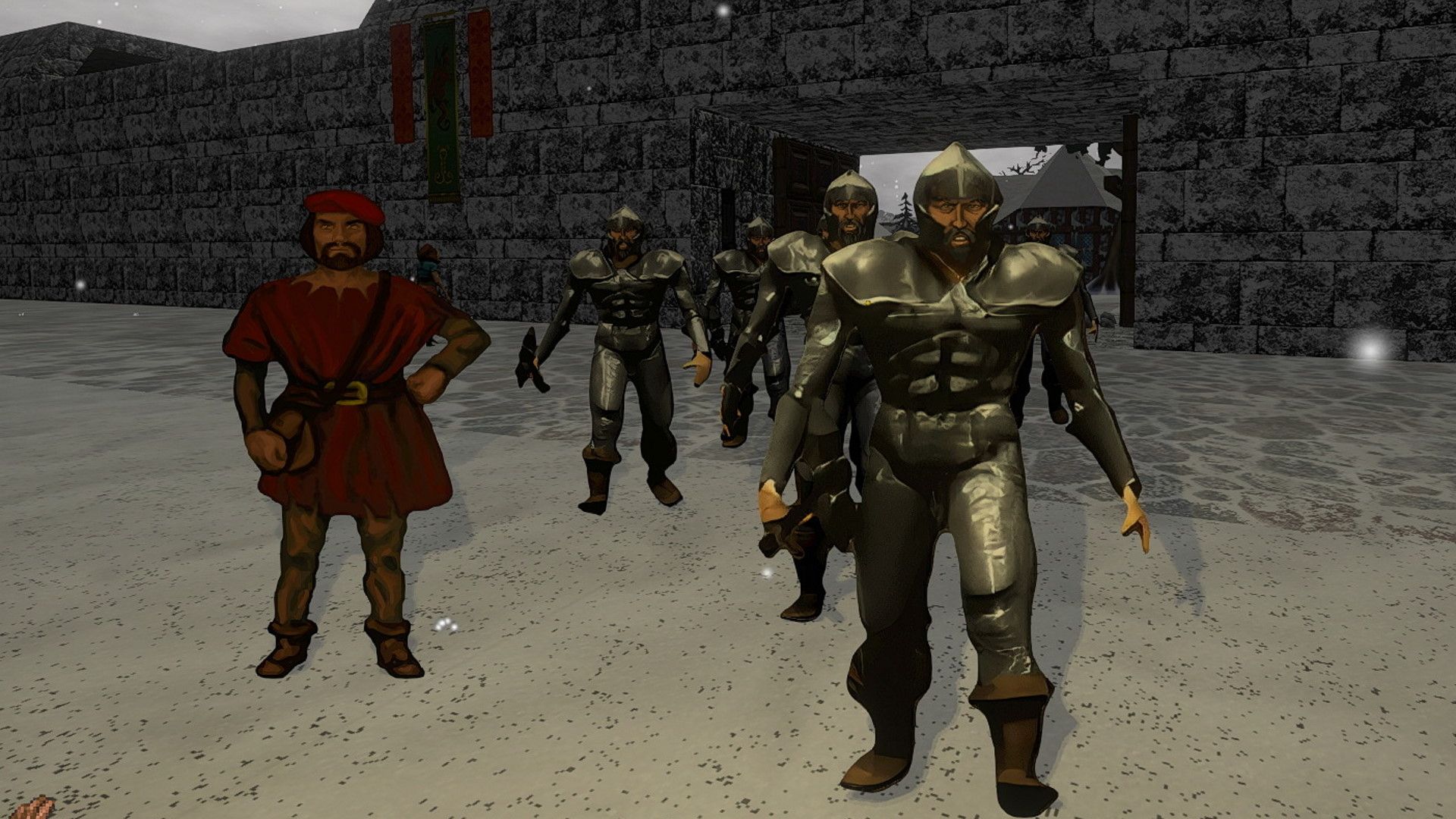
Nesmith’s critique hinges on the idea that unresolved lore creates confusion. But for players who cherish the series’ depth, the Dragon Break is a masterclass in worldbuilding. It’s the kind of narrative daring that made Morrowind’s cryptic history and Oblivion’s layered factions feel alive. By leaving Daggerfall’s endings unanswered, Bethesda didn’t just create a workaround—it created a legend.
That said, Nesmith isn’t dismissing the value of deep lore outright. He points to the Daedric Lords as a rich, untapped vein for future storytelling. Their realms, he suggests, could be the foundation for a new era of Elder Scrolls narrative experimentation—one that balances myth and mechanics without sacrificing the series’ signature weirdness.
So is the Dragon Break a flaw or a feature? For Nesmith, it’s the former. For the millions who’ve pored over The Elder Scrolls’ history, it’s proof that sometimes, the best stories aren’t resolved—they’re expanded*.