The Witcher series has always thrived on its sprawling, lore-rich world—one where every region feels distinct yet interconnected. With The Witcher 4 reportedly shifting focus to the northern realms of Kovir and Poviss, the next Wild Hunt expansion may take a different approach: not venturing farther from the familiar, but instead expanding what’s already there.
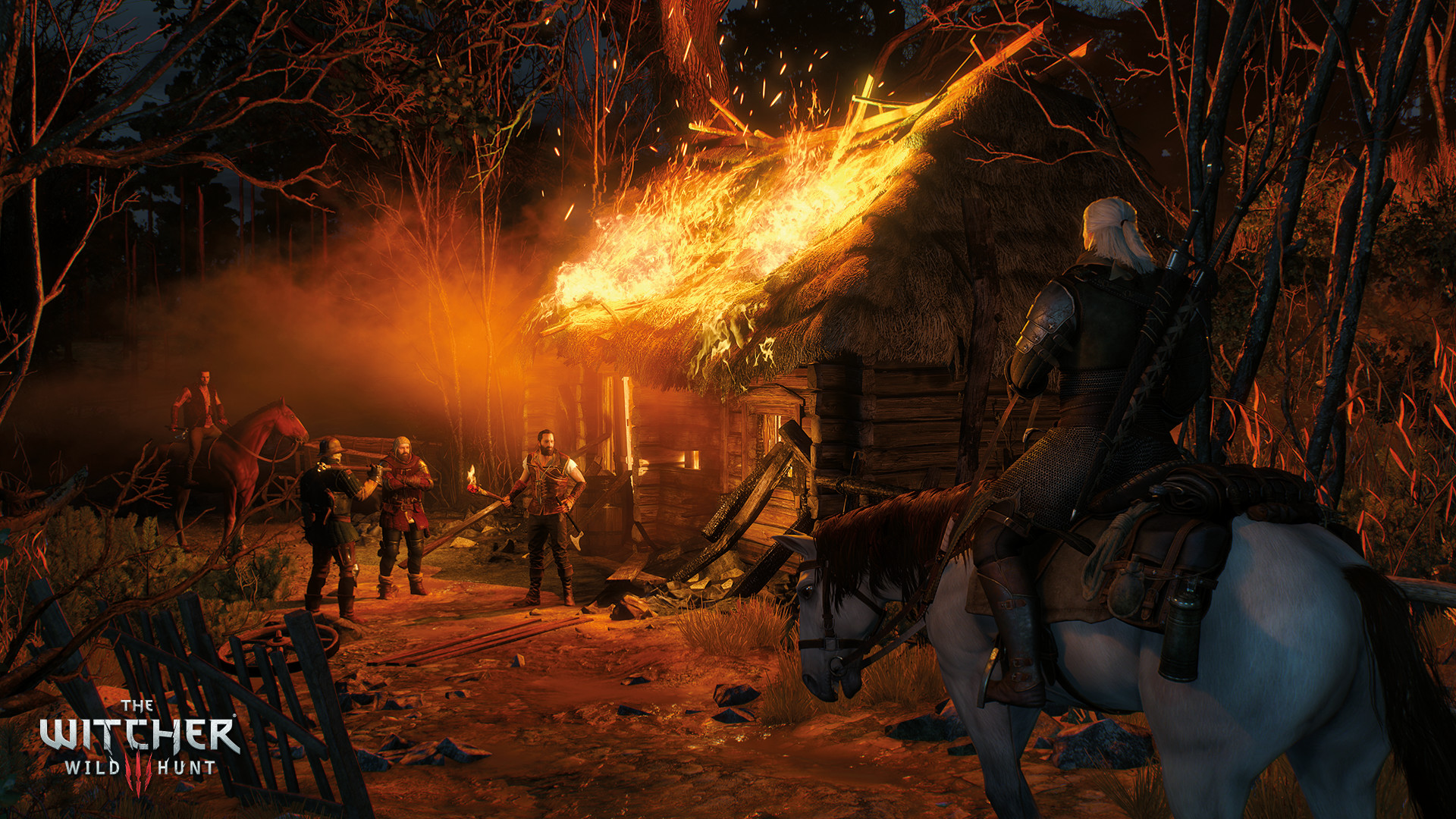
A former journalist from Poland’s gaming media, known for insider insights into CD Projekt Red’s development pipeline, recently dropped cryptic clues during a livestream. While avoiding direct confirmation, the insider suggested that the expansion’s new region would not be Zerrikania—the exotic, desert-bound land often speculated as the next frontier. Instead, the focus appears to be on Velen, the swampy, monster-infested heartland introduced in Hearts of Stone*.
Why the shift? Developing an entirely new region from scratch—complete with unique biomes, settlements, and lore—would demand significant resources. For a team already stretched thin by *Cyberpunk 2077*’s ongoing updates and *The Witcher 4*’s looming release, expanding an existing area makes practical sense. Velen’s uncharted corners, half-built ruins, and unanswered mysteries (like the fate of its dwarven fortresses) offer fertile ground for exploration without requiring a complete overhaul.
Where This Fits in the *Witcher Ecosystem
The Witcher universe has long been divided into distinct regions, each with its own culture, politics, and supernatural threats. The original trilogy covered
- Velen: Swamps, dwarven ruins, and the Wild Hunt’s stronghold.
- Northern Kingdoms: Geralt’s homeland, with its forests, castles, and human-dominated society.
- Redania: Coastal cities, political intrigue, and the Nilfgaardian threat.
- Zerrikania: A distant desert region, barely touched in the base game, rumored to hold ancient secrets.
Zerrikania’s allure lies in its untapped potential—sand dunes, lost civilizations, and perhaps even ties to the Elder Blood. Yet, for an expansion meant to serve as a bridge between Wild Hunt and The Witcher 4*, its isolation could feel like a misstep. The northern realms of Kovir and Poviss, where *Witcher 4 is set, are already far removed from the core regions of the first three games. Adding another distant desert might fragment the player’s connection to the world.
Development Realities Over Speculative Leaps
CD Projekt Red has historically prioritized narrative depth over sheer geographical expansion. Blood and Wine didn’t introduce a new continent—it enriched Toussaint with hidden lore, political schemes, and moral dilemmas. Similarly, Hearts of Stone expanded Velen’s lore without drastically altering its layout. This pattern suggests the upcoming DLC will follow suit: filling gaps rather than carving out new territory.
Velen, in particular, has unresolved threads. The dwarven clans’ decline, the fate of its ancient magic, and the lingering presence of the Wild Hunt’s remnants all point to untold stories. An expansion focusing here would allow developers to
- Reuse existing assets (settlements, dungeons, creatures) with fresh content.
- Tie into The Witcher 4*’s themes by exploring the Continent’s shared history.
- Avoid the logistical hurdle of designing a new biome from scratch.
Zerrikania, while tempting for its exoticism, would require
- New terrain models, flora, and fauna.
- Original questlines disconnected from the main narrative.
- A risk of becoming a one-time destination with little payoff for future games.
Given the team’s current workload, the math favors Velen.
Who Benefits?
Players stand to gain a more cohesive experience. Instead of a detour to an unfamiliar desert, they’d explore a region already rich in lore—one where every corner could hold surprises. The expansion could also serve as a microcosm for *The Witcher 4*, teasing the Continent’s broader history before the next main game.
CD Projekt Red avoids the pitfalls of overhauling a game’s engine or art pipeline for a single DLC. By leveraging existing assets, the team can focus on writing, quest design, and polish—areas where *The Witcher series has always excelled.
Lore purists may argue for Zerrikania’s inclusion, but the insider’s hints suggest pragmatism is winning. After all, The Witcher*’s magic lies not just in its maps, but in its stories—and Velen has plenty left to tell.
The official announcement is still months away, but the pieces are falling into place. If the expansion stays close to home, it won’t just be another *Witcher detour—it could be a masterclass in making the familiar feel fresh again.