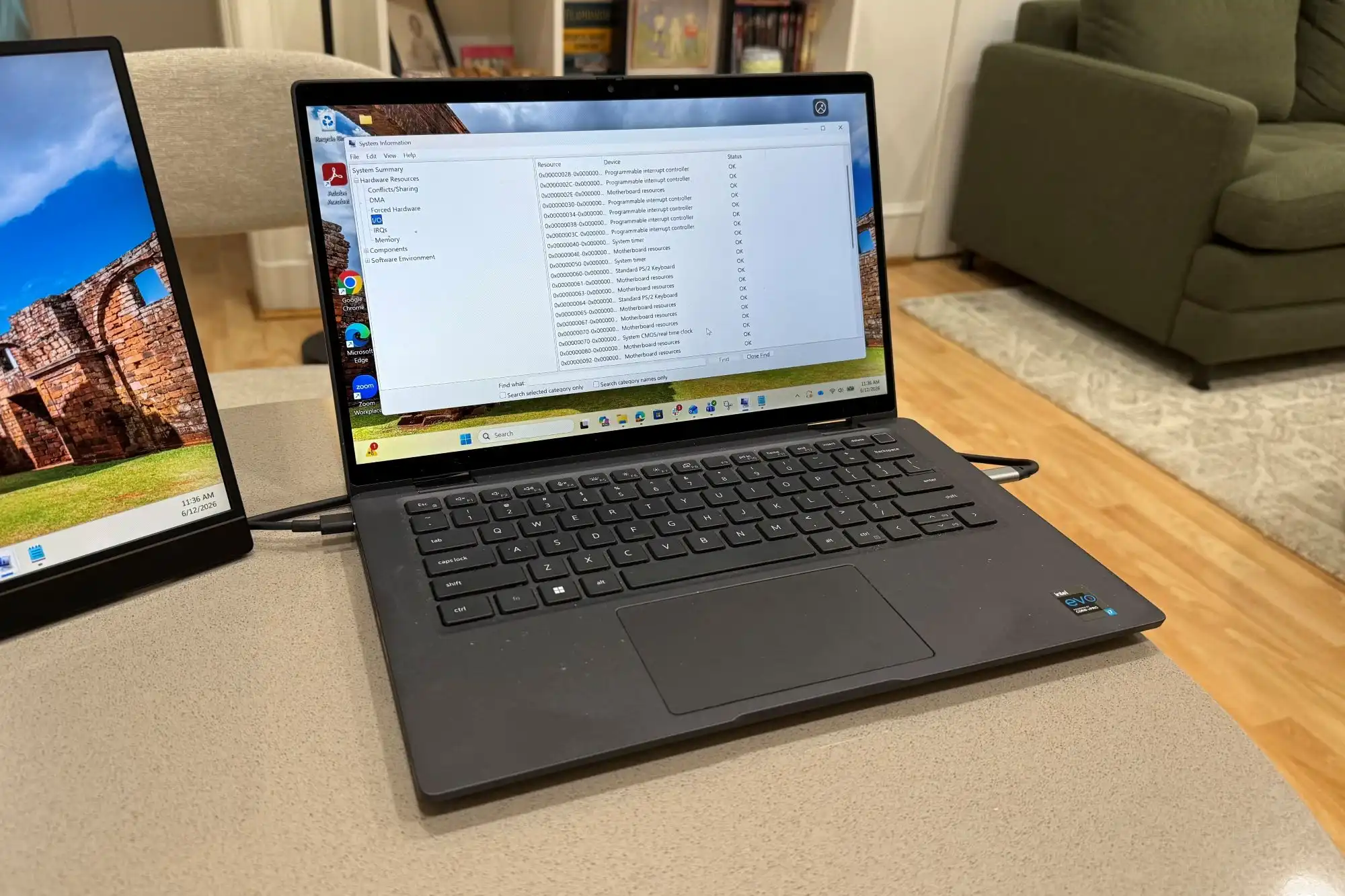
The ThinkPad P14s Gen 6 represents a major milestone in the evolution of mobile workstations, challenging the traditional trade-off between performance and portability. Unlike its predecessors, which relied on larger chassis to house powerful components, this iteration packs even more computational power into a significantly smaller footprint, raising important questions about thermal sustainability and long-term reliability under demanding workloads.
At the heart of the P14s Gen 6 lies an Intel Core Ultra processor based on Meteor Lake architecture. The top-tier configuration features up to 15 cores—8 performance cores and 7 efficiency cores—with a base clock speed of 2.3 GHz that can turbo boost up to 4.9 GHz. This is paired with up to 64 GB of LPDDR5X memory operating at 5600 MT/s, providing ample bandwidth for intensive tasks such as AI inference, data processing, and complex simulations. Storage is handled by a 2 TB PCIe Gen 4 SSD, which ensures rapid data access without becoming a performance bottleneck.
Thermal management has always been a critical factor in ultraportable workstations, and the P14s Gen 6 addresses this with a dual-fan cooling system and an aluminum chassis designed to improve heat dissipation by up to 20% compared to its predecessor. While early benchmarks suggest better thermal throttling than previous models, real-world performance under sustained AI workloads will be a key test of its long-term viability.

For IT administrators and deployment teams, the P14s Gen 6 introduces several new considerations. The device comes equipped with Intel vPro and Lenovo ThinkShield security features, which streamline enterprise management and endpoint protection. However, the shift to Meteor Lake architecture may present compatibility challenges with legacy software or older drivers, potentially complicating large-scale deployments without thorough testing.
Looking ahead, the P14s Gen 6's roadmap is closely tied to Intel's broader strategy for AI integration in mobile platforms. While it does not yet offer dedicated AI acceleration hardware like some competitors, its CPU architecture and memory bandwidth position it well for future software optimizations that could unlock more efficient AI workload processing without requiring a complete hardware overhaul.
The most significant achievement of this iteration is the successful compression of high-end workstation performance into a 14-inch chassis. This balance between power and portability was previously only achievable in larger, heavier designs. Whether this balance holds under sustained real-world use, particularly for AI-driven tasks, will determine if it becomes a standard-bearer for the next generation of mobile workstations.