When TSMC first broke ground in Arizona in 2023, the move was framed as a historic pivot toward U.S.-based semiconductor manufacturing. Now, just three years later, the company is preparing to nearly triple its investment in the state with a $100 billion package for four additional fabrication plants. But despite the staggering sum—and the buzz around reshaping global supply chains—the reality of what this means for chip production, costs, and timelines is far more nuanced.
The expansion, expected to be formally announced by April, would push TSMC’s total commitment in Arizona to $265 billion. Of that, $165 billion has already been allocated, with the new $100 billion split between TSMC and its supply chain partners, who are contributing an estimated $30 billion. Yet the scale of the investment doesn’t translate to immediate capacity or even a fixed timeline. Fabrication plants take years to design, equip, and bring online—often a decade or more—with no guarantees of avoiding delays.
What people might assume
- TSMC will instantly flood the U.S. with cutting-edge chips, reducing reliance on Taiwan.
- The $100 billion will be spent quickly, accelerating production timelines.
- This move will single-handedly secure America’s semiconductor dominance.
- All four new fabs will prioritize advanced nodes like 3 nm or 2 nm.
What’s actually changing—and what isn’t
First, the $100 billion is not a lump sum to be deployed overnight. TSMC’s capital expenditures are spread over years, if not decades. The company already approved a record $45 billion in spending for 2026 alone, but even that won’t cover Arizona’s needs in full. The Arizona expansion will likely compete for resources with TSMC’s ongoing investments in Taiwan, where it continues to push boundaries in 2 nm and advanced packaging. Some of the new capacity may focus on mature nodes—like 5 nm or older—rather than bleeding-edge 3 nm or 2 nm, depending on demand and logistical constraints.
Second, TSMC isn’t acting alone. Its supply chain partners—companies that provide equipment, materials, and services—are chipping in $30 billion. This reflects a broader industry shift toward localization, but it also means the burden of risk is shared. If delays occur in equipment delivery or regulatory approvals, the entire timeline could stretch further.
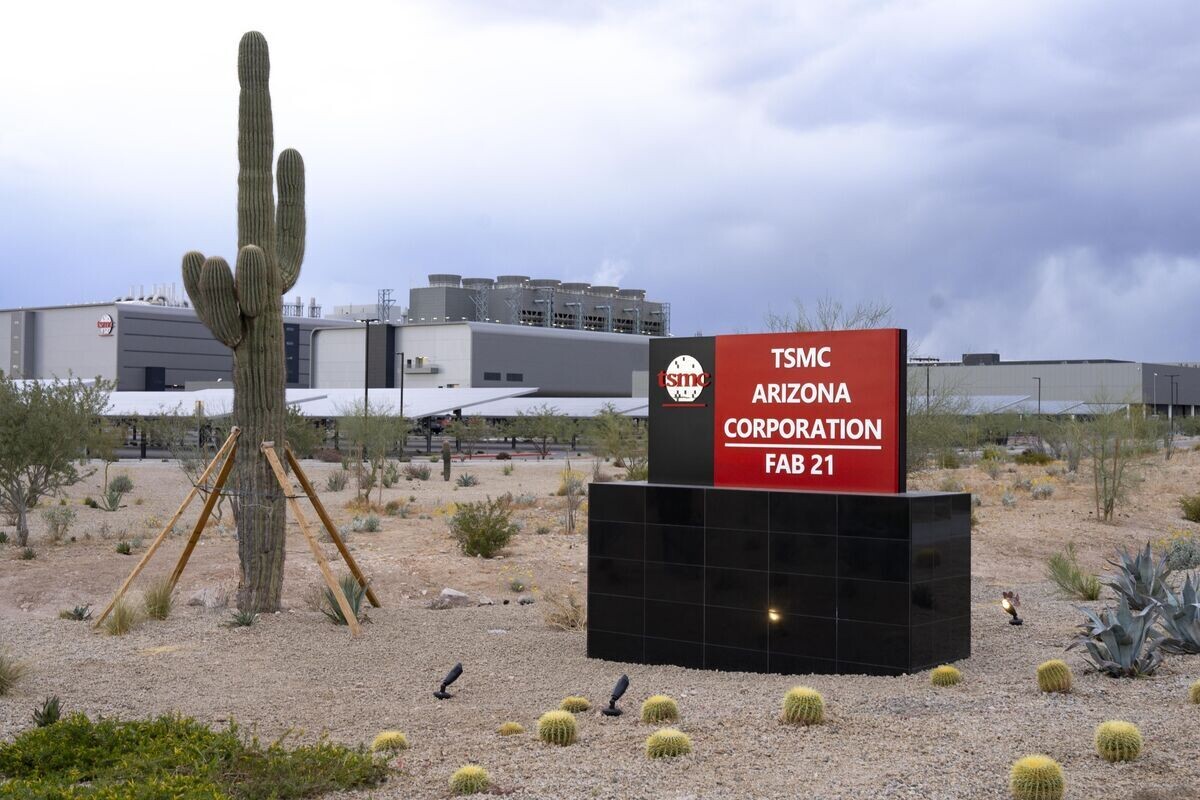
Third, the Arizona site won’t replace Taiwan overnight. TSMC has already signaled that its 3 nm production in Arizona won’t begin until the second half of 2027 at the earliest. Even then, the new fabs won’t reach full capacity for years. The company’s recent purchase of an additional 900 acres of land—directly across the highway from its existing campus—hints at long-term planning, but it doesn’t guarantee speed.
Finally, the economic impact is real but incremental. The $265 billion total makes this the largest foreign investment in U.S. history, but the effects on domestic chip production will unfold gradually. For now, TSMC’s Arizona facility remains a critical but supplementary player in its global strategy, not a standalone solution to geopolitical or supply chain risks.
What this means for the industry
- Timelines are fluid. Fabrication plants take years to complete, and TSMC’s Arizona expansion will likely follow a similar trajectory. Expect phased rollouts rather than a sudden surge in capacity.
- Advanced nodes may take a backseat. While TSMC has targeted 3 nm for Arizona, some capacity could initially focus on older nodes to stabilize production before scaling up.
- Supply chain resilience is the goal. The $30 billion from partners underscores a collaborative effort to reduce dependency on Taiwan, but it also means shared responsibility for delays or cost overruns.
- U.S. manufacturing gets a boost—but not dominance. Arizona will become a major hub, but TSMC’s global operations will remain intertwined with Taiwan for the foreseeable future.
The Arizona expansion is undeniably transformative, but the myth of an overnight semiconductor revolution needs tempering. What’s clear is that TSMC’s bet on the U.S. is less about immediate gains and more about hedging against long-term risks—whether geopolitical, logistical, or economic. For now, the chips are still being made in Taiwan, and Arizona’s role is evolving, not replacing.