The addlink 2026 Virtual Showcase is set to redefine storage performance for AI systems, gaming desktops, and mobile workflows. At the heart of this lineup are PCIe Gen 5 SSDs that push data transfer speeds to 14,000 MB/s, but the catch lies in balancing those peak numbers with real-world stability and thermal management—critical for sustained high-performance workloads.
This showcase isn’t just about raw speed metrics. It’s a deliberate push into three distinct performance domains: AI PCs where DDR5 CUDIMM modules are becoming essential, gaming desktops where responsiveness directly impacts frame rates, and mobile creators who need both portability and bandwidth without sacrificing battery life.
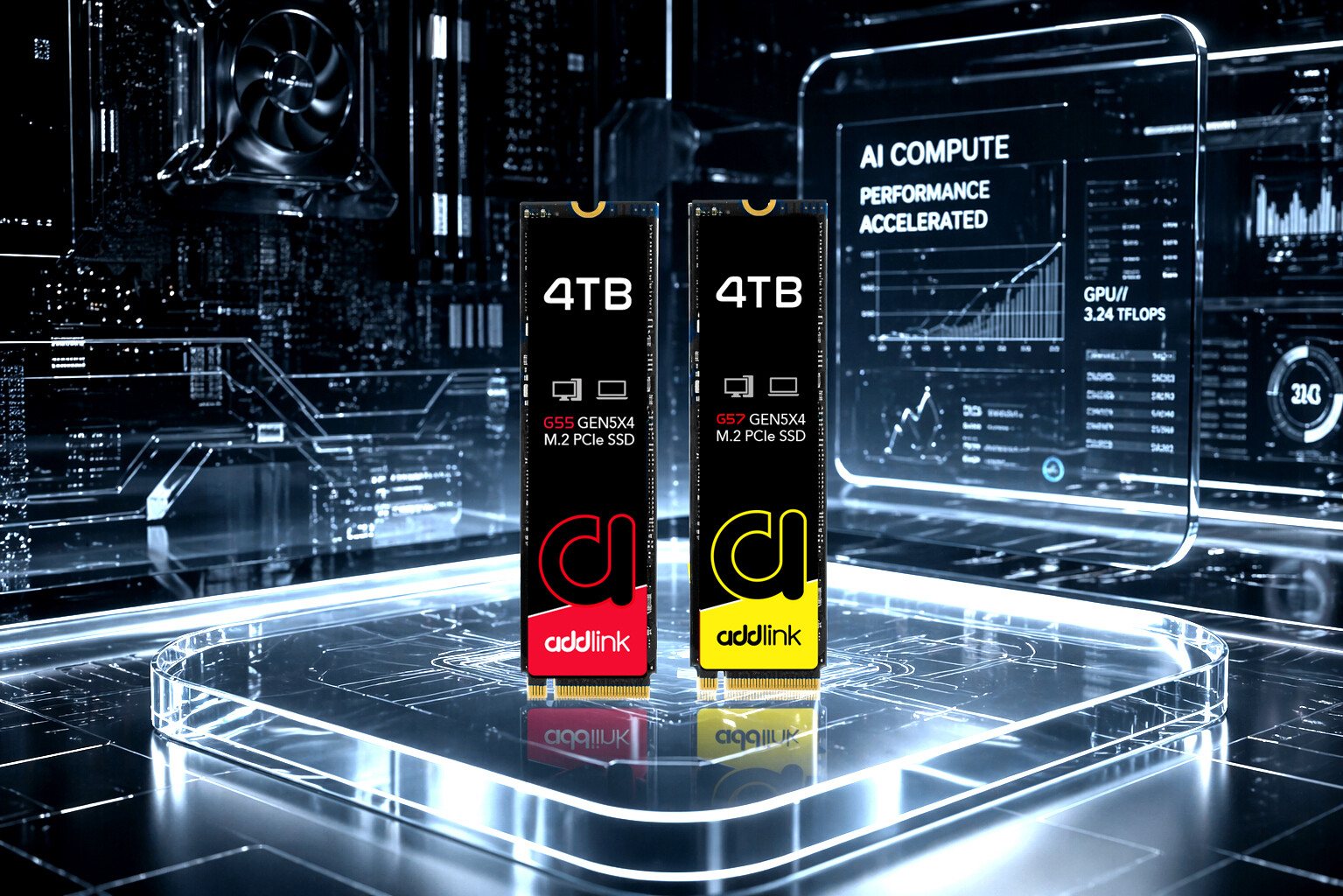
- G57 PCIe Gen 5 SSD: 14,000 MB/s read/write, 6 nm controller, intelligent thermal management
- SC5 DDR5 CUDIMM: up to 8,400 MT/s for gaming and next-gen desktops
- B31 Magnetic Docking Station: 100 W power delivery, HDMI 4K @ 60 Hz, built-in NVMe SSD enclosure
- P30 Portable SSD: 4,000 MB/s USB4 transfer speeds, magnetic attachment for mobile workflows
That’s the upside—here’s the catch. PCIe Gen 5 SSDs like the G57 are designed with AI workloads in mind, but their effectiveness depends on how well they handle sustained thermal loads without throttling. Similarly, DDR5 CUDIMM modules (like the SC5) promise lower latency for gaming, yet real-world adoption hinges on motherboard compatibility and power delivery stability.
The B31 docking station bridges the gap between mobile and desktop workflows, but its 100 W PD capability means it’s not just a charger—it’s a full-featured expansion hub that could redefine how creators manage multiple devices. The P30 portable SSD, with its USB4 speeds, is built for high-resolution video editing on the go, though its magnetic attachment adds bulk and may not suit ultra-thin devices.
Who benefits most? AI researchers and 3D rendering teams will see immediate gains from PCIe Gen 5 SSDs if thermal management holds under sustained loads. Gamers with compatible motherboards could experience smoother performance, but DDR5 CUDIMM adoption remains tied to chipset support. Mobile creators will gain portability without sacrificing transfer speeds, though the tradeoff is physical size and battery impact.
The showcase doesn’t confirm pricing or availability, leaving those details for a later announcement—but the focus on PCIe Gen 5, DDR5 CUDIMM, and USB4 signals a clear roadmap toward higher bandwidth demands across AI, gaming, and mobile workflows.