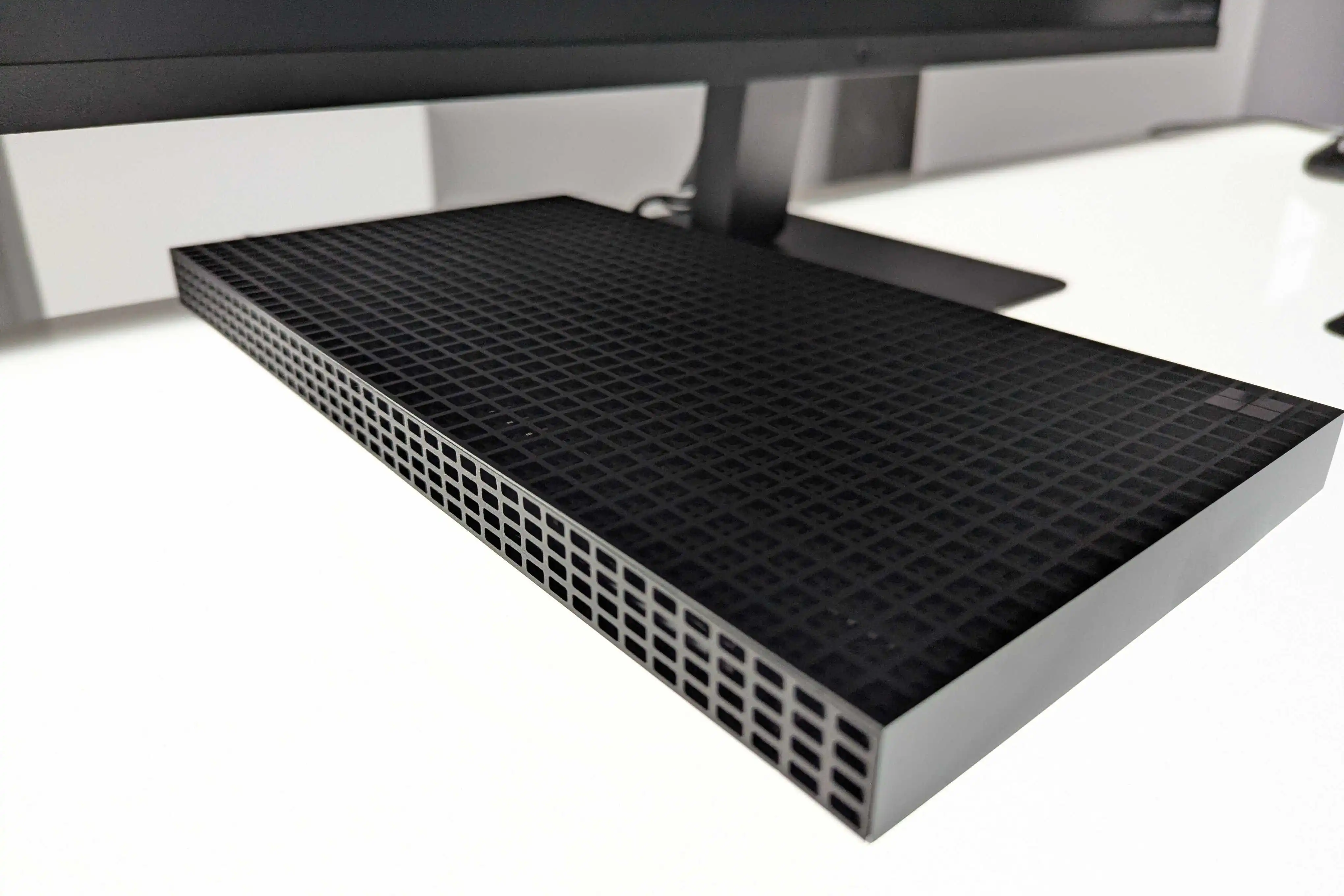
A shift toward fanless designs is taking hold in the computing industry, driven by a growing demand for silent operation, extended lifespan, and reduced thermal noise. Akasa has expanded its portfolio to address this trend, introducing a range of enclosures that support everything from ultra-low-power edge devices to high-wattage industrial applications—without relying on active cooling.
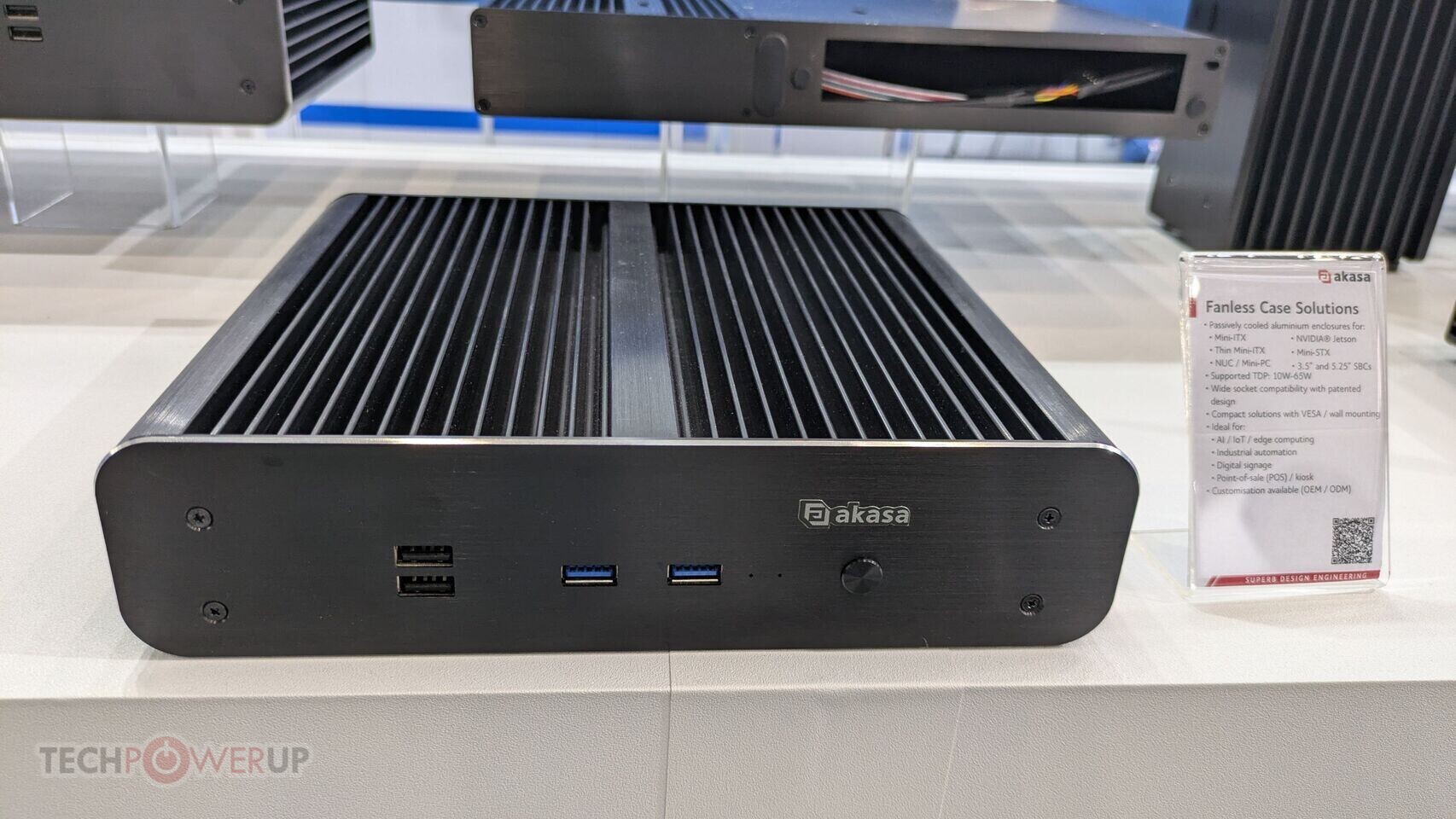
The company’s latest fanless chassis lineup now includes options for Mini-ITX, Thin Mini-ITX, NUC, and Mini-STX form factors. These cases cater to diverse use cases, from AI and IoT edge deployments to rugged industrial setups. The designs cover thermal design power (TDP) ranges from 10 W up to 65 W, demonstrating a focus on both efficiency and performance.
Among the standout models is the Plato RC, a sub-1U enclosure measuring just 39 mm in thickness, built specifically for NUC 14/15 Pro units. Its slim profile makes it ideal for space-constrained environments where heat dissipation must remain silent. In contrast, the Fermi CM5 offers a 1U form factor (185 x 93 x 43.6 mm) tailored for the Raspberry Pi CM5 IO board, emphasizing modularity and adaptability.
For those working with Kontron hardware, the Laplace K12 provides a 1.07-liter Mini-STX option, while the Euler CMX stands out with an embedded LCD display and support for up to 35 W TDP, catering to miniaturized yet feature-rich industrial builds. Meanwhile, the Newton N16 accommodates ASUS NUC 16 Pro units, scaling up to 28 W—sufficient for more demanding workloads while maintaining passively cooled operation.
The Pascal MX takes ruggedness to another level with an IP65 rating, designed for Thin Mini-ITX boards that push the TDP envelope up to 65 W. This enclosure also integrates a 220 W DC-to-DC ATX power converter, ensuring stable power delivery even in harsh environments where traditional PSUs would struggle.
Beyond enclosures, Akasa has introduced cooling solutions that bridge the gap between passive and active thermal management. A 6-heatpipe CPU cooler with dual 120 mm PWM fans delivers targeted airflow for high-performance systems, while a 1U low-profile vapor chamber cooler supports LGA1700 and LGA1851 sockets, handling TDP values up to 125 W without compromising on form factor. This dual approach allows builders to choose between silent operation and active cooling based on their specific needs.
A new 120 mm performance fan from Akasa pushes the boundaries of airflow efficiency, delivering 85.51 CFM at just 37.7 dB(A), making it suitable for environments where noise levels must remain minimal without sacrificing performance. Complementing this are micro DC fans and blowers, ranging from 13 mm to 45 mm, which fill the gap for compact systems requiring precise airflow control.
Thermal management extends beyond hardware with the T6 Prograde thermal compound, offering an impressive 18 W/mK heat dissipation rating. This high-performance paste is designed to maximize efficiency in systems where every watt of heat must be efficiently transferred away from critical components.
For liquid cooling applications, Akasa has expanded its offerings to include solutions for Intel Xeon and AMD EPYC processors, supporting TDP values up to 750 W. These high-capacity liquid coolers address the thermal demands of server-grade workloads while maintaining reliability in data center or industrial environments.
Power delivery is another critical area where Akasa has made strides. The G-Nexus 12V-2x6 adapter manages up to 600 W, designed specifically for GPU power delivery in tight clearance scenarios. This adapter ensures stable voltage delivery without the risk of overheating or cable management issues—a common pain point in high-performance builds.
Complementing this is a dual SATA-to-8-pin CPU adapter, which simplifies power distribution in systems with multiple high-wattage components. Additionally, a 3-way PWM/ARGB fan hub provides centralized control over RGB lighting and fan speed, adding both functionality and aesthetic appeal to custom builds.
Networking solutions are not overlooked, with Akasa introducing a 10 GbE PCIe 3.0 x2 RJ45 network card that supports six-speed auto-negotiation. This component is particularly valuable for high-bandwidth applications where latency and throughput are critical, such as data centers or professional workstations.
Storage expansion is also addressed with two M.2 NVMe-to-PCIe adapters—one featuring a key-locked removable tray for easier installation and maintenance. These adapters provide flexibility in systems where M.2 slots are limited or non-existent, allowing builders to leverage high-speed NVMe storage without compromising on performance.
Industrial-grade connectivity is further reinforced with a wide-temperature USB 3.2 Gen 1 hub rated for operation between -40°C and 70°C. This component ensures reliability in extreme environments where standard consumer hardware would fail, making it ideal for field deployments or outdoor applications.
The combination of these components suggests a clear trend: the industry is moving toward solutions that balance passive efficiency with high-performance capabilities. For PC builders and system integrators, this means more options to design silent yet powerful systems—whether for consumer use, industrial applications, or data center deployments.
Availability remains a key consideration. While specific release dates are not yet confirmed, the components on display hint at a broader push toward modularity, high efficiency, and adaptability in both low-power and high-wattage scenarios. For now, builders can look forward to a range of solutions that redefine what’s possible without active cooling—though some high-wattage applications may still require hybrid approaches.