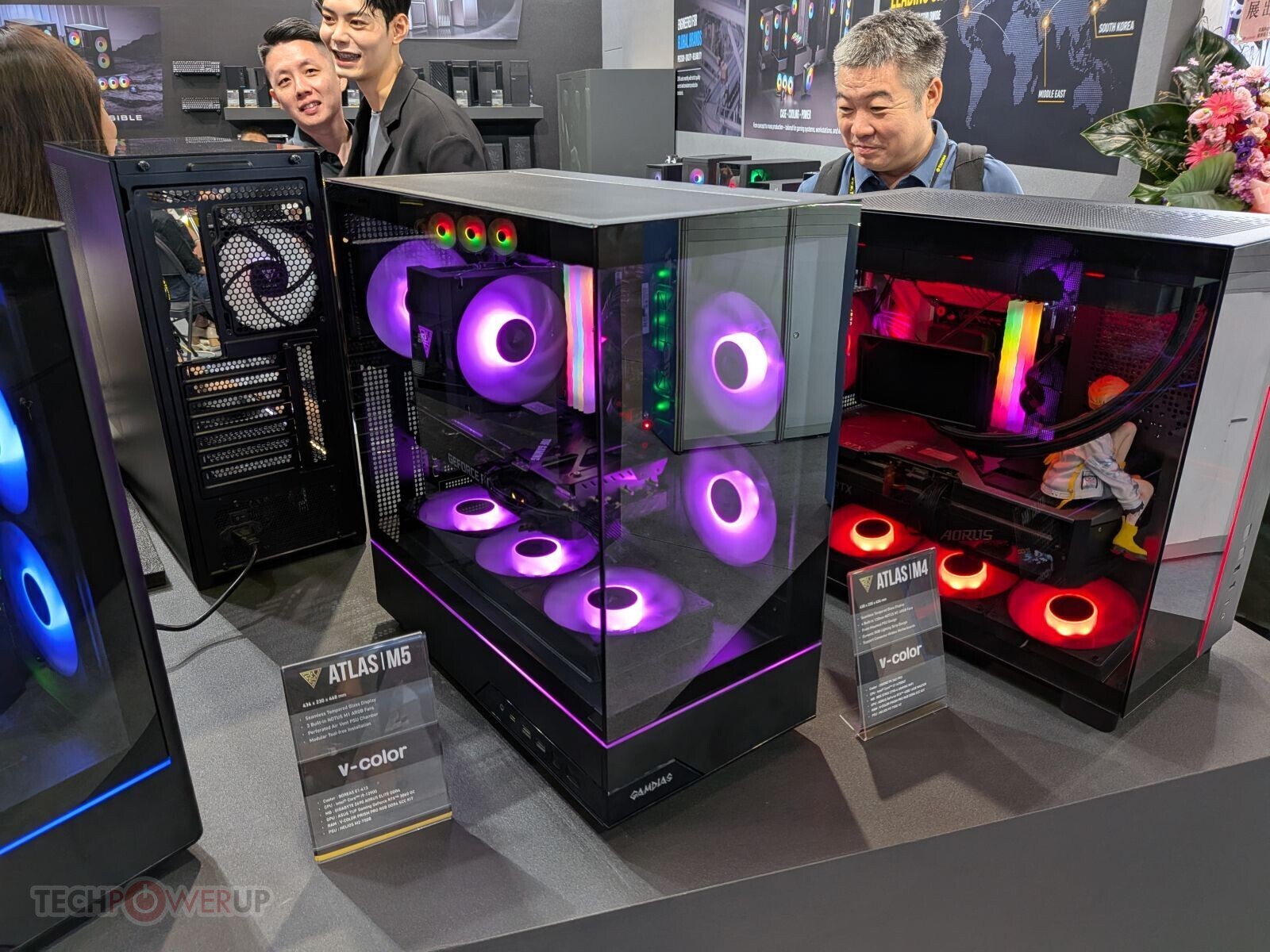
Gamdias has unveiled a lineup that challenges the boundary between form and function in PC cooling and enclosure design. At the heart of its presentation are two mid-tower chassis—one with a three-sided glass facade that eliminates traditional support pillars, the other featuring four tempered glass panels arranged to create a floating visual effect when paired with underglow lighting.
Both cases can integrate vertical LCD displays up to 11.26 inches in size, but what sets them apart is not just the screen real estate but how they reimagine internal visibility. The ATLAS P6 CG Series, for example, includes a dedicated stage with omnidirectional lighting for physical media display, while the ATLAS P7 Series offers a more premium variant with an integrated LCD and reinforced sheet metal back panel to support heavier components.
This shift reflects broader industry trends where enclosure design is no longer just about airflow or cable management but also about creating a canvas for visual storytelling. The inclusion of built-in displays suggests a move toward systems that double as interactive installations, which could appeal to both gaming setups and AI-driven workstations requiring high-bandwidth cooling solutions.
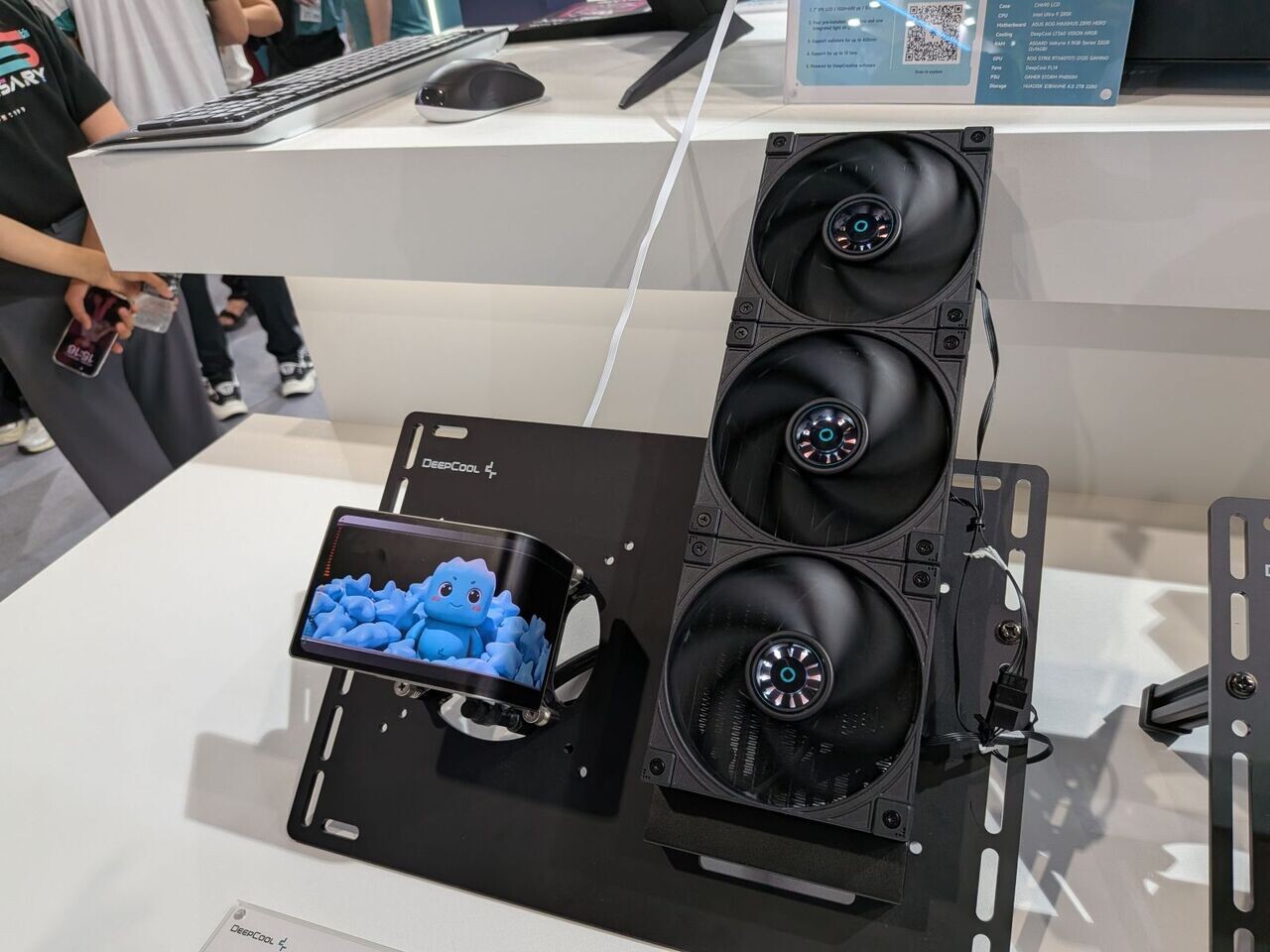
Complementing the chassis are two all-in-one liquid coolers: the CHIONE P6 with a 6.67-inch curved LCD capable of simulated 3D effects, and the CHIONE P5 PRO featuring a detachable 6-inch screen. Both use multi-directional brackets to optimize viewing angles, addressing a practical need for users who prioritize both aesthetics and performance in high-end builds.
- THOR P2 Series power supplies (up to 1350 W) support ATX 3.1 and PCIe Gen 5.1, with 80 Plus Platinum efficiency and a twelve-year warranty.
- CHIONE P6 AIO cooler features a curved 6.67-inch true-color LCD for advanced visual effects.
- ATLAS P7 Series includes four tempered glass panels and underglow lighting for a floating effect.
The THOR P2 power supply series, available in capacities up to 1350 W, is notable for its adherence to ATX 3.1 and PCIe Gen 5.1 standards—a critical specification for systems powered by GPUs like the RTX 5080 or CPUs such as Apple’s M1, which demand robust power delivery. The inclusion of Japanese capacitors and a silent cooling mode further positions these units for both high-performance computing and AI workloads.
What might seem like an overemphasis on visual elements is actually a response to changing user expectations. Enthusiasts no longer view PCs as purely functional devices but as platforms for expression, while enterprise buyers increasingly require systems that balance thermal efficiency with modularity. Gamdias’ approach suggests that the next generation of enclosures will need to support not just hardware upgrades but also software-driven visual experiences, whether for gaming or AI training.
The practical benefit here is clear: users who previously had to choose between raw performance and aesthetic flexibility now have options that merge both. The integration of DDR5 memory compatibility (implied by the power supply specs) and support for next-gen GPUs like NVIDIA’s RTX 5080 ensures these systems remain relevant in an era where AI acceleration and high-bandwidth computing are table stakes.
For enterprise buyers, this means a shift toward enclosures that prioritize not just cooling efficiency but also the ability to integrate with advanced liquid-cooling solutions without sacrificing modularity. The twelve-year warranty on the THOR P2 PSUs, combined with Japanese capacitors, signals durability—a key consideration for data center and workstation deployments where uptime is non-negotiable.
The takeaway is straightforward: Gamdias is betting that the future of PC enclosures lies in systems that are as much about visual storytelling as they are about performance. Whether this resonates with mainstream users or remains a niche for high-end builds will depend on how quickly software and hardware evolve to support these features, but the trend is undeniable.