AMD’s Integrated Graphics Strategy: A Decade of Stagnation for Most Users
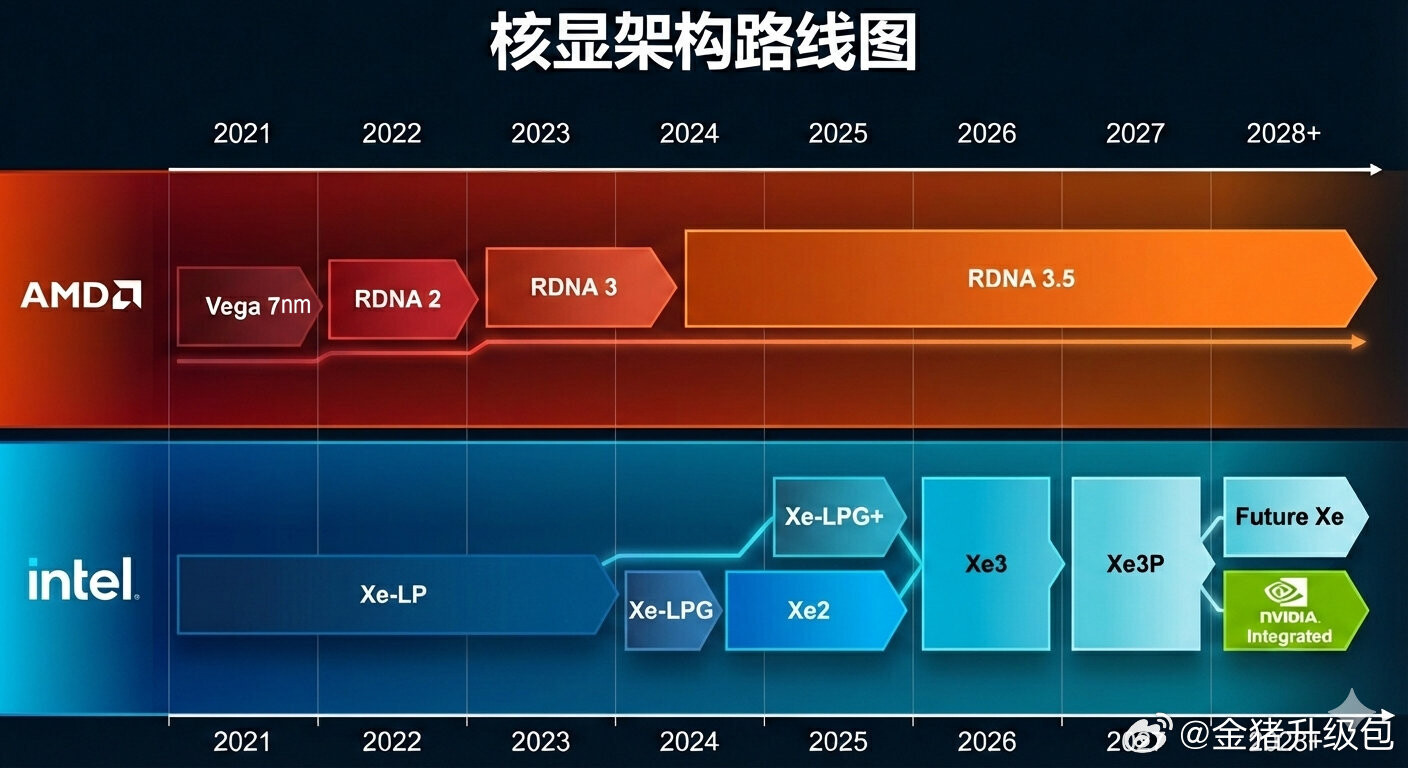
AMD’s latest product roadmap signals a prolonged reliance on its RDNA 3.5 architecture for integrated graphics, with no meaningful upgrades expected for mainstream laptops until at least 2029. Meanwhile, the company’s next-generation RDNA 5 architecture—rumored to debut in high-end 'Medusa Halo' chips—will be absent from midrange and office-oriented processors, leaving performance improvements limited to CPU advancements like Zen 6.
The revelation, surfaced by industry-leading analyst Golden Pig Upgrade, suggests AMD is doubling down on a conservative approach that contrasts sharply with competitors. While NVIDIA and Intel continue annual refinements in their integrated graphics solutions, AMD’s strategy appears to prioritize incremental CPU upgrades over iGPU innovation for the foreseeable future.
The Architecture Divide: RDNA 3.5 vs. RDNA 5
According to the leaked roadmap, RDNA 3.5—already in use across Ryzen AI 300 and 400 series APUs—will remain the standard for most consumer laptops through 2029. This means users in the office, education, and budget gaming segments can expect no architectural upgrades in their integrated graphics for nearly half a decade.
RDNA 5, by contrast, is slated exclusively for AMD’s premium 'Halo' lineup, including the anticipated 'Medusa Halo' chips. These high-end SKUs, which may feature separate GPU tiles, will likely incorporate RDNA 5—an architecture rumored to support up to 96 compute units and a 384-bit memory bus. However, the more common 'Medusa Point' chips, targeting midrange and mainstream markets, will continue using RDNA 3.5.
The implications are clear: AMD’s mainstream users will see little to no improvement in integrated graphics performance beyond what’s already available today. Even minor enhancements—such as additional compute units or process node advancements—appear unlikely, given the company’s past reluctance to push RDNA 4 into mobile or APU markets.
Why the Stagnation?
AMD’s decision reflects a broader trend in its graphics strategy. The company’s RDNA 4 launch was limited to desktop GPUs, bypassing mobile and APU integration entirely. This approach left a gap in its product stack, with no high-end competitors to challenge NVIDIA’s dominance in discrete graphics. Now, with RDNA 5 reserved for premium SKUs, the mainstream market faces even longer waits for upgrades.
Compounding the issue is AMD’s reliance on CPU advancements—particularly Zen 6—as the primary driver of performance gains. With TSMC’s 2 nm process for CCDs and 3 nm for I/O, Zen 6 promises efficiency improvements, but these won’t translate to better integrated graphics. For users who depend on iGPUs for productivity or light gaming, the lack of architectural progress could create a growing performance gap compared to competitors.
What This Means for Consumers
For mainstream laptop buyers, the news is a mixed bag. On one hand, RDNA 3.5 remains a capable architecture, offering decent performance for 1080p workloads and basic gaming. However, the absence of upgrades for five years risks leaving AMD’s iGPUs behind as competitors refine their solutions annually.
High-end users, particularly those targeting 'Medusa Halo' chips, may see RDNA 5 in the future, but the exclusivity of this architecture raises questions about AMD’s long-term vision. If RDNA 5 never trickles down to midrange or budget APUs, the company risks alienating a significant portion of its customer base.
In the meantime, AMD’s focus on CPU improvements—such as Zen 6—could appeal to power users, but for the average consumer, the lack of iGPU innovation may feel like a step backward. With DDR6 memory speeds climbing to 17,600 MT/s and competitors like Intel and NVIDIA pushing forward with annual refinements, AMD’s strategy could leave it further behind in the integrated graphics race.
Key Takeaways
- RDNA 3.5 Lifespan: AMD’s integrated graphics architecture will remain in use until at least 2029 for mainstream laptops.
- RDNA 5 Exclusivity: Next-gen architecture is reserved for premium 'Halo' SKUs, leaving midrange users without upgrades.
- Zen 6 Focus: CPU advancements will drive performance gains, while iGPU improvements stall for years.
- Competitive Risk: Prolonged stagnation in iGPU tech could widen the gap against NVIDIA and Intel’s annual refinements.
- Memory & Process: Zen 6 uses TSMC’s 2 nm (CCDs) and 3 nm (I/O), but this won’t benefit integrated graphics.
The roadmap also hints at potential future shifts. If AMD’s 'Medusa Halo' lineup succeeds, it could pave the way for broader RDNA 5 adoption—but for now, the company’s mainstream users are left waiting. Whether this strategy pays off remains to be seen, but one thing is clear: AMD’s integrated graphics future is far from certain.
Availability & Pricing: No confirmed release dates or pricing for RDNA 5 or 'Medusa Halo' chips. Mainstream RDNA 3.5 APUs remain in production through 2029.