AMD’s Ryzen 9000 series has faced scrutiny over reliability concerns since launch, but a new case involving the top-tier Ryzen 9 9950X suggests a deeper problem—one that may lie with ASRock’s high-end AM5 motherboards rather than the CPUs themselves.
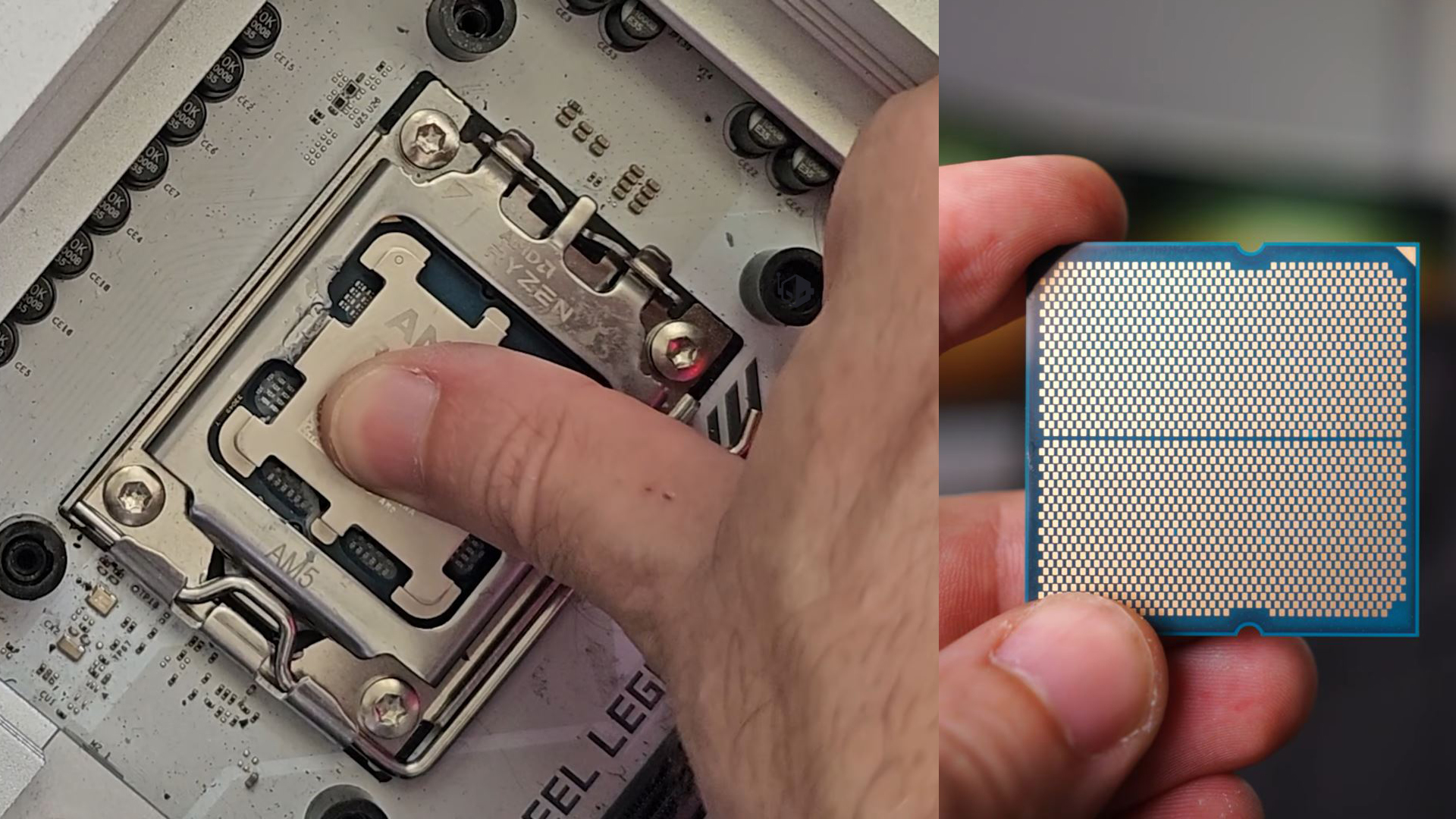
A well-known hardware content creator has documented the unexpected failure of two Ryzen 9 9950X processors within a few months of operation, both running on the same ASRock X870 Steel Legend WiFi motherboard. Unlike sudden catastrophic failures, these CPUs exhibited gradual degradation, a pattern that points to voltage regulation issues in the motherboard’s VRM rather than inherent flaws in AMD’s latest desktop chips.
The Problem: Two CPUs, One Board, Zero Redemption
The first Ryzen 9 9950X lasted roughly three to four months before shutting down unexpectedly. After replacing it with a second unit from a different supplier, the same fate struck—another premature death on the identical motherboard. The creator tested the failed CPUs across multiple ASRock AM5 boards, confirming their demise wasn’t due to a defective batch of Ryzen 9000 processors but rather a compatibility or hardware issue tied to the X870 Steel Legend WiFi.
Despite ASRock’s recent BIOS updates—including version 4.10 with AGESA 1.3.0.0a, aimed at stabilizing Ryzen 9000 booting—the latest firmware didn’t revive the CPUs. This suggests the root cause may be physical, likely involving VRM regulators that cause voltage overshoot, gradually damaging the CPU over time.
Key Findings: What’s Really Happening?
- Two Ryzen 9 9950X failures: Both CPUs died within months on the same ASRock X870 Steel Legend WiFi motherboard.
- Gradual degradation: Symptoms align with voltage-related stress rather than sudden hardware failure.
- BIOS updates ineffective: Latest firmware (v4.10) didn’t resolve the issue, pointing to a hardware-level problem.
- Other ASRock boards unaffected: The creator’s B850 and X870 setups have operated flawlessly for years, suggesting a batch-specific defect.
- Retailer confirmation: A major Australian retailer acknowledged Ryzen 9000 failure rates as normal but noted they no longer stock high-end ASRock motherboards due to similar reports.
The pattern hints at a manufacturing defect in a subset of ASRock’s high-end AM5 motherboards, where VRM components may not handle the power demands of AMD’s flagship CPU. Unlike Intel’s recent 13th/14th-gen issues—marked by widespread failures—this appears to be a niche problem affecting only certain ASRock models paired with the Ryzen 9 9950X.
Who’s Affected—and What Should You Do?
Owners of the ASRock X870 Steel Legend WiFi running a Ryzen 9 9950X should monitor their system for signs of instability, such as unexpected shutdowns or performance drops. If a CPU fails prematurely, testing it on a different motherboard could confirm whether the issue lies with the board or the processor. In extreme cases, replacing both the motherboard and CPU may be necessary.
For now, ASRock continues to push BIOS updates, but hardware-level fixes would require a motherboard replacement. The broader Ryzen 9000 series remains stable for most users, but this case underscores the importance of thorough testing—especially for high-end builds where power delivery is critical.