AMD’s client CPU division has delivered its strongest financial performance in years, with revenue climbing 34% year-over-year to $3.1 billion in the latest quarter. The surge reflects a market increasingly hungry for Ryzen processors, both in gaming desktops and commercial systems, where sell-through grew over 40% in the final months of 2025.
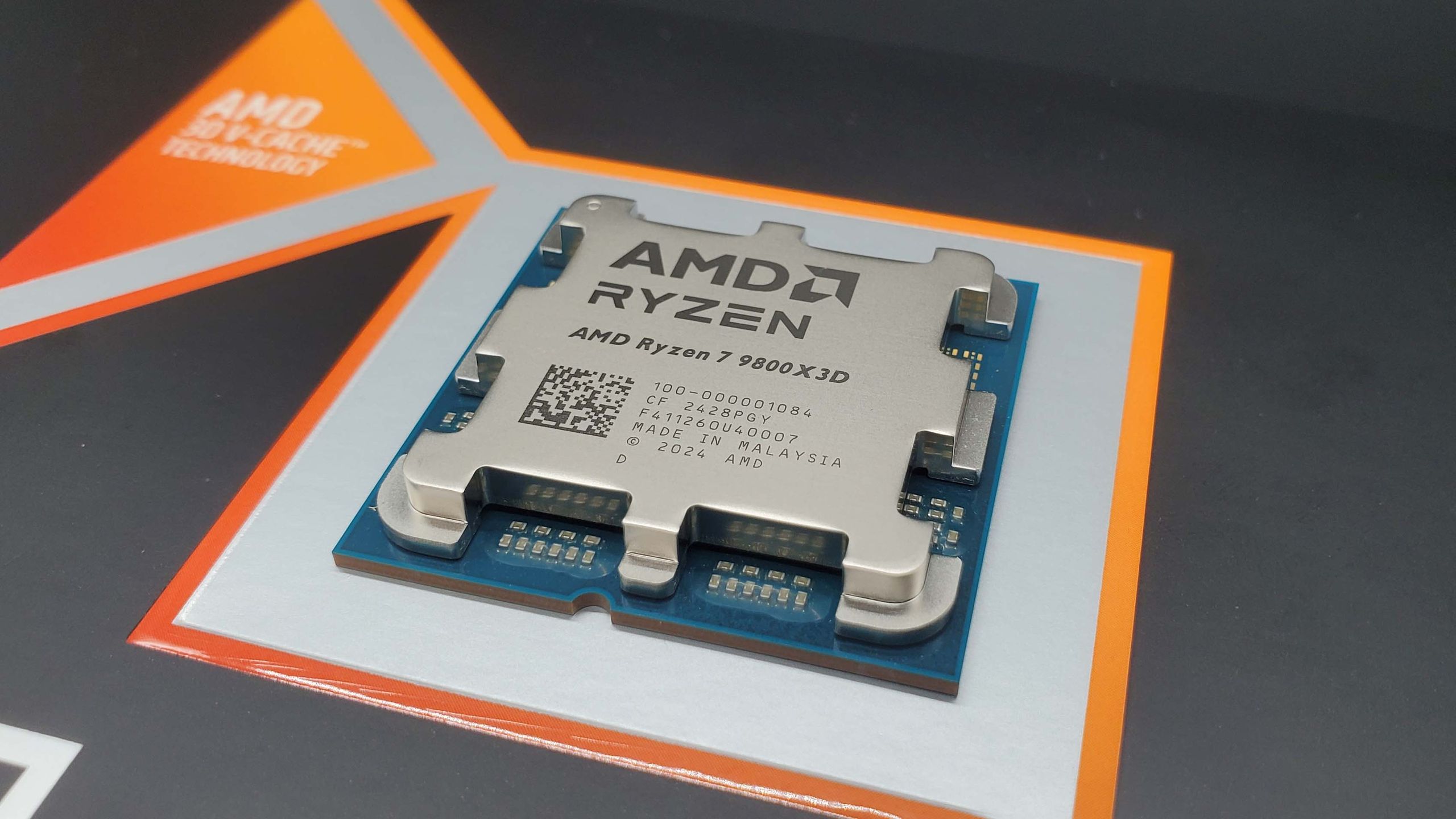
The numbers underscore Ryzen’s dominance in the desktop space, where AMD’s current lineup—spanning Zen 4 and Zen 5 architectures—has become the default choice for retailers and system builders. Even previous-generation chips remain competitive, with AMD’s 3D V-Cache models like the Ryzen 7 9800X3D still commanding attention in high-end configurations.
Yet beneath the surface, challenges loom. Intel’s Panther Lake mobile chips, launched late last year, have outperformed expectations in early benchmarks, offering a rare competitive edge in battery efficiency and integrated graphics for thin-and-light laptops. AMD’s Ryzen AI 400 series, while promising in content creation workloads, appears to be a refined refresh of its Strix Point architecture—hardly a generational leap in a market where Intel is pushing Core Ultra Series 3 with dedicated AI acceleration and thermal efficiency gains.
For now, AMD’s desktop leadership is unshaken. But the mobile CPU war remains unresolved, with Intel still holding a commanding 78.1% market share in laptops as of late 2025. Whether AMD’s holiday sales momentum translates into long-term gains—or if Intel’s Nova Lake desktop chips (expected in late 2026) can disrupt the status quo—will hinge on execution, pricing, and how quickly Ryzen adapts to Intel’s shifting strategies.
Key Specs: Ryzen’s Current Desktop Dominance
- Architecture: Zen 4 (Ryzen 7000/8000) and Zen 5 (Ryzen 9000)
- Top Models: Ryzen 9 9950X3D (16 cores/32 threads, 5.7 GHz boost), Ryzen 7 9800X3D (8 cores/16 threads, 5.0 GHz boost)
- 3D V-Cache: Up to 128MB L3 cache (Ryzen 9 9950X3D), delivering sustained gaming performance gains
- TDP Range: 65W–280W (desktop); 15W–45W (mobile)
- Socket: AM5 (desktop), FP8 (mobile)
- Memory Support: DDR5-5600+ (desktop), LPDDR5X (mobile)
- PCIe 5.0: Full x16 for GPUs, x4 for NVMe SSDs
- Pricing: $250–$700 (desktop); $300–$1,200 (mobile, including AI variants)
The Ryzen 9000 series brings incremental improvements over Zen 4, with modest IPC gains and efficiency tweaks. However, the real story is AMD’s ability to sustain demand across multiple generations—something Intel has struggled with amid production delays and underwhelming performance in its Arrow Lake launch.
The Mobile Wildcard: Can Ryzen Crack Intel’s Laptop Fortress?
AMD’s mobile strategy hinges on two pillars: Ryzen AI 400 for mainstream laptops and Ryzen AI Max for high-end gaming/creator machines. The former offers modest uplifts in AI workloads (via NPU acceleration) and multitasking, but lacks the architectural overhaul seen in Intel’s Meteor Lake successor. Early reviews suggest AMD’s mobile chips still trail Intel in battery life and integrated graphics performance—critical for ultrabooks and 2-in-1 devices.
Intel’s Core Ultra Series 3 (Panther Lake) counters with Thread Director 2.0, deeper AI integration, and up to 30% better efficiency in light workloads. For AMD to close the gap, it will need more than incremental refreshes—especially as Intel ramps up production of its Nova Lake desktop chips, which could introduce a new power-efficient architecture in late 2026.
AMD’s revenue growth is a testament to its execution, but the CPU market remains volatile. Key questions
- Will Nova Lake (Intel’s late-2026 desktop launch) finally deliver the performance-per-watt to challenge Ryzen’s pricing advantage?
- Can AMD’s mobile chips break Intel’s 80%+ laptop dominance, or will they remain niche for gamers and creators?
- How will pricing evolve as Ryzen 9000 ages—will AMD extend AM5’s lifespan with another 3D V-Cache refresh?
One thing is clear: AMD’s current momentum is built on a foundation of multiple generations working in tandem. Whether that strategy holds as Intel sharpens its competitive edge will define the next chapter of the CPU war.