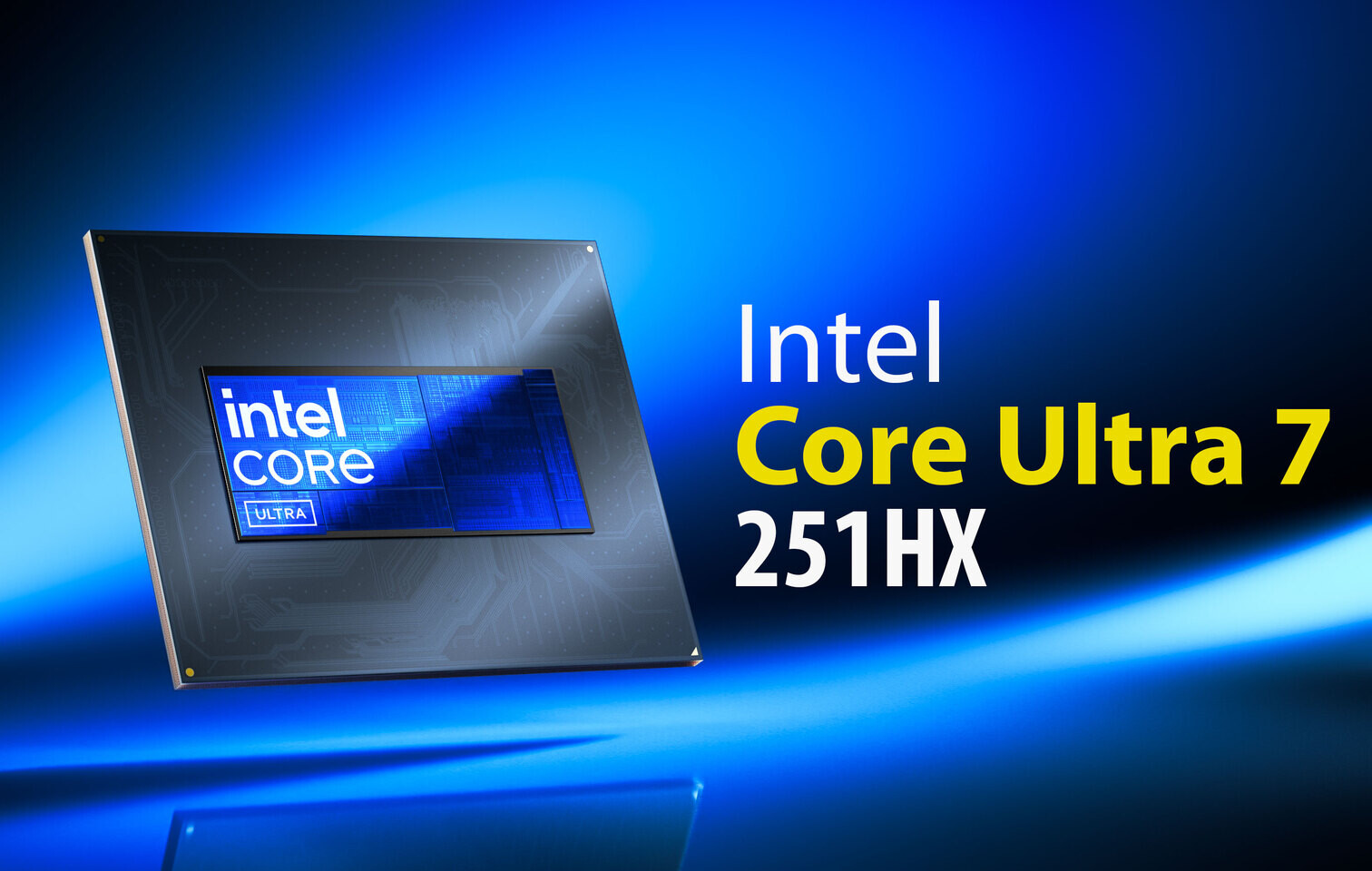
Intel's latest addition to its Arrow Lake HX series, the Core Ultra 7 251HX, positions itself as a mid-tier option without the fanfare of a formal launch announcement.
The processor, which has quietly appeared on Intel's website and in select device listings, brings 18 CPU cores—6 performance (P) cores and 12 efficiency (E) cores—to the table. It slots between the Core Ultra 5 245HX and the higher-end Core Ultra 7 255HX, offering a compromise that may appeal to creators and power users seeking a balance of performance and efficiency.
Compared to its more powerful sibling, the 251HX drops two P-cores and two threads but retains the same 30 MB of Smart Cache. Its maximum turbo frequency is slightly lower at 5.1 GHz, though base clocks see notable improvements: E-core base jumps by 700 MHz to 2.5 GHz, while P-core base increases by 500 MHz to 2.9 GHz. Memory support remains robust with DDR5-6400, ensuring compatibility with demanding workloads.
However, the integrated Xe3 graphics core—clocked up to 1.8 GHz—is a step down from the four-core configuration in the 255HX. This change also reduces AI performance from 33 TOPS to 30 TOPS, a nuanced difference that may matter for specialized workloads relying on neural processing units.
The processor maintains a TDP range identical to its counterparts, spanning from 55 W at base to 160 W under maximum turbo. This consistency suggests Intel is aiming for a uniform thermal profile across the Arrow Lake HX lineup, though real-world efficiency will depend on implementation in different devices.
For creators and content producers, the 251HX offers a compelling mix of CPU performance and GPU capabilities without pushing into premium pricing tiers. However, those with heavy AI workloads may find the reduced TOPS rating a limiting factor, depending on their specific needs.
The next steps for this processor will likely hinge on its adoption in consumer devices, particularly laptops from key OEMs like Lenovo and MSI, where it has already surfaced. Pricing and availability remain unconfirmed but are expected to align with the broader Arrow Lake HX ecosystem, which may see a gradual rollout as Intel refines its production and distribution strategies.