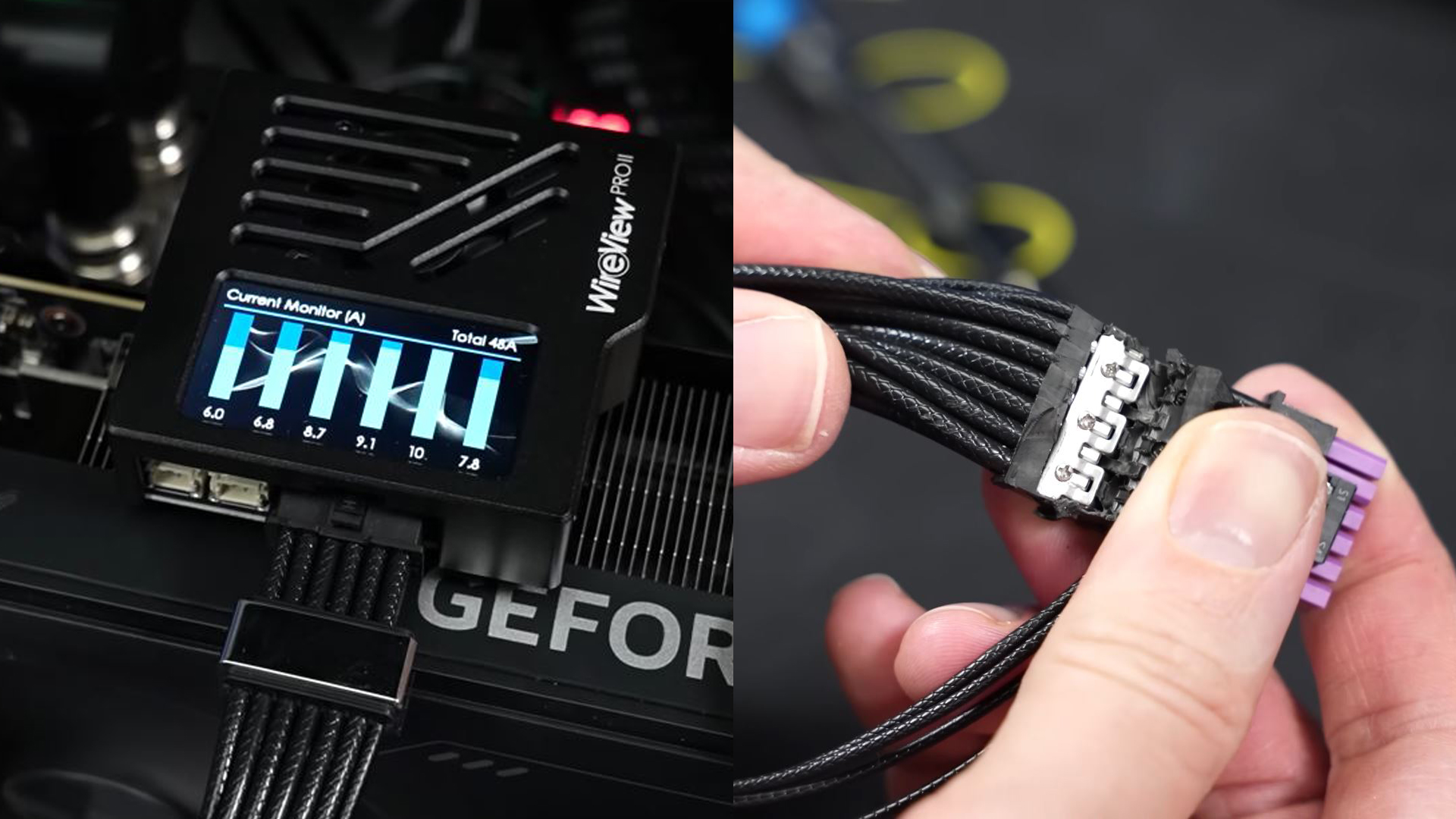
The ASUS ROG Equalizer connector, designed to deliver balanced power distribution across multiple pins, is showing unexpected performance inconsistencies when used with the RTX 5090. Testing indicates a significant current imbalance between pins, which could lead to stability issues and reduced efficiency for users pushing high-end workloads.
This revelation adds a layer of complexity for power users who prioritize both performance and reliability in their builds. The Equalizer’s promise of balanced power delivery is being challenged by real-world testing, raising questions about whether it truly delivers on its claims or if alternative connectors might offer more stable results.
A Closer Look at the Equalizer’s Performance
- Current Imbalance: Testing shows a 4A imbalance between pins when using the ASUS ROG Equalizer connector. This discrepancy can lead to uneven power distribution, potentially causing stability issues under heavy loads.
- Power Delivery: The connector is designed for 12V-2x6 pin configurations but may not perform as expected on NVIDIA’s latest GPUs, which require precise power delivery for optimal performance.
- Stability Concerns: Users relying on the Equalizer for stable power delivery might experience unexpected crashes or reduced efficiency, especially during intensive tasks like rendering or gaming at high settings.
The Equalizer’s design aims to distribute power more evenly across multiple pins, which is crucial for high-end GPUs. However, the current imbalance suggests that this balance may not always translate into real-world stability, particularly on the RTX 5090. This could force users to reconsider their cable choices if they encounter performance issues.
What This Means for Power Users
For power users who demand both high performance and reliability, the Equalizer’s performance inconsistencies introduce a potential risk. While standard 12V-2x6 connectors may offer more predictable results, the Equalizer’s design is still appealing due to its promise of balanced power delivery. However, the real-world testing suggests that this balance may come at the cost of stability.
The findings also highlight the importance of thorough testing and validation in high-performance hardware. Users who prioritize efficiency and stability should weigh the potential risks against the benefits when choosing their power connectors for the RTX 5090. As GPU technology continues to evolve, the need for reliable power delivery will only grow, making this a critical consideration for enthusiasts.
The ASUS ROG Equalizer’s performance issues serve as a reminder that even well-intentioned design choices can have unintended consequences. For users who are already experiencing stability problems with their RTX 5090 builds, exploring alternative connectors may be worth the effort to ensure optimal performance and longevity.