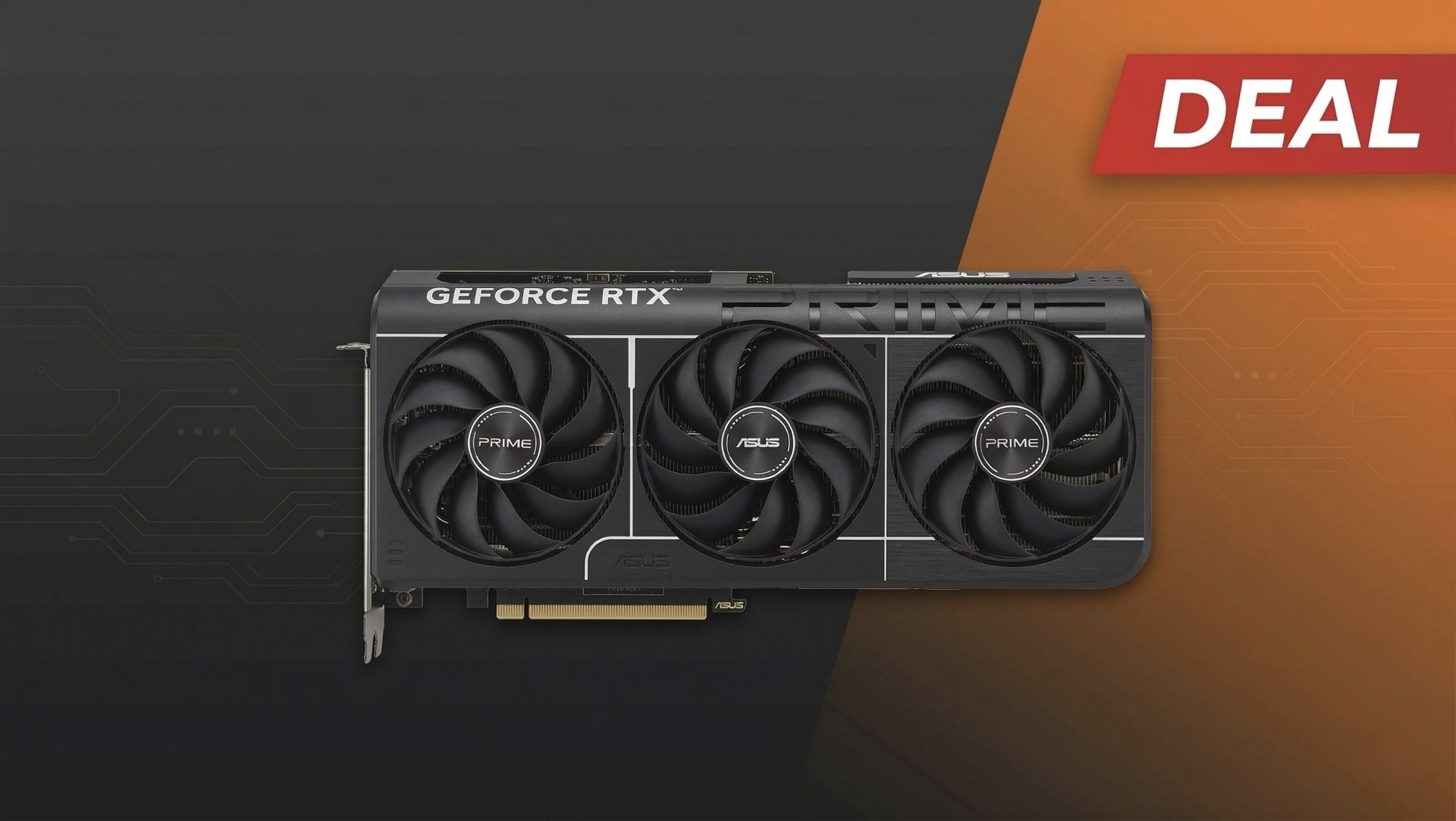
Building a PC in a small case just got slightly easier with the ASUS Prime RTX 5070 OC Edition dropping to $699. This 2.5-slot GPU is designed for tight builds, but its 12 GB GDDR7 VRAM and 1440p performance positioning make it a niche player in today’s market.
The RTX 5070 itself has an MSRP of $549, so the OC model’s price feels inflated by current standards. Most AIB cards have been hovering around $750+, making this the lowest price seen for ASUS’s SFF-ready variant. The card supports PCIe 5.0, dual BIOS profiles (performance and quiet), and outputs like HDMI 2.1 and DisplayPort 2.1—standard features in this tier.
Where it diverges is VRAM capacity. At 12 GB on a 256-bit bus, the RTX 5070 struggles at 4K with high texture settings or demanding titles like Cyberpunk 2077. DLSS 4 and frame generation help, but the 16 GB of AMD’s RX 9070 XT ($799) provides a clear advantage for future-proofing. Meanwhile, the RTX 5070 Ti—if you can find one near $850—offers better long-term scalability with its own 16 GB VRAM.
Key Specifications
- Model: ASUS Prime RTX 5070 OC Edition (SFF-Ready)
- VRAM: 12 GB GDDR7, 256-bit bus
- Memory Interface: PCIe 5.0
- Form Factor: 2.5-slot (compact for RTX 5070)
- Outputs: HDMI 2.1, DisplayPort 2.1
- Features: Dual BIOS, DLSS 4 support
- Price: $699 (8% off list price)
The RTX 5070’s performance sits around 100-110 FPS at 1440p in most games, making it a solid choice for mid-range 1440p setups. At 4K, DLSS becomes essential to maintain playable frame rates. For creators or gamers who prioritize compact builds over future-proofing, this card checks the boxes—but at a premium.
If you’re upgrading from an RTX 3060 or 3070, the value is more apparent. However, jumping from an RTX 4070 Super (which still retails around $1,000 used) to this card may not justify the cost difference without significant feature upgrades.
The real question isn’t whether this GPU works—it does—but whether its 12 GB VRAM and $699 price will age well in a market where 16 GB options are increasingly standard. For now, it’s a valid entry point for compact builds, but not a long-term investment without careful consideration.