AMD’s AM5 platform may dominate headlines with its high-end Ryzen 7000 and 9000 processors, but the company’s older AM4 socket remains the backbone of mainstream PC sales. Despite AM5’s superior performance and DDR5 memory support, B550 motherboards—designed for AM4—continue to outsell their AM5 counterparts (B650 and X670) across major retailers, including Amazon in the U.S., Canada, and the UK, as well as German market leader Mindfactory.
The reason? Cost. DDR5 memory prices, while dropping, still hover significantly above DDR4, and AM5’s LGA 1851 socket demands a full platform upgrade—motherboard, CPU, and RAM—whereas AM4’s Ryzen 5000 series (and even Ryzen 3000) offers a more budget-friendly entry point. A solid B550 board can be had for as little as $100, while a comparable B650 or X670 motherboard rarely dips below $150, often requiring a premium for features like PCIe 5.0 or advanced VRMs.
On Amazon alone, the ASUS ROG B550-F Gaming WiFi II ($139) and ASUS TUF Gaming B550-Plus WiFi II lead sales, while Mindfactory reports the MPG B550 Gaming Plus as its top seller—with nearly 55,370 units moved since launch. Even in Germany, where AM5 adoption is growing, B550 boards remain the default for gamers and creators on tighter budgets.
Why AM4’s Ryzen 5000 Still Wins
AMD’s Ryzen 5000 series, launched in 2020, delivers near-Ryzen 7000 performance in many workloads while cutting power draw and heat. For gamers, the Ryzen 5 5600X and Ryzen 7 5800X3D (the latter with a 3D V-Cache for gaming) offer compelling alternatives to newer CPUs—especially when paired with DDR4 memory. The Ryzen 7 9800X3D, AMD’s latest high-end gaming CPU, peaks at 5.6 GHz but costs $120, while the Ryzen 7 9850X3D (also $120) competes closely with its predecessor, the Ryzen 7 5800X3D ($139 at launch).
Yet the lack of a Ryzen 5000X3D successor—rumored but never released—leaves a gap in the budget 3D V-Cache market. Without a mid-range 3D V-Cache option, many builders opt for AM4’s Ryzen 5000 instead of upgrading to AM5, where even the entry-level Ryzen 7 7700X costs $100 more than a Ryzen 5 5600.
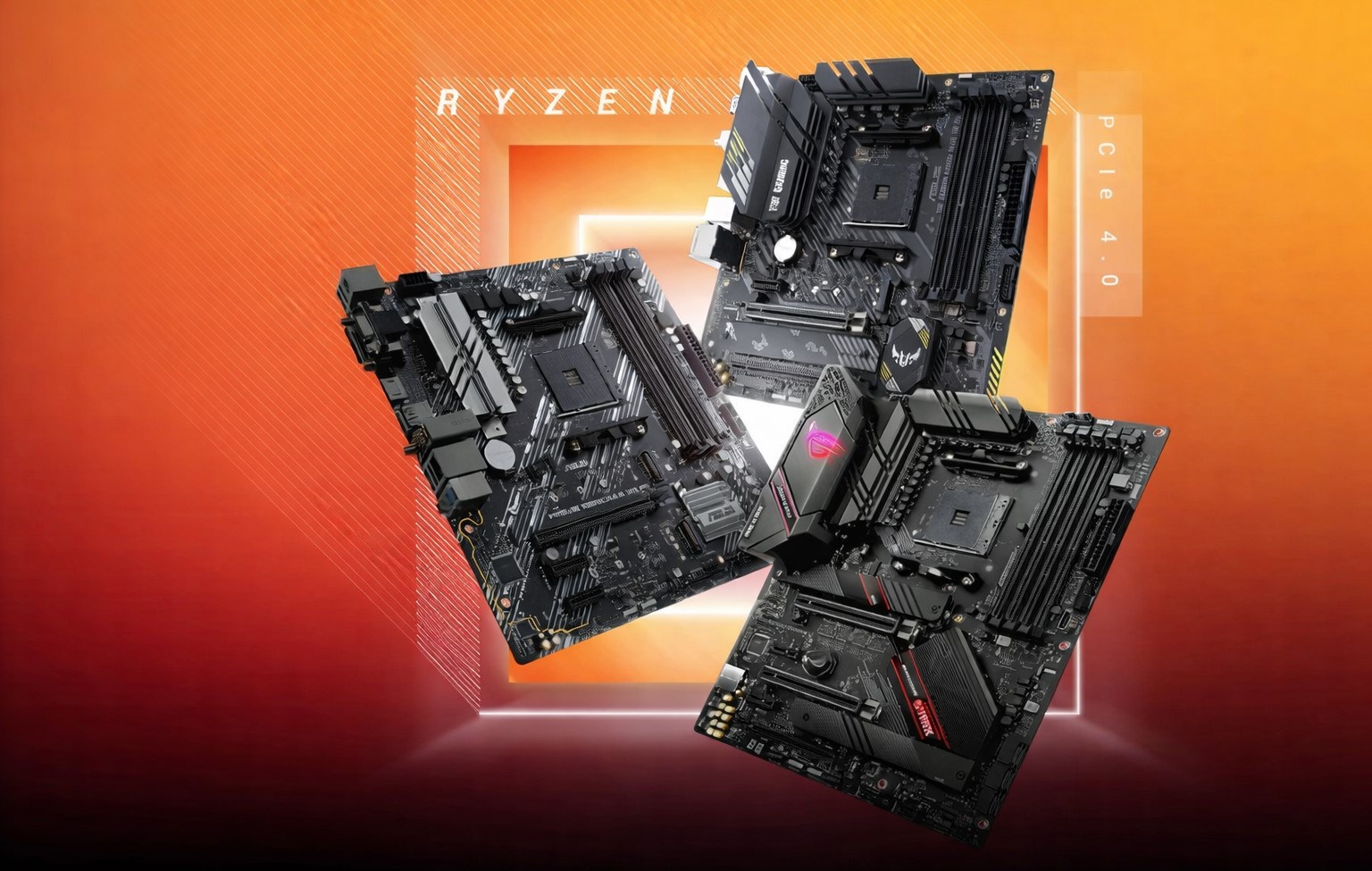
Key Specs: B550 vs. AM5 Motherboards
- B550 (AM4):
- Supports Ryzen 5000/3000 CPUs
- DDR4 memory (up to 3200 MHz+)
- PCIe 4.0 x16 for GPUs
- Price range: $100–$150
- Top sellers: ASUS ROG B550-F ($139), MSI B550-A Pro
- B650/X670 (AM5):
- Supports Ryzen 7000/9000 CPUs
- DDR5 memory (up to 6000+ MHz)
- PCIe 5.0/4.0 for GPUs and NVMe SSDs
- Price range: $150–$300+
- Top sellers: ASUS ROG Strix B650-F, MSI MPG X670E Carbon
For most users, the choice boils down to budget and future-proofing. B550 is ideal for those prioritizing affordability and DDR4’s lower memory costs, while AM5 appeals to enthusiasts needing PCIe 5.0 or planning to upgrade to Ryzen 9000 CPUs. The Ryzen 7 9800X3D and 9850X3D remain the best gaming CPUs available, but their $120 price tag aligns closely with high-end AM4 options, reducing the incentive to switch.
Will AMD Bring Back Ryzen 5000X3D?
The absence of a Ryzen 5000X3D successor is a notable omission. AMD’s Ryzen 7 5800X3D set a benchmark for gaming performance on a budget, and a mid-range 3D V-Cache CPU could reignite AM4 sales. However, with Ryzen 7000 and 9000 series dominating, and no official word on a revival, the gap may persist. For now, B550’s affordability—and DDR4’s cost advantage—ensures AM4’s staying power in the mainstream.
Availability for B550 motherboards remains strong, with no signs of slowing down. AM5 adoption will grow as DDR5 prices stabilize, but for today’s budget builders, B550 remains the smarter choice.