Introducing Bolt Graphics and the ZEUS Architecture
The computer graphics industry is dominated by a single player: NVIDIA. However, a new startup, Bolt Graphics, based in Sunnyvale, California, is challenging this status quo with its entirely new graphics hardware architecture – dubbed ZEUS. Bolt’s ambition isn't simply to create another GPU; it’s aiming for a paradigm shift, particularly focusing on applications like path tracing and high-performance computing (HPC) where traditional GPUs often struggle.
Key Features of the ZEUS Architecture
At its core, the ZEUS architecture represents a departure from conventional designs. It leverages an in-house SIMD (Single Instruction, Multiple Data) architecture controlled by a RISC-V command processor. This dual-processor approach is intended to optimize data flow and execution for complex rendering tasks. Unlike many current GPUs that rely heavily on CUDA cores, ZEUS’s architecture appears tailored from the ground up for parallel processing in demanding workflows.
Memory Configuration: A Hybrid Approach
The ZEUS prototype card incorporates a sophisticated memory system designed to handle massive datasets. It utilizes LPDDR5X for fast on-board data access alongside DDR5 SODIMM slots, allowing for up to 384GB of total memory capacity. This expansive memory pool is crucial for path tracing, which relies heavily on storing and processing vast amounts of ray information during rendering.
Connectivity & I/O
Beyond the core architecture, ZEUS incorporates several features targeting professional workstation and server environments. It boasts a PCI-Express 5.0 x16 interface for high bandwidth data transfer, a 400 Gbps or 800 Gbps enterprise network interface, and a fully-fledged Baseboard Management Controller (BMC)/IPMI circuit. The BMC/IPMI provides remote management capabilities crucial for deploying and maintaining multiple ZEUS cards within rackmount render servers or workstations.
Power Efficiency & Performance
Interestingly, the ZEUS card’s power consumption is surprisingly modest, drawing just 225W from an 8-pin PCIe power input. This efficiency is a key design consideration, potentially leading to lower operating costs and reduced cooling requirements. The combination of efficient hardware and a powerful architecture suggests significant potential for performance gains.
Performance Claims & Path Tracing Focus
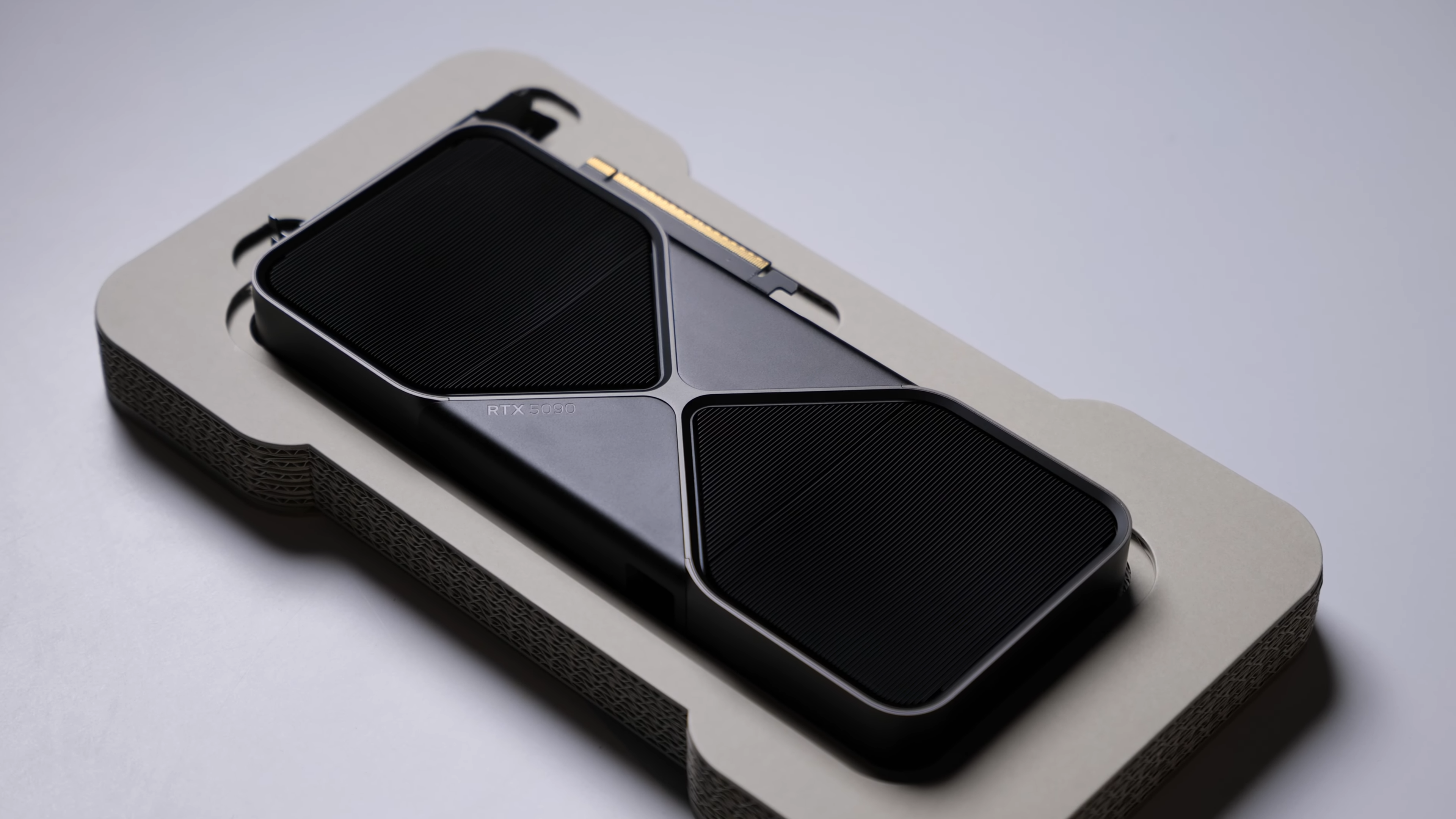
Bolt Graphics’ marketing materials highlight a remarkable claim: up to 2.5x the path tracing performance compared to an NVIDIA RTX 5090. This figure is particularly noteworthy given the RTX 5090's already impressive capabilities in ray tracing. The company attributes this performance boost primarily to the optimized SIMD architecture and the card’s substantial memory capacity, both of which are critical for efficiently handling the complex calculations involved in path tracing.
Technical Details (As Presented)
- Architecture: ZEUS
- SIMD Architecture: In-house Designed
- Command Processor: RISC-V
- Memory: LPDDR5X + DDR5 SODIMM (up to 384GB)
- PCIe Interface: PCIe 5.0 x16
- Network Interface: 400 Gbps / 800 Gbps
- BMC/IPMI: Fully Integrated
- Power Consumption: 225W
Implications for the Graphics Industry
The emergence of Bolt Graphics and its ZEUS architecture represents a potentially disruptive force in the graphics hardware market. If the company’s performance claims hold true, it could significantly impact industries reliant on demanding rendering workloads, including film production, visual effects, architectural visualization, scientific simulation, and game development.