The Dimensity 9600 Pro has arrived, promising performance that blurs the line between smartphone and desktop. Its architecture is designed to hit a 5 GHz clock speed, a benchmark once reserved for high-end PCs, but doing so comes at a cost: sustained power draw that could redefine what ‘efficient’ means in mobile computing.
This isn’t just another incremental upgrade—it’s a fundamental shift in how smartphone processors balance raw performance with thermal constraints. The 9600 Pro’s design pushes the envelope, but whether it can deliver on its promise without crippling battery life remains an open question for engineers and users alike.
A New Benchmark for Mobile Power
The Dimensity 9600 Pro is built around a 5 nm process node, featuring up to eight performance cores clocked at 3.0 GHz with a target peak of 5 GHz. This aggressive speed comes paired with a robust power delivery system, including a 12th-generation LPDDR5X memory controller capable of handling 8 GB of RAM at speeds up to 7.6 Gbps—nearly double the bandwidth of previous generation chips.
- Performance Cores: Up to eight cores, 3.0 GHz base with a target peak of 5 GHz
- Memory: 12th-gen LPDDR5X controller, up to 8 GB RAM at 7.6 Gbps bandwidth
- Efficiency Cores: Integrated for sustained workloads with dynamic voltage scaling
- Thermal Design Power (TDP): Estimated at 15W–20W under sustained load, higher than previous mobile SoCs
The chip’s efficiency cores are optimized to handle extended data/AI workloads, but the performance cores demand significant thermal management. This means smartphones equipped with the Dimensity 9600 Pro will likely require advanced cooling solutions—possibly even liquid cooling in some premium devices—to maintain stability under prolonged stress.
Context: Why 5 GHz Matters (And Doesn’t)
Targeting a 5 GHz clock speed is no small feat. Modern smartphones typically operate in the 2.8–3.4 GHz range, with rare exceptions pushing slightly higher due to thermal throttling. The Dimensity 9600 Pro’s architecture aims to sustain this speed for short bursts—useful for tasks like real-time rendering or heavy AI processing—but maintaining it for extended periods is where the trade-offs become clear.
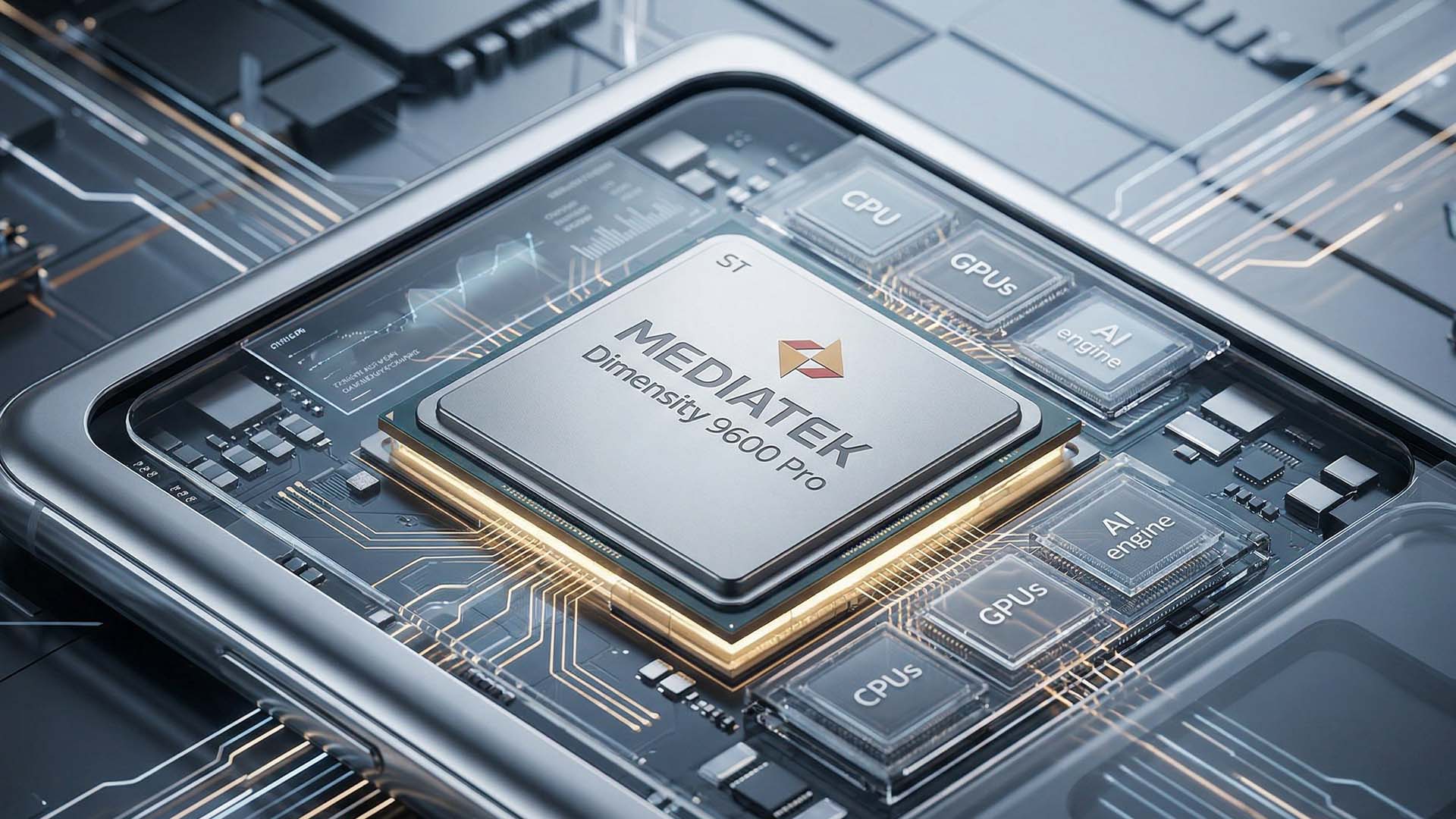
For data/AI workloads, the 9600 Pro could be a game-changer. Its memory bandwidth and core configuration are tailored for parallel processing, making it well-suited for tasks like neural network inference or large-scale dataset analysis. However, the power implications mean this chip is less about replacing a desktop CPU and more about pushing the boundaries of what’s feasible in a handheld device.
Implications: What Engineers Need to Know
The Dimensity 9600 Pro isn’t just a performance upgrade—it’s a challenge to the industry’s understanding of mobile power efficiency. Smartphone OEMs will need to rethink thermal design, battery chemistry, and even software optimization to fully leverage its capabilities without sacrificing battery life.
For end users, the question is whether the performance gains justify the potential drawbacks. If the chip can deliver sustained 5 GHz speeds for critical tasks while maintaining reasonable battery runtime, it could set a new standard. But if thermal throttling or power consumption becomes a limiting factor, its desktop-grade promise may remain out of reach for all but the most demanding workloads.
What’s Confirmed—and What Isn’t
The Dimensity 9600 Pro is confirmed to feature a 5 GHz target clock speed, a 12th-generation LPDDR5X memory controller, and a power-efficient architecture with dynamic voltage scaling. However, real-world performance under sustained loads—particularly in terms of battery life—remains untested.
Availability and pricing are not yet confirmed, but given its target market (high-end smartphones), it’s likely to debut in devices aimed at professionals who prioritize raw processing power over portability. Whether it delivers on its desktop-grade promise without significant trade-offs will only be clear after extended benchmarks and real-world testing.