Dragon Quest VII Reimagined arrives as a technical marvel, redefining what it means to be a modern JRPG. Yet its transformation from a punishing, atmospheric classic into a streamlined, beginner-friendly adventure raises questions about whether Square Enix has prioritized accessibility over the series’ storied identity.
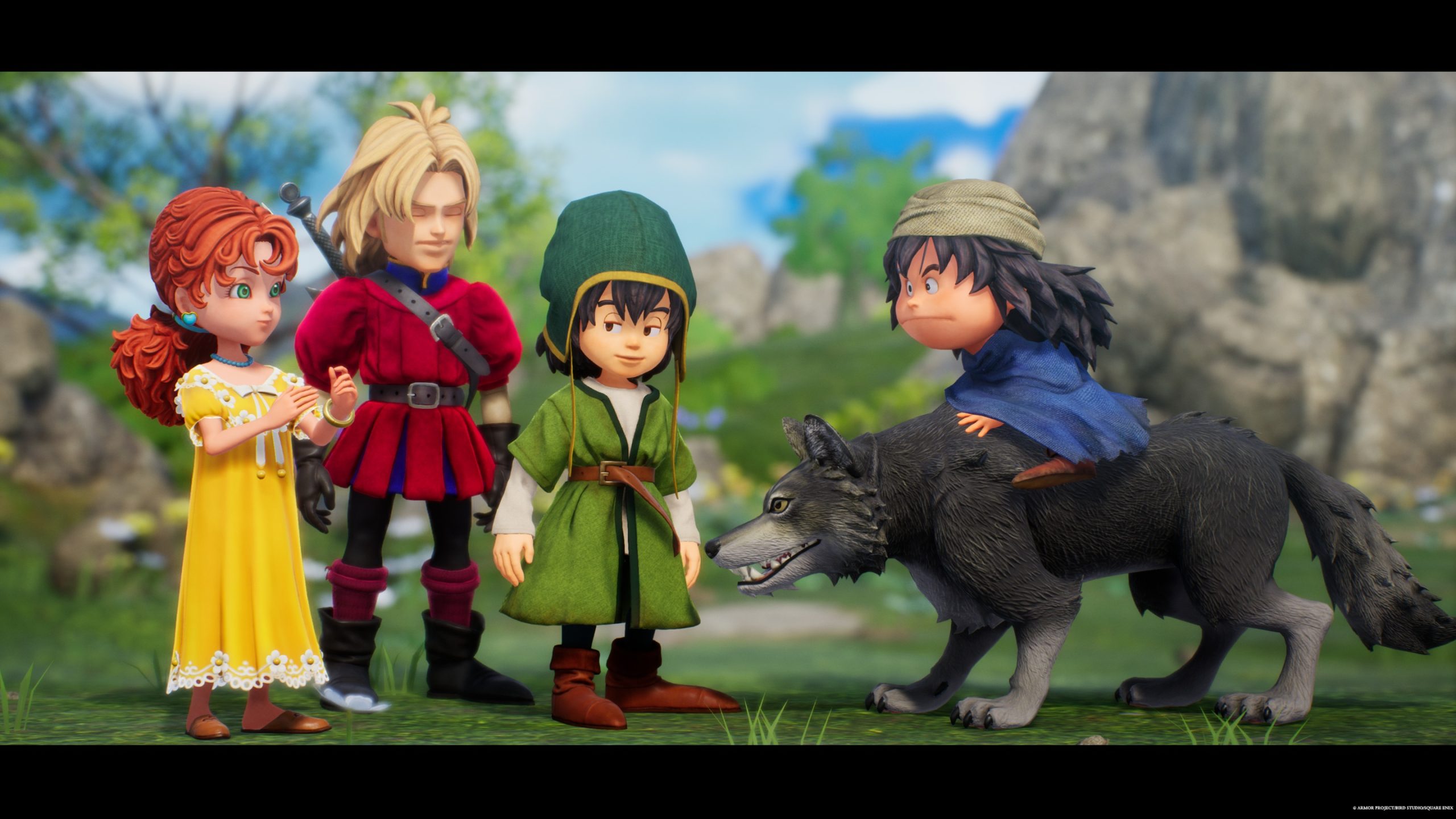
The game’s most striking achievement lies in its presentation. The world of Eden is rendered with a level of detail that feels almost tactile, where every wooden plank in a tavern’s floorboards casts a distinct shadow and the wind rustles through grass with a quiet realism. Character models, too, stand out—Ruff’s wolf mother and the Hero’s party members are crafted with a precision that rivals AAA action titles, their textures and animations lending weight to even the most fleeting interactions. It’s a visual feast that makes earlier entries in the series feel dated by comparison.
But this beauty comes at a cost. The original Dragon Quest VII was infamous for its lengthy, atmospheric introduction—a deliberate choice to immerse players in a world where time itself was fractured. Reimagined condenses this prologue into a fraction of its original length, trading mood for momentum. The result is a game that feels less like an unfolding mystery and more like a guided tour, where the Shrine of Mysteries’ caretaker repeatedly points players toward the next objective rather than leaving them to explore. Even the once-cryptic map shard puzzles are now accompanied by in-game prompts, removing much of the trial-and-error that defined the original’s challenge.
Combat, too, has been neutered. The turn-based system remains intact, but the difficulty has been dialed down to the point where even the most casual player can breeze through encounters with minimal effort. Auto-battle is always an option, and the ability to restore HP after every fight further erodes any sense of tension. The Vocation system—once a cornerstone of the series’ depth—has been simplified to the point where most players will default to the same builds, with Moonlighting as a secondary class offering little more than cosmetic variety. Monster vocations, once a source of creativity, are now relegated to accessories, and the ability to mix and match skills across classes has been removed entirely.
The game’s length has also been drastically reduced. Where the original required 80–100 hours for a full playthrough, Reimagined can be completed in roughly half that time—assuming players skip optional content. The postgame, once a labyrinth of side quests and hidden treasures, has been trimmed to a skeleton, with much of the original’s charm replaced by a single, repetitive minigame: Lucky Panel. To unlock rare items, players must endure hours of Match-3 grinding, a decision that feels like a misstep in an otherwise polished experience.
Yet for all its flaws, Reimagined isn’t without its charms. The time-traveling narrative remains compelling, with each island’s past and present offering a satisfying contrast. The final act, in particular, delivers a sense of freedom and exploration that justifies the game’s existence. And while the lack of difficulty may frustrate veterans, it makes Dragon Quest VII far more approachable for newcomers—something the series has struggled with in recent years.
The $59.99 price tag feels justified for the visuals alone, but the trade-offs are undeniable. Reimagined is a beautiful, accessible JRPG that prioritizes polish over challenge—a decision that may leave longtime fans wanting more. For those new to the series, however, it serves as an inviting gateway, proving that even in a remake, some things are better left untouched.
Final Verdict: A stunning but sanitized experience that excels in presentation but lacks the bite of its predecessor.