DuckDuckGo’s latest user survey delivers a sharp rebuke to AI-enhanced search: **90% of respondents explicitly chose to disable AI features** when given the option. The result underscores a growing rift between tech’s push toward AI integration and user demand for control—even among the very demographic most likely to prioritize privacy.
The findings come as Google’s Gemini AI overhaul has driven some users toward alternatives like DuckDuckGo. Yet while the company markets itself as a non-AI search engine, it quietly offers optional AI tools—including a chatbot (Duck.ai) bundled with its $10/month VPN service. The poll’s stark outcome suggests that even among privacy-focused users, AI’s presence remains contentious.
The company’s stance appears to be one of user choice. Two dedicated URLs—noai.duckduckgo.com and yesai.duckduckgo.com—let visitors toggle AI features on or off without account creation. Duck.ai itself, however, operates as a separate product, leveraging private interactions with large language models like ChatGPT, Claude, and Llama.
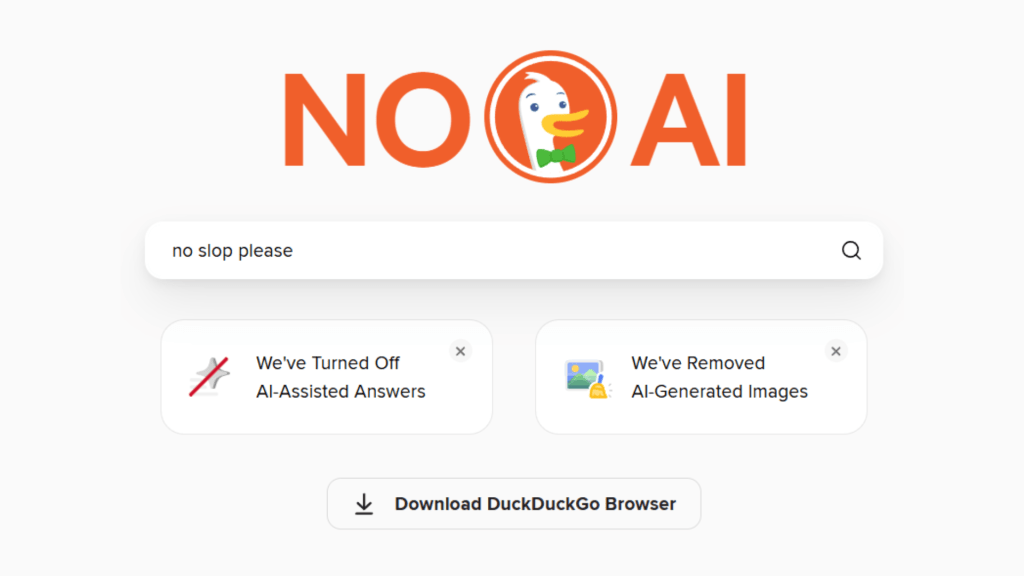
This dual approach contrasts with competitors like Vivaldi, which has taken a harder line against AI in search. For DuckDuckGo’s founder, the balance seems deliberate: AI features must be useful, private, and optional. Yet the poll’s results raise questions about whether the company’s AI offerings—however opt-in—are eroding its core appeal among users who view AI as inherently invasive.
- User preference: 90% of DuckDuckGo users disable AI features when prompted.
- Optional AI: Duck.ai chatbot included with VPN ($10/month) supports private LLM interactions.
- Search alternatives: Two URLs (
noai.andyesai.) let users toggle AI on/off without logging in. - Privacy-first design: No account required to customize search behavior.
The data reflects a broader trend: even among privacy advocates, AI’s role in search remains divisive. While DuckDuckGo allows users to opt out, its continued promotion of AI tools—particularly in premium services—may test the limits of its no-AI branding.