When a user plugs in a DDR5 module and immediately sees full bandwidth—no BIOS tweaks, no stability trade-offs—the assumption is that such simplicity should have arrived years ago. Yet, GeIL’s latest DDR5-8000 MT/s memory suggests this long-anticipated convenience may finally be within reach.
The new JEDEC-standard module operates at 8000 MT/s with optimized timings (CL64-64-64-128) and a standard voltage of 1.10V, delivering peak throughput without manual intervention. This marks the first time such speed has been embedded directly into JEDEC’s SPD profile, eliminating the need for overclocking profiles or BIOS adjustments—a shift that could reshape how PC builders approach high-end systems.
For enthusiasts and AI developers, this means a more stable platform for demanding workloads. However, whether this level of performance translates to real-world gains—especially when paired with next-gen GPUs like the RTX 5090—remains an open question. The module is designed for current Intel 15th Gen platforms (Core Ultra 270K Plus, 265K, 245K) and upcoming systems, but its true value hinges on how it interacts with future hardware.
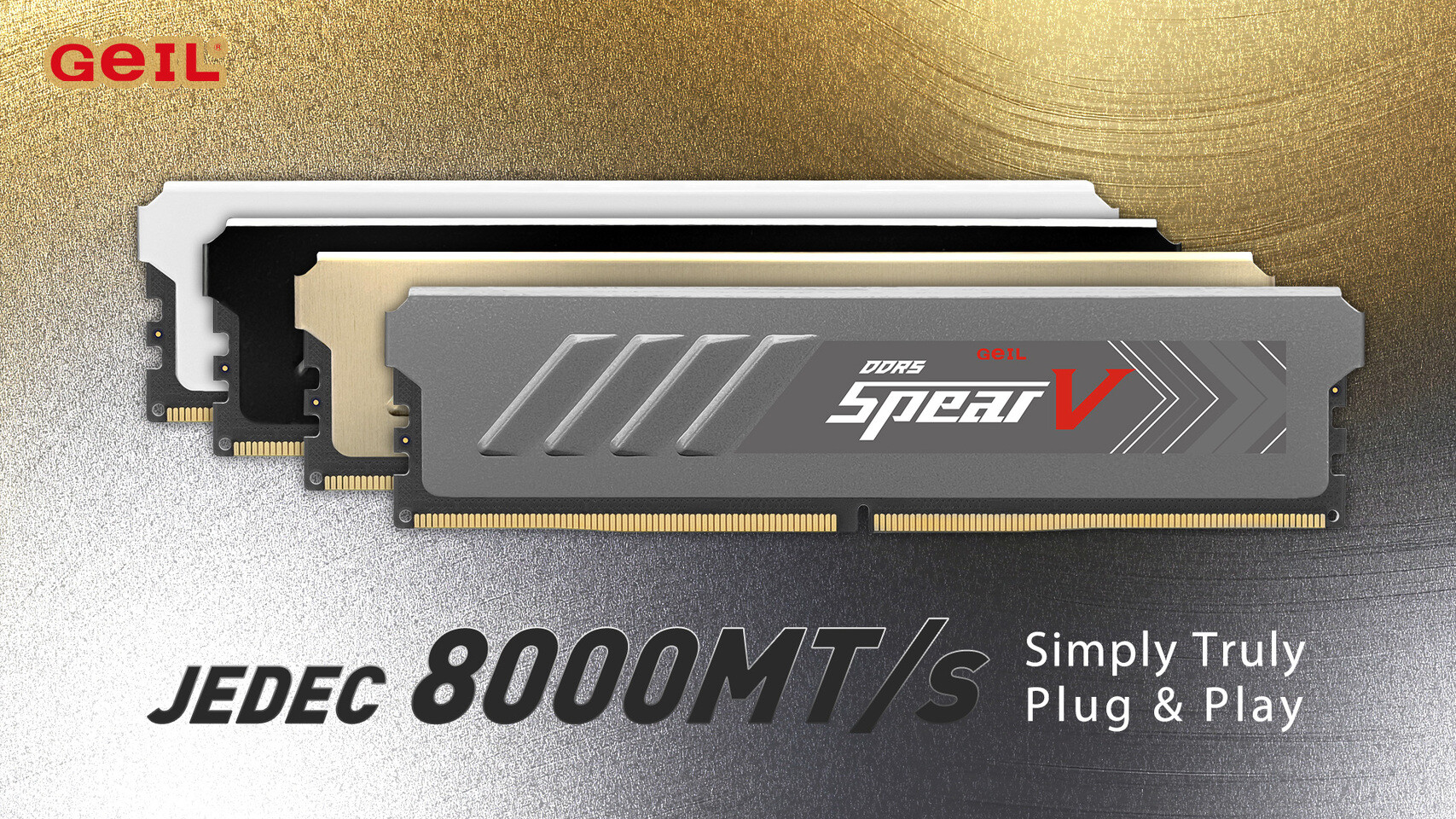
GeIL’s AQUARIUS Diamond RGB series accompanies the memory, featuring a diamond-cut light bar and premium aluminum heatsink. While the aesthetic appeal is undeniable, the focus remains on performance: every module undergoes rigorous testing to ensure signal integrity under sustained loads, from gaming to AI training.
- Speed: DDR5-8000 MT/s (JEDEC standard)
- Timings: CL64-64-64-128
- Voltage: 1.10V
- Compatibility: Intel 15th Gen (Core Ultra 270K Plus, 265K, 245K) with Z890/B860 motherboards; future-proofing for next-gen platforms
The real-world impact is still unclear. While the memory promises plug-and-play performance, its effectiveness in high-bandwidth scenarios—such as AI model training or 4K content creation—will depend on how well it balances speed with stability. For now, this represents a step forward in simplicity, but whether it delivers on the promise of seamless high-performance computing remains to be seen.
Who benefits most? Enthusiasts and professionals who prioritize ease of use over manual tuning will find value here, especially if future platforms leverage JEDEC-standard speeds more aggressively. The RGB series adds a premium aesthetic, but performance remains the primary driver.