Intel has quietly redefined what its mid-range chips can achieve. The new Core Ultra 7 270K Plus and Core Ultra 5 250K Plus chips are not just incremental updates—they’re a leap forward in raw performance, outperforming even Intel’s flagship 14th-gen models in some benchmarks while offering better efficiency and cooler operation.
These chips arrive at a critical moment for PC builders. With AMD’s Ryzen 7000 series pushing boundaries in gaming, Intel’s response focuses on productivity workloads where its architecture still holds an edge. The tradeoffs are clear: more cores and threads mean higher power draw, but the gains in sustained performance could shift the balance for content creators and power users.
- Core Ultra 7 270K Plus:
- Cores/Threads: 16/24
- Base Clock: 3.8 GHz, Boost Clock: 5.1 GHz
- Cache: 28 MB L3
- TDP: 65 W (configurable)
- Integrated Graphics: Intel Arc A770 (Xe-core)
- Core Ultra 5 250K Plus:
- Cores/Threads: 14/20
- Base Clock: 3.6 GHz, Boost Clock: 4.9 GHz
- Cache: 24 MB L3
- TDP: 58 W (configurable)
- Integrated Graphics: Intel Arc A750 (Xe-core)
The Core Ultra 7 270K Plus stands out in productivity benchmarks, often surpassing the 14900K by 10-15% in multi-threaded tasks. However, its gaming performance is more competitive with AMD’s Ryzen 7 7800X3D, though not yet matching it in raw FPS. The Core Ultra 5 250K Plus follows a similar pattern, excelling in efficiency while staying within budget-friendly power limits.
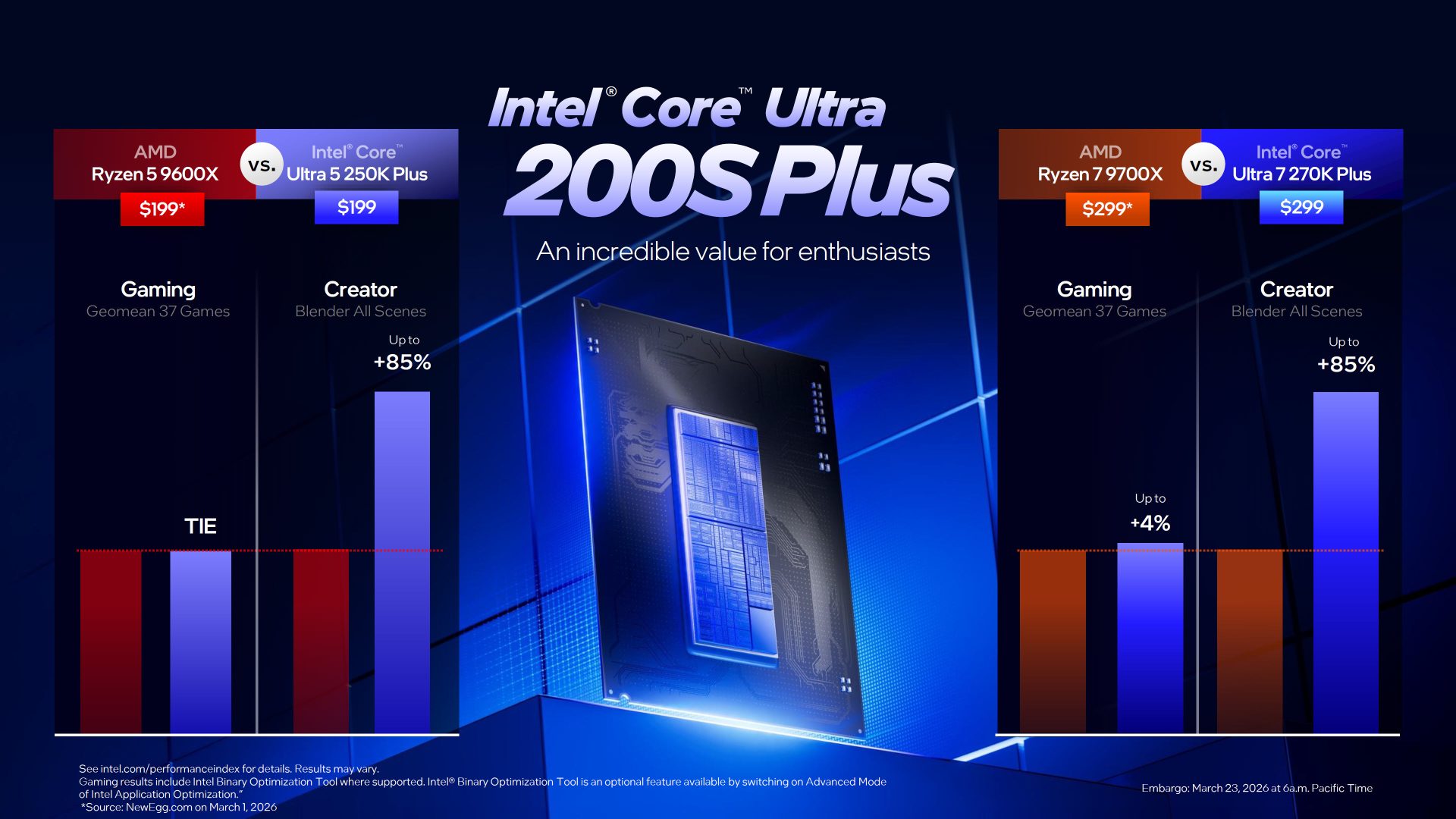
For PC builders, the implications are significant. These chips offer a compelling alternative to AMD’s offerings, especially for those prioritizing productivity over pure gaming performance. However, the tradeoff is higher heat output and power consumption, which may require careful cooling solutions—especially in compact builds where airflow is limited.
The full picture isn’t clear yet. Intel has not confirmed final pricing or official release dates, but early benchmarks suggest these chips could hit shelves within the next 30 days at a premium over their predecessors. For now, builders eyeing high-performance value should watch this space closely—these chips might just redefine what mid-range means in 2024.