The Lenovo Legion Go’s price tag has climbed sharply in recent months, with some models now costing up to $650 more than they did half a year ago. While the jump is notable, it’s not without reason. Behind the sticker shock lies a series of engineering decisions that balance performance, portability, and long-term sustainability—factors critical for enterprise buyers evaluating upgrade paths.
At first glance, the Legion Go appears to be a straightforward evolution of its predecessor. The core specifications remain largely unchanged: 16 GB of LPDDR5X RAM, up to 1 TB of NVMe storage, and an Intel Core i7-1280P processor with a base clock of 1.4 GHz and a turbo boost reaching 4.8 GHz. These numbers suggest continuity rather than disruption, yet the price shift signals a deeper recalibration.
One might assume that the increase is purely a reflection of market inflation or supply chain pressures. However, the actual changes are more nuanced. The Legion Go’s redesign focuses on thermal efficiency and power management, which, while improving battery life and heat dissipation, also introduce constraints in cooling system design. This shift necessitates a rethinking of how the device is manufactured and assembled, leading to higher component costs without an immediate boost in raw performance metrics.
For enterprise buyers, the tradeoff becomes clear when considering future-proofing. The Legion Go’s new thermal architecture, while more efficient, may limit its ability to sustain high-performance workloads over time compared to competitors that prioritize raw power density. This could influence long-term total cost of ownership (TCO) if hardware refresh cycles are extended beyond initial expectations.
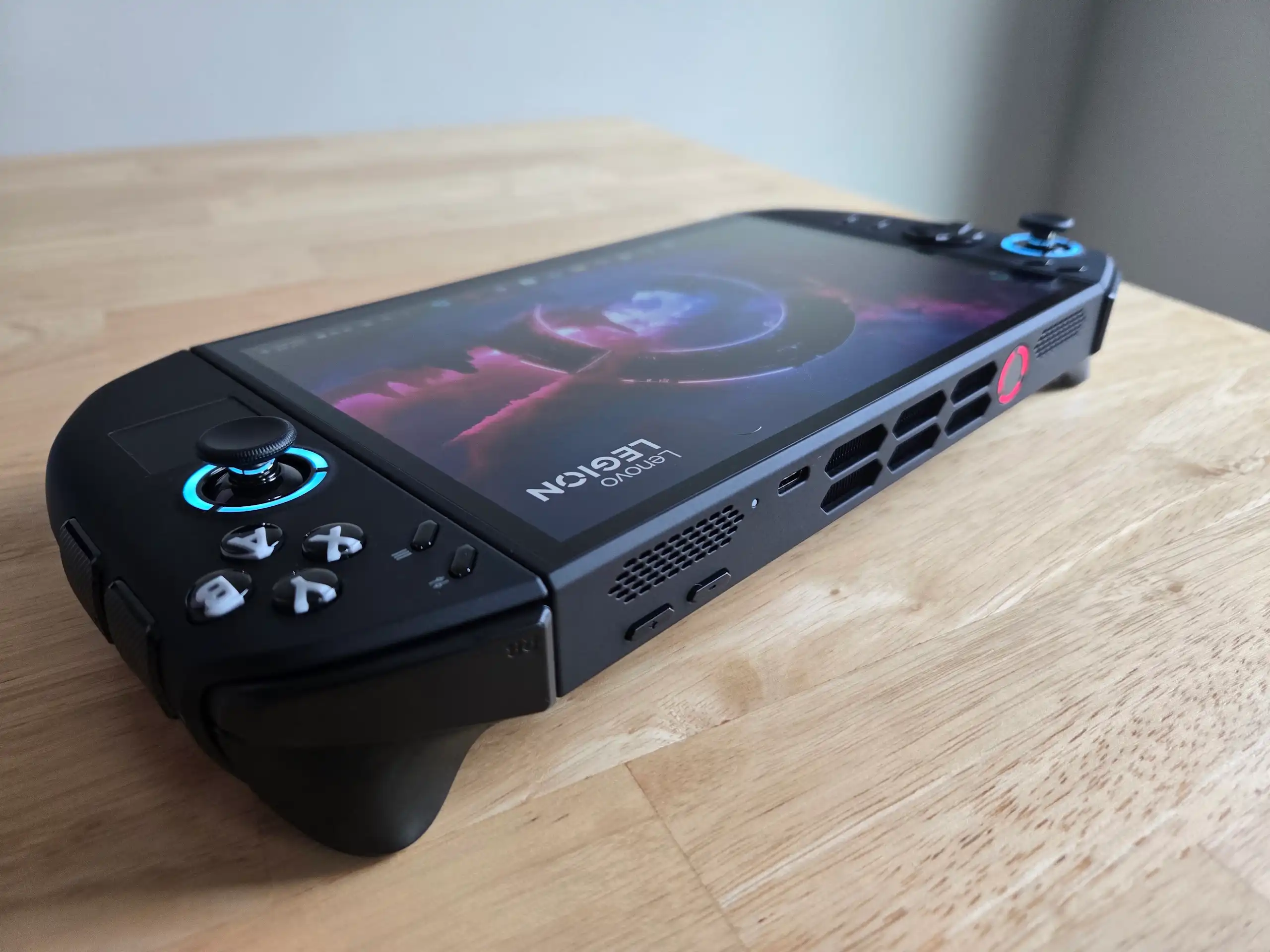
Another key consideration is the balance between build quality and weight. The Legion Go’s magnesium alloy chassis, a staple in its lineup, has been refined to reduce overall mass while maintaining durability. However, this lightweight approach comes with a catch: thinner materials can sometimes compromise structural rigidity under heavy or prolonged use. Enterprise environments that demand robustness may find this tradeoff less than ideal.
Battery life is often cited as a major selling point for portable workstations, and the Legion Go delivers here—claiming up to 14 hours of mixed-use battery life on its high-end configuration. That’s the upside; here’s the catch: achieving that longevity required sacrificing some peak performance modes. In sustained workloads, such as video rendering or CAD tasks, the device may throttle more aggressively than expected, a behavior that could be problematic for users who rely on consistent performance without thermal throttling.
When evaluating alternatives, buyers should weigh whether the Legion Go’s refined approach aligns with their operational needs. For example, models that prioritize raw power over battery life might offer better long-term scalability, even if they come at a slightly lower upfront cost. Conversely, those who value portability and efficiency may find the Legion Go’s adjustments worthwhile, despite the price increase.
Ultimately, the Legion Go’s price surge reflects more than just economic factors—it signals a deliberate shift in design philosophy. For enterprise buyers, the question isn’t whether they can afford it, but whether its engineering tradeoffs align with their long-term productivity goals. Those who prioritize sustainability and efficiency over raw power will likely find the most value in this iteration.